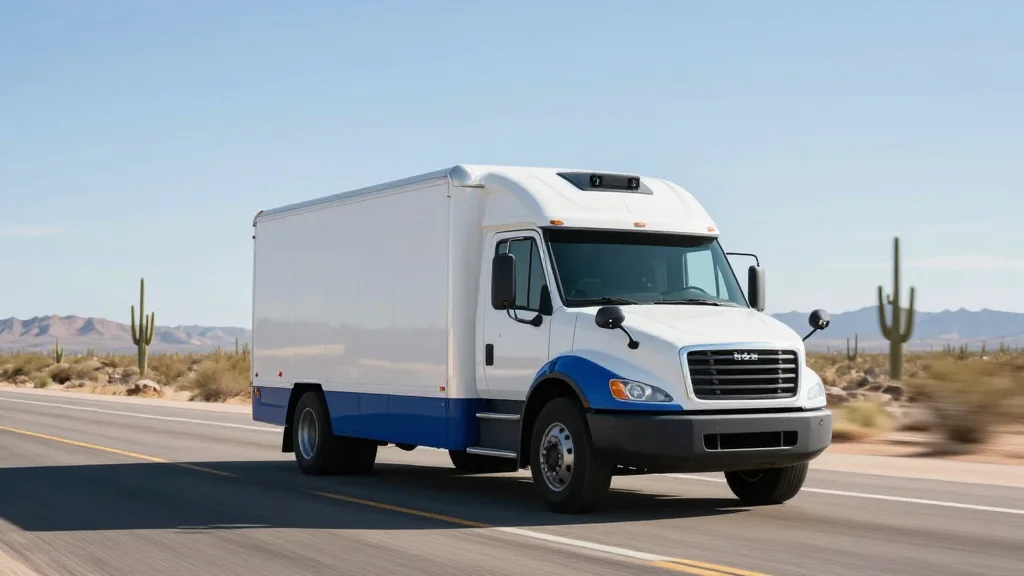
OM in the News: Pepsi Trucks Go Driverless
Key Takeaways
- •35 autonomous trucks operating on Arizona public roads.
- •99% on‑time delivery performance exceeds human driver averages.
- •Zero accidents recorded since driverless launch in 2025.
- •Pepsi will retrain drivers for equipment management and unloading.
- •Union opposition highlights labor tensions in autonomous freight adoption.
Pulse Analysis
The emergence of autonomous freight vehicles is reshaping the logistics landscape, and PepsiCo’s pilot in Arizona illustrates how a consumer‑goods giant can leverage the technology. While Waymo and Tesla focus on passenger‑level autonomy, Pepsi’s 26,000‑lb box trucks employ a suite of LiDAR, radar and camera sensors comparable to those used in driverless taxis. By integrating real‑time mapping and predictive analytics, the trucks navigate repetitive routes with minimal human oversight, showcasing that heavy‑duty autonomy is moving beyond experimental phases into commercial reality.
Performance metrics underscore the operational advantage. A 99% on‑time delivery rate eclipses typical human‑driver reliability, which is often hampered by fatigue, mandatory rest periods, and recent federal English‑proficiency rules. The driverless fleet also eliminates sick‑day variability, delivering consistent service on short, high‑frequency loops such as the 14‑mile shuttle between a Gatorade bottling plant and a storage depot. These efficiencies translate into lower fuel consumption per mile, reduced labor costs, and a tighter supply chain for high‑turnover snack products, giving PepsiCo a competitive edge in shelf‑stock reliability.
However, the technology’s rollout is not without friction. Unions representing Pepsi’s thousands of drivers have voiced strong opposition, fearing job displacement. The company’s strategy to retrain and redeploy workers into roles like equipment monitoring, route synchronization, and manual unloading aims to mitigate backlash while still trimming its driver headcount. This approach reflects a broader industry trend where firms balance automation gains with workforce transition plans, signaling that the next decade will likely see a hybrid model of autonomous trucks complemented by a leaner, more skilled human workforce.
OM in the News: Pepsi Trucks Go Driverless
Comments
Want to join the conversation?