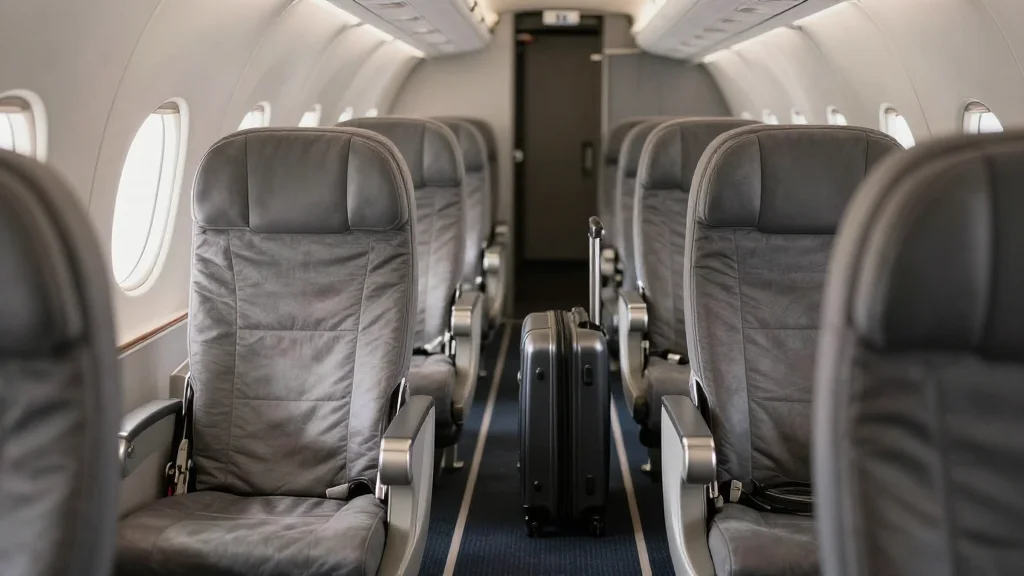
Passenger Boarded A Flight Only To Learn Their Seat 27E Didn’t Exist
Key Takeaways
- •Aircraft swap changed seat layout from six‑abreast to four‑abreast
- •Boarding pass not reissued, leaving passenger with nonexistent seat
- •EU Regulation 261 mandates compensation for operational changes
- •Overbooking incidents can lead to passengers without seats on board
- •Airlines must adjust assignments promptly to avoid legal penalties
Pulse Analysis
The Lisbon‑flight mishap illustrates a common yet under‑reported challenge in airline operations: last‑minute aircraft swaps can render existing seat assignments obsolete. When a six‑abreast aircraft is replaced by a four‑abreast regional jet, rows and seat letters often shift, and if the system does not automatically generate a new boarding pass, passengers may find themselves with a seat that physically does not exist. In this case, the traveler boarded with a ticket showing 27E, a seat that vanished with the change, exposing a gap in the airline’s real‑time seat‑allocation workflow.
Under European Union Regulation 261/2004, passengers affected by operational changes such as aircraft swaps are entitled to compensation—€250 ($275) for flights up to 1,500 km, €400 ($440) for intra‑EU routes over 1,500 km, and €600 ($660) for longer journeys. The rule also allows a 50% reduction if the airline rebooks the passenger on a comparable flight within a short delay window. Unlike the United States, where compensation is limited to overbooking scenarios, the EU framework treats any significant itinerary alteration as a compensable event, raising the stakes for carriers that mishandle seat reassignments.
Beyond regulatory compliance, the incident signals a broader industry need for integrated, real‑time passenger‑service platforms. Airlines must ensure that any aircraft change triggers an automatic seat‑map update and a re‑issued boarding pass, either digitally or at the gate. Failure to do so not only incurs financial penalties but also erodes consumer confidence, especially in a market where loyalty programs and seamless travel experiences are key differentiators. Investing in smarter reservation systems and staff training can mitigate these risks, turning a potential PR nightmare into an opportunity for operational excellence.
Passenger Boarded A Flight Only To Learn Their Seat 27E Didn’t Exist
Comments
Want to join the conversation?