Port of Brunswick the Busiest Auto Terminal
Key Takeaways
- •Brunswick handled 779,000 vehicles and 53,000 heavy machines in 2025.
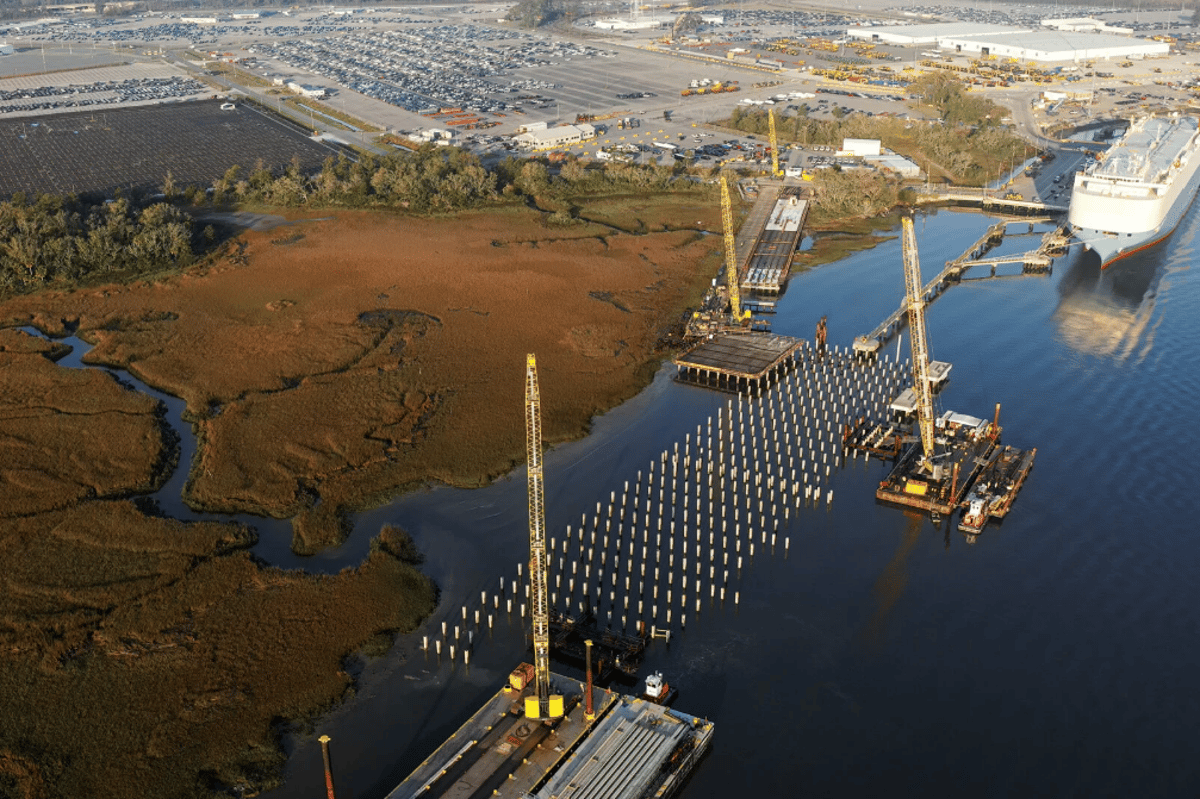
- •Fourth berth at Colonels Island, $100M, 30% complete, opens 2027.
- •GPA invested $284M in storage and infrastructure during FY2025.
- •Southside Railyard Phase I doubled rail capacity to 370,000 vehicles annually.
- •Colonels Island spans 1,700 acres, with 264 acres earmarked for expansion.
Pulse Analysis
The Port of Brunswick’s 2025 throughput underscores its pivotal role in U.S. automotive logistics, handling more than three‑quarters of a million cars and a substantial volume of construction equipment. Its RoRo (roll‑on/roll‑off) specialization offers shippers direct access to the Southeast market, reducing inland drayage costs and shortening delivery windows for manufacturers and dealers nationwide. This operational scale not only cements Brunswick’s leadership domestically but also enhances the United States’ competitiveness against foreign auto‑import gateways.
Infrastructure upgrades are the engine behind Brunswick’s sustained growth. The $100 million fourth berth, with a 975‑foot length, will accommodate larger vessels and accelerate turnarounds, while $284 million in recent improvements added 350,000 sq ft of covered on‑dock storage and expanded outdoor capacity across 1,700 acres. The newly completed Phase I of the Southside Railyard doubled rail handling capacity to 370,000 vehicles per year, and Phase II promises an additional 250,000 units by 2029. These enhancements diversify modal options, lower congestion, and provide shippers with flexible, cost‑effective pathways from ship to rail to truck.
Beyond the terminal, Brunswick’s expansion fuels broader economic development in the Georgia Southeast corridor. Growing vehicle assembly and heavy‑equipment manufacturing demand reliable inbound logistics, and the port’s upgrades directly support that supply chain. State officials project that the added capacity will attract new RoRo carriers, stimulate job creation, and generate ancillary business for warehousing, customs, and transportation services. As global automotive production pivots toward electric and autonomous models, Brunswick’s modernized infrastructure positions it to capture emerging freight patterns and maintain its status as the nation’s premier RoRo hub.
Port of Brunswick the busiest auto terminal
Comments
Want to join the conversation?