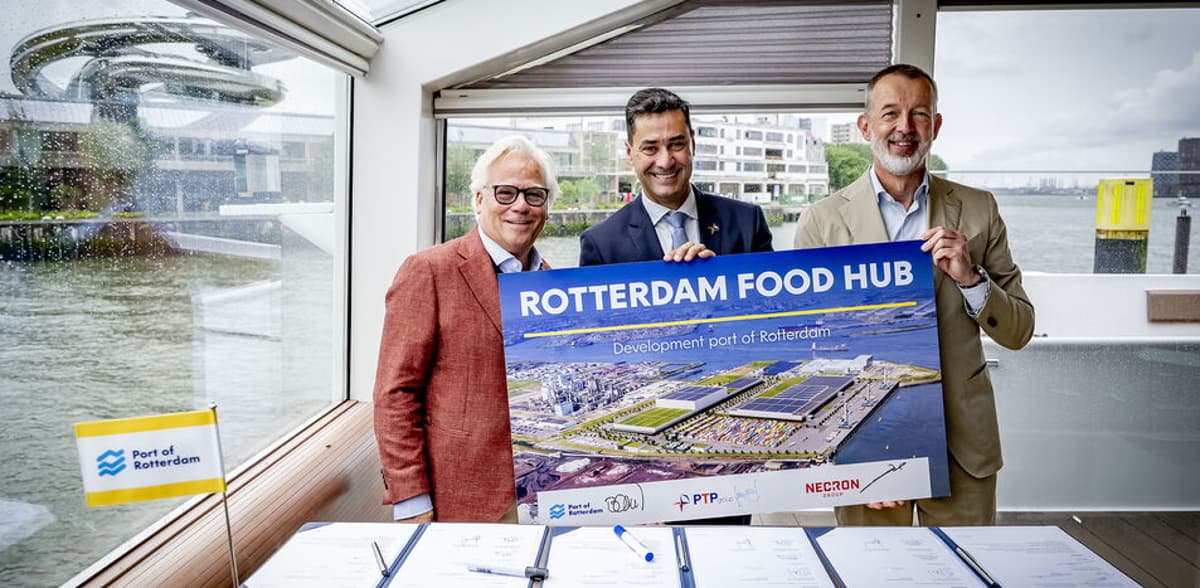
Port of Rotterdam Agrees Development Food Hub Expansion
Key Takeaways
- •38‑hectare agrifood hub adds 500‑metre quay wall
- •Necron to build 145,000 m² cold‑storage complexes
- •PTP to operate 73,000 m² terminal with three berths
- •Energy hub will power terminal and warehouses from day one
- •Final investment decisions expected early 2027
Pulse Analysis
The Port of Rotterdam has long been Europe’s maritime gateway, handling more than 450 million tonnes of cargo annually. As consumer preferences shift toward fresher, temperature‑controlled products, ports are under pressure to provide integrated cold‑chain solutions. The newly announced Rotterdam Food Hub responds to this trend by dedicating 38 hectares of Europoort to chilled and frozen agrifood logistics. By co‑locating quay infrastructure, warehousing, and power generation, the hub positions Rotterdam to capture a larger share of the continent’s growing demand for efficient, low‑carbon food distribution. The hub also aligns with the EU’s Green Deal objectives by promoting energy‑efficient handling of perishable cargo.
The development is a joint venture between the Port Authority, Necron Group, and PTP Group. Necron will deliver two cold‑storage parks totaling roughly 145,000 square metres, while PTP constructs a 73,000‑square‑metre terminal with three deep‑sea and inland berths. An on‑site energy hub will supply electricity to both the terminal and the warehouses, ensuring immediate operational readiness. The 500‑metre quay wall and protective breakwater will accommodate larger vessels, reducing turnaround times and enhancing reliability for shippers of perishable goods. Construction is slated to begin in 2025, with phased commissioning to match market demand.
Strategically, the hub strengthens Rotterdam’s claim as Europe’s premier agrifood port, offering end‑to‑end logistics that competitors in the North Sea region lack. The integrated model reduces handling steps, cuts carbon emissions, and improves traceability—key factors for retailers facing stricter sustainability mandates. With final investment decisions expected in early 2027, the project could unlock billions of euros in downstream economic activity, from warehousing jobs to export growth. If successful, the model could inspire similar cold‑chain clusters in Hamburg and Antwerp, intensifying regional competition. As supply chains become increasingly resilient, the Rotterdam Food Hub may set a benchmark for future port‑centric cold‑chain developments.
Port of Rotterdam agrees development food hub expansion
Comments
Want to join the conversation?