Readers Speak: The Biggest Lesson From the Hormuz Crisis
Key Takeaways
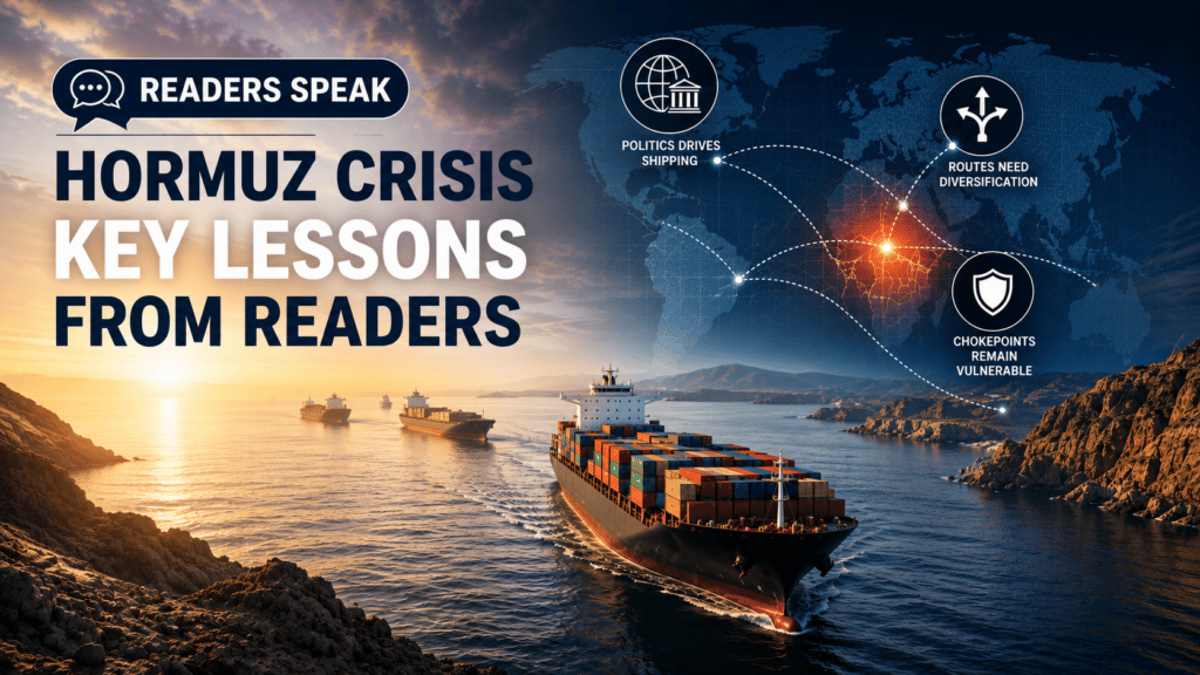
- •Politics now a primary driver of maritime shipping decisions
- •Route diversification seen as essential for supply‑chain resilience
- •Chokepoints like Hormuz remain critical vulnerability points
- •Security cost spikes viewed as symptom, not core lesson
- •Long‑term strategic planning outweighs short‑term operational fixes
Pulse Analysis
The Strait of Hormuz, a narrow waterway that funnels roughly 20% of global oil trade, erupted into a geopolitical flashpoint earlier this year, prompting vessel delays, insurance hikes, and heightened naval activity. While the immediate disruption captured headlines, the Container News poll reveals a deeper industry introspection: shipping can no longer be insulated from politics. Executives now recognize that diplomatic disputes, sanctions, and regional conflicts directly shape vessel itineraries, freight rates, and cargo allocation, forcing a reevaluation of risk models that once treated geopolitics as an externality.
Beyond acknowledging political influence, the poll underscores a consensus that route diversification is no longer optional but a strategic imperative. Companies are exploring alternative corridors—such as the Cape of Good Hope for oil shipments or overland rail links for containerized goods—to mitigate the concentration risk inherent in a few chokepoints. This shift drives investments in flexible fleet deployment, digital twin simulations of network scenarios, and collaborative alliances that can reroute cargo swiftly when a single passage is compromised. The emphasis on diversification also dovetails with broader supply‑chain resilience initiatives, where redundancy and agility are prized over pure cost efficiency.
Finally, the survey’s low ranking of "security has a price" suggests that industry leaders view cost spikes as a downstream symptom rather than a root cause. The real lesson, they argue, is the need for long‑term strategic planning that integrates geopolitical forecasting, diversified routing, and robust contingency frameworks. As insurers adjust premiums and navies maintain heightened patrols, shippers that embed these considerations into capital allocation, vessel design, and partnership structures will be better positioned to navigate an increasingly complex global trade landscape.
Readers Speak: The biggest lesson from the Hormuz Crisis
Comments
Want to join the conversation?