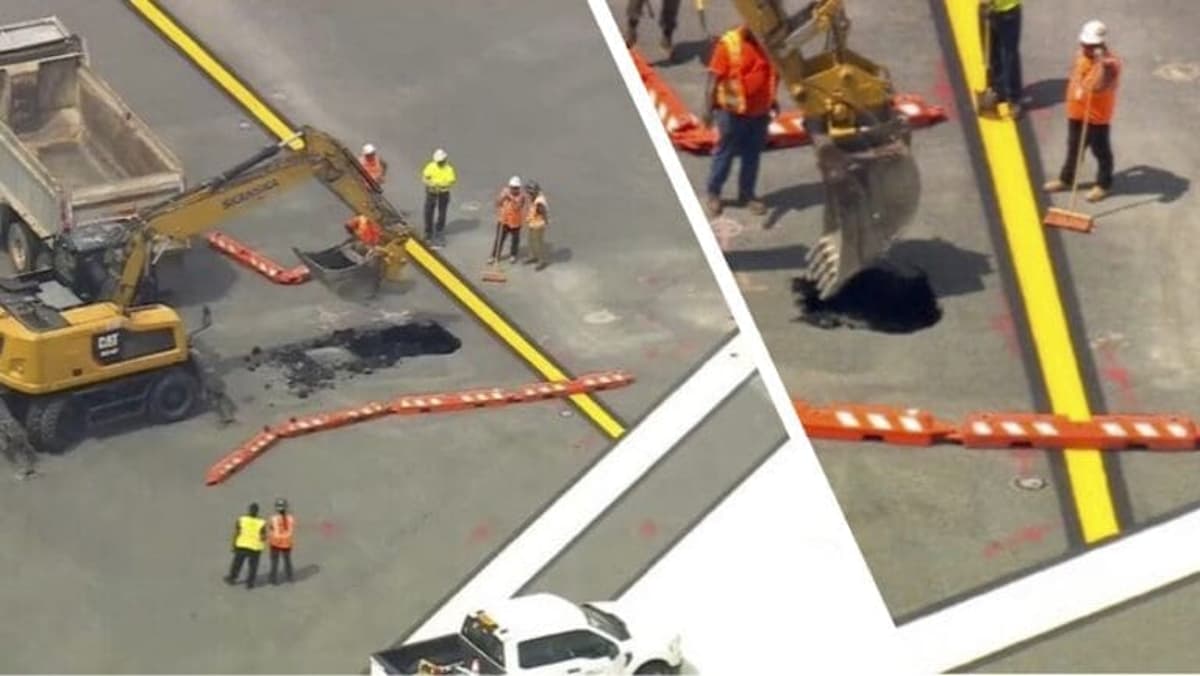
Sinkhole Shuts Down Runway at New York LaGuardia Airport
Key Takeaways
- •Runway 4/22 closed after sinkhole discovered during morning inspection.
- •Average departure delays exceeded 90 minutes; some reached three hours.
- •FAA warned of continued delays amid thunderstorms and reduced runway capacity.
- •Port Authority deployed emergency construction crews to assess and repair the sinkhole.
- •Single runway outage at LGA highlights vulnerability of congested hub airports.
Pulse Analysis
The sinkhole that appeared on LaGuardia’s Runway 4/22 on the morning of May 20, 2026 forced the Port Authority of New York and New Jersey to shut the strip within minutes of discovery. Emergency engineering crews were dispatched to stabilize the pavement while the Federal Aviation Administration issued an advisory about expected delays. With the runway out of service, the airport’s already tight departure schedule stretched, producing an average 90‑minute hold time and pushing some flights toward a three‑hour wait. The incident unfolded as a thunderstorm front moved in, compounding the operational strain.
The event spotlights the aging infrastructure that underpins many U.S. airports, especially those built on reclaimed land like LaGuardia. Sinkholes, while rare, are a known risk in the region’s limestone and sand deposits, prompting regulators to mandate daily airfield inspections. The rapid response demonstrated the value of those protocols, yet the prolonged outage reveals a vulnerability: a single runway loss can cripple capacity at a hub handling over 30 million passengers annually. Industry analysts are calling for accelerated runway redundancy projects and more predictive maintenance technologies to mitigate similar disruptions.
For airlines, the unplanned delay translates into higher crew costs, fuel burn from holding patterns, and potential compensation claims under EU‑261‑like regulations that affect U.S. carriers. Passengers face missed connections and cascading schedule changes across the Northeast corridor. The FAA may consider revising its contingency plans, possibly requiring additional buffer slots during peak periods or investing in rapid‑repair kits for pavement failures. As climate‑related weather events become more frequent, airports like LGA will need to balance capacity growth with resilient design to protect the broader national air‑traffic network.
Sinkhole Shuts Down Runway at New York LaGuardia Airport
Comments
Want to join the conversation?