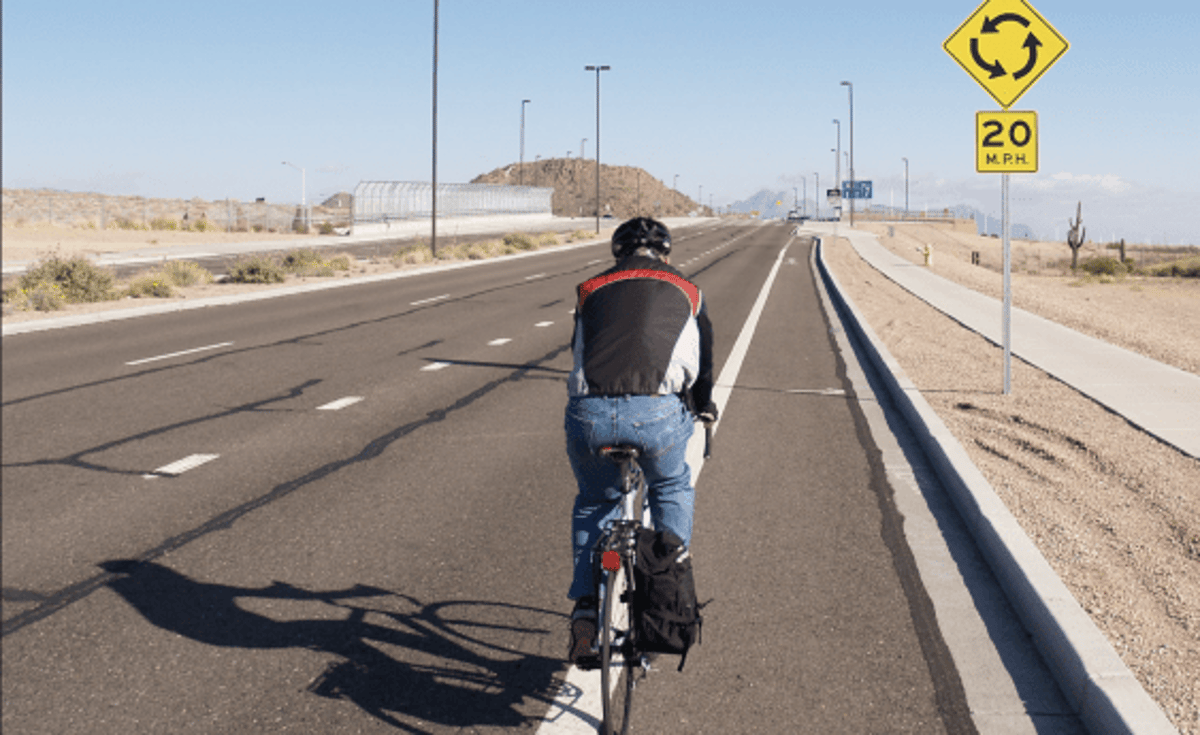
Study: Most Of America’s Paint-Only Bike Paths Are On Our Deadliest Roads
•February 23, 2026
0
Why It Matters
Paint‑only lanes dominate U.S. cycling networks yet expose riders to heightened danger, undermining public confidence and slowing broader adoption of active transportation.
Key Takeaways
- •77% of US bike lanes are paint-only.
- •61% of paint-only lanes are high‑stress corridors.
- •High‑stress lanes linked to more crashes than no lanes.
- •South and West have highest share of unsafe paint lanes.
- •AASHTO 2024 guidance pushes protected bike lanes on fast roads.
Pulse Analysis
The prevalence of paint‑only bike lanes reflects a legacy of low‑cost, low‑impact infrastructure that fails to address the safety needs of a growing cyclist population. While municipalities have installed these striped paths to meet federal funding criteria, the study shows that the majority sit on high‑speed, multi‑lane arterials where motorists are less likely to notice cyclists. This mismatch not only raises the objective risk of collisions but also creates a perception problem: riders see the most common lane type and assume it represents the norm for safe cycling infrastructure.
Safety data reinforce the design flaw. In Atlanta, researchers documented more crashes on painted lanes than on comparable streets without any bike markings, a pattern echoed in cities like Houston and Columbus where up to 87% of bike lane mileage is unprotected. The high‑stress classification, based on traffic volume and speed, correlates strongly with accident frequency, suggesting that simply adding a stripe does not substitute for physical separation. As a result, many potential cyclists opt out, limiting the health, equity, and congestion‑reduction benefits that robust micromobility networks can deliver.
Policy momentum is finally catching up. AASHTO’s 2024 update explicitly advises against placing conventional paint‑only lanes on high‑speed roads, recommending protected designs instead. Although the guidance is advisory and does not compel immediate retrofits, it provides a clear benchmark for state and local agencies. Cities that have already embraced protected lanes—such as New York City, Chicago, and Denver—demonstrate lower stress ratings and higher rider satisfaction. As funding mechanisms evolve to reward safer designs, the industry may see a gradual decline in the dominance of paint‑only lanes, paving the way for a more resilient and inclusive cycling ecosystem.
Study: Most Of America’s Paint-Only Bike Paths Are On Our Deadliest Roads
0
Comments
Want to join the conversation?
Loading comments...