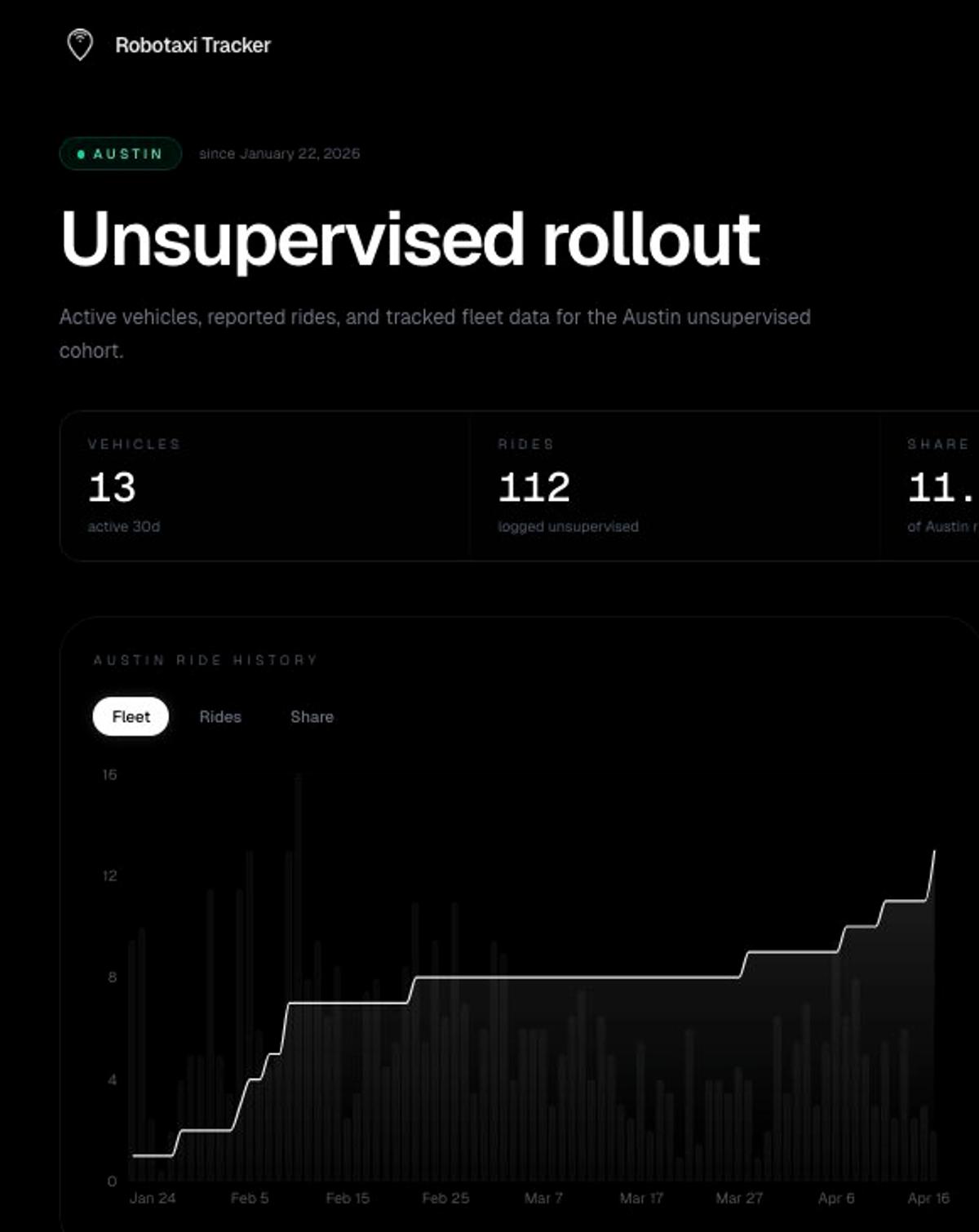
Tesla Continues Slow Increase of Unsupervised Robotaxi in Austin – Now 13 Unsupervised

Key Takeaways
- •Tesla's Austin fleet grew to 13 unsupervised robotaxis
- •Fleet may reach ~20 vehicles within a week
- •NHTSA logged zero accidents from February through mid‑March
- •Hundreds of Cybercabs prepared for Austin rollout by May
- •Unsupervised robotaxis test regulatory tolerance for autonomous taxis
Pulse Analysis
Tesla’s Austin rollout marks a pivotal moment for fully driverless transportation. By quietly adding three more Cybercab units to an existing fleet of ten, the company now fields 13 unsupervised robotaxis, a figure that could climb to 20 within days. This incremental growth underscores Tesla’s strategy of scaling autonomy through real‑world exposure rather than headline‑making launches, allowing its neural‑network‑based system to collect diverse data while maintaining a low public profile.
The safety record reported by the National Highway Traffic Safety Administration adds a layer of credibility to Tesla’s approach. NHTSA’s data shows zero accidents involving the Austin robotaxis from February through mid‑March, a notable achievement given the vehicles operate without a safety driver. This clean record may influence state and federal regulators, who have historically been cautious about granting full autonomy permissions. As policymakers observe tangible safety outcomes, the path to broader legislative acceptance for driverless fleets could accelerate.
Market implications are equally significant. Austin has become a proving ground where Tesla can demonstrate the viability of large‑scale unsupervised fleets, potentially pressuring competitors like Waymo and Cruise to expedite their own driverless deployments. With hundreds of Cybercabs earmarked for rollout by the end of May, the city could soon host one of the world’s most extensive autonomous taxi networks. Such density not only promises reduced congestion and lower emissions but also offers a live laboratory for refining pricing models, fleet management algorithms, and consumer acceptance strategies, setting a template for other U.S. metros.
Tesla Continues Slow Increase of Unsupervised Robotaxi in Austin – Now 13 Unsupervised
Comments
Want to join the conversation?