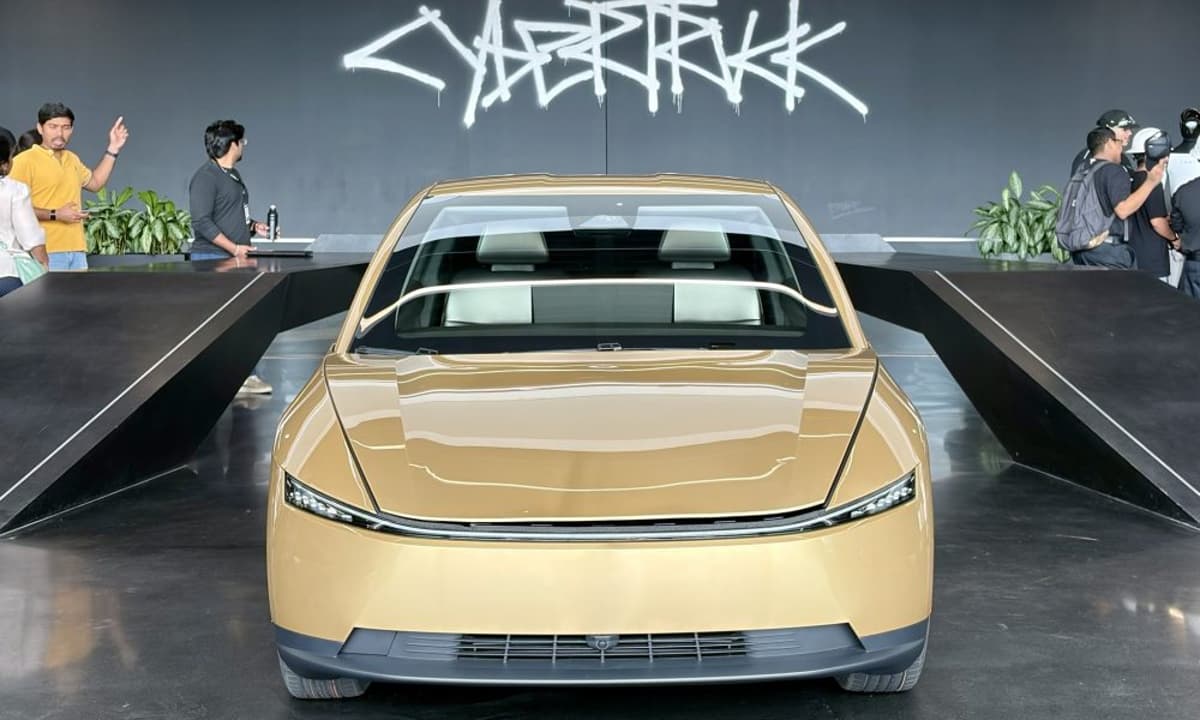
Tesla Cybercab Gets Crazy Change as Mass Production Begins
Key Takeaways
- •VIN Zero rolls out with champagne‑gold glossy finish
- •Glossy coat uses clear‑coat process, no traditional paint
- •Tesla targets hundreds of Cybercabs weekly from Giga Texas
- •Premium look supports upcoming driverless ride‑hailing service
Pulse Analysis
Tesla’s decision to launch Cybercab production with a high‑gloss champagne‑gold finish marks a notable shift from the matte prototypes that generated buzz at the 2024 “We, Robot” showcase. By employing a clear‑coat application rather than conventional painting, Tesla not only reduces production steps but also delivers a mirror‑like surface that conveys luxury and futurism. This visual upgrade aligns with the company’s broader strategy to present autonomous vehicles as premium services, helping to attract early adopters and investors who may have been skeptical of the robotaxi’s aesthetic appeal.
The rollout at Giga Texas signals Tesla’s intent to move from low‑volume pilot units to a true volume‑manufacturing model. After the first Cybercab left the line in February 2026, the company now aims to produce several hundred units weekly, a scale that could underpin a nationwide driverless ride‑hailing network. If Tesla can sustain this output while refining its Full Self‑Driving (FSD) software via over‑the‑air updates, the cost per mile could drop to pennies, reshaping urban mobility pricing and challenging traditional taxi and rideshare operators.
Industry observers see Tesla’s aggressive production cadence and premium finish as a test of market appetite for autonomous, on‑demand transport. Competitors such as Waymo and Cruise are still reliant on purpose‑built fleets and extensive testing, whereas Tesla leverages its existing vehicle platform and massive manufacturing footprint. Should the Cybercab achieve the promised reliability and cost advantages, it could accelerate the broader adoption of robotaxis, prompting regulators and cities to adapt infrastructure and policy frameworks to accommodate a new class of high‑volume, driverless vehicles.
Tesla Cybercab gets crazy change as mass production begins
Comments
Want to join the conversation?