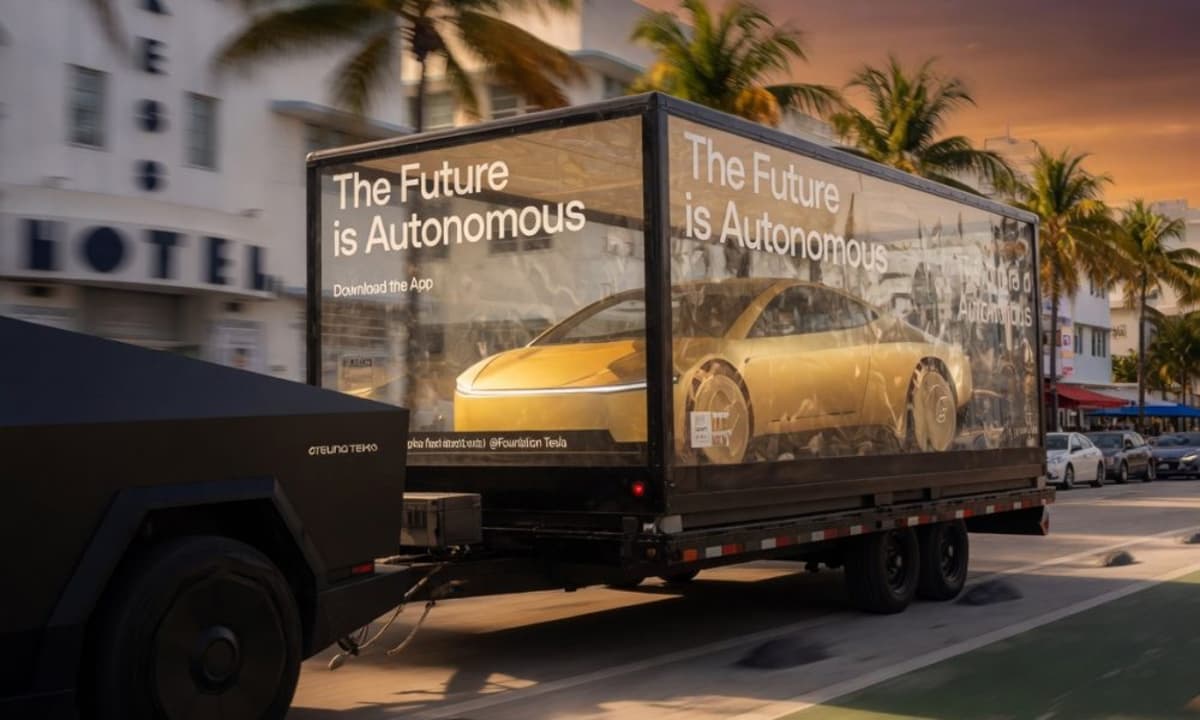
Tesla Cybercab Just Rolled Through Miami Inside a Glass Box
Key Takeaways
- •Cybercab rolled in Miami inside glass “Future is Autonomous” case.
- •Miami joins seven‑city robotaxi rollout planned for early 2026.
- •Tesla aims to produce up to 5 million Cybercabs annually.
- •Target price under $30,000; operating cost $0.20 per mile.
- •Optimus robot demos generate earned media without advertising spend.
Pulse Analysis
Tesla’s latest “Autonomy Pop‑Up” at Miami’s Lummus Park turned the beachfront into a live showroom for its upcoming robotaxi platform. From April 29 to May 3, a Cybertruck hauled the sleek Cybercab through a glass enclosure emblazoned with “Future is Autonomous,” drawing crowds attending the F1 Miami Grand Prix Fan Fest. The spectacle builds on a pattern of pop‑up events that Tesla has used since early 2026, from a December 2025 Art Basel showcase to a high‑visibility Optimus appearance at the Boston Marathon. By embedding the demo in a major sports festival, Tesla captures earned media at virtually no ad spend, reinforcing its narrative of autonomous mobility as mainstream.
The Miami demonstration is more than a publicity stunt; the city is on Tesla’s confirmed list of seven locations slated for robotaxi service rollout in the first half of 2026, alongside Dallas, Houston, Phoenix, Orlando, Tampa and Las Vegas. Musk has disclosed an ambitious production target of up to five million Cybercabs per year, with a cycle time of one vehicle every ten seconds. Priced under $30,000 and projected to cost just $0.20 per mile to operate, the Cybercab could undercut traditional ride‑hail pricing, accelerating adoption in dense urban corridors.
Scaling the fleet to ten million operational units over the next decade is a cornerstone of Elon Musk’s compensation package, linking personal incentives to the broader industry shift toward autonomous ride‑sharing. If Tesla meets its cost and volume goals, the economics could pressure incumbent taxi operators and emerging competitors such as Waymo and Cruise to lower fares or accelerate their own deployments. However, regulatory approval, safety validation and public acceptance remain hurdles. The Miami pop‑up therefore serves as both a market teaser and a real‑world testbed for the logistical, legal, and consumer‑experience challenges that will define the next phase of autonomous transportation.
Tesla Cybercab just rolled through Miami inside a glass box
Comments
Want to join the conversation?