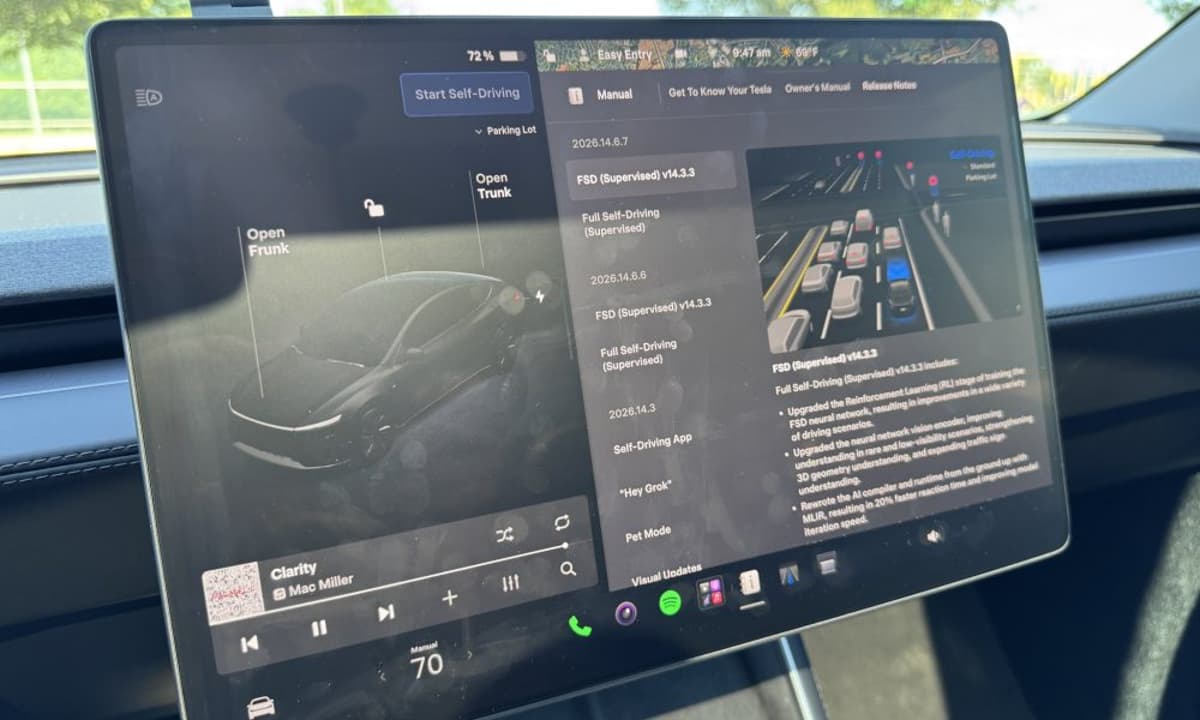
Tesla Full Self-Driving v14.3.3 Driver Monitoring: We Tested It
Key Takeaways
- •v14.3.3 adds eye‑gaze tracking and better low‑light performance.
- •Hurry mode triggers a nag after roughly 30 seconds of screen use.
- •Mad Max mode issues immediate warnings for music or navigation changes.
- •Standard mode still permits about 80 seconds of interaction without alerts.
Pulse Analysis
Tesla’s Full Self‑Driving (FSD) platform has long balanced cutting‑edge autonomy with the need for human oversight. The latest software iteration, version 14.3.3, upgrades the driver‑monitoring system (DMS) to capture eye‑gaze more reliably, even when drivers wear glasses or when lighting conditions shift. This technical refinement arrives amid growing regulatory pressure in the United States and Europe, where authorities demand demonstrable safeguards before granting broader autonomous approvals. By bolstering the DMS, Tesla aims to pre‑empt potential compliance hurdles while preserving the allure of its hands‑free promise.
Real‑world testing reveals that the DMS behaves differently across Tesla’s three Speed Profiles. In the conservative Standard mode, drivers enjoyed roughly 80 seconds of uninterrupted screen interaction before any alert, mirroring earlier versions. The intermediate Hurry profile cut that window to about 31 seconds, issuing a visual nag when the driver lingered on the center console. The aggressive Mad Max setting proved the strictest, delivering immediate warnings whenever music or navigation inputs were detected. These findings suggest Tesla is calibrating the DMS to the risk level implied by each profile, nudging users toward greater attentiveness when the vehicle travels at higher speeds.
The implications extend beyond Tesla’s own fleet. Competitors developing supervised‑driving suites—such as Waymo’s Driver‑Assist and GM’s Super Cruise—must now consider comparable DMS granularity to stay competitive and meet emerging safety standards. For consumers, the heightened monitoring may temper the novelty of “phone‑friendly” autonomous driving, but it also reinforces confidence that the vehicle will intervene before driver distraction becomes hazardous. As Elon Musk hints at future software that could safely accommodate limited phone use, the balance between convenience and safety will remain a pivotal narrative in the autonomous‑vehicle market.
Tesla Full Self-Driving v14.3.3 driver monitoring: We tested it
Comments
Want to join the conversation?