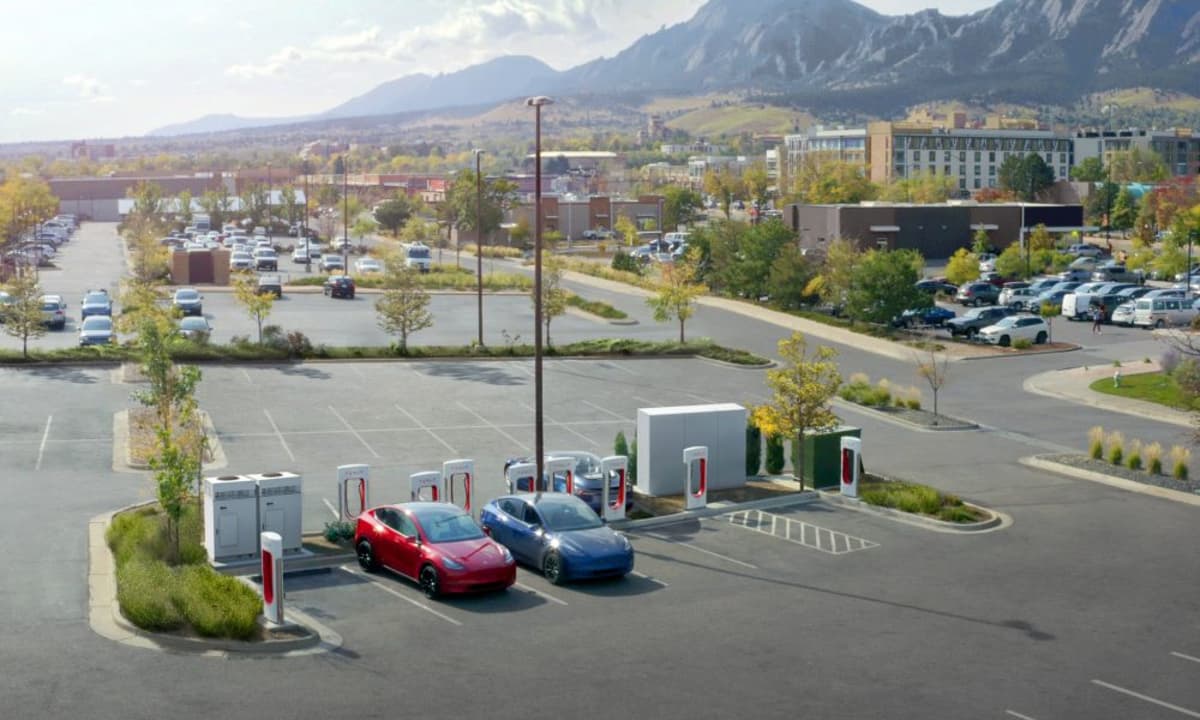
Tesla Launches Solution to End Supercharger Fights Once and for All
Key Takeaways
- •Tesla's virtual queue notifies drivers of exact wait times.
- •App prompts drivers to start charging only when their turn arrives.
- •Reduces disputes over arrival order at busy Supercharger sites.
- •Improves overall EV charging efficiency as network grows.
- •System depends on driver compliance; no automatic enforcement.
Pulse Analysis
As electric‑vehicle sales accelerate, charging infrastructure is becoming the new bottleneck for many owners. While Tesla’s Supercharger network remains one of the most extensive, popular corridors—especially in urban hubs—still see occasional queues that can stretch for several minutes. Traditional first‑come‑first‑served rules often break down when drivers arrive simultaneously, leading to misunderstandings and, in rare cases, confrontations. The virtual queue leverages the Tesla mobile app’s GPS capabilities to provide a transparent, data‑driven ordering system, turning a chaotic wait into a predictable process.
The virtual queue works by detecting when a driver approaches a fully occupied Supercharger. A pop‑up in the app offers the option to join a digital line, displaying the number of vehicles ahead and an estimated wait time. Once the driver’s turn arrives, the app sends a clear notification prompting them to plug in, effectively synchronizing vehicle arrivals with charger availability. This approach shifts responsibility to the driver to act only when signaled, reducing the temptation to jump the line and minimizing the need for on‑site enforcement.
For Tesla, the rollout signals a strategic blend of hardware expansion and software optimization. As the company continues to deploy V4 stations on the East Coast and beyond, the virtual queue can stretch the utility of existing chargers without immediate capital outlay for additional stalls. Industry observers note that such digital queue management could become a standard feature across competing networks, especially as public charging providers grapple with similar congestion challenges. However, success hinges on driver compliance; without widespread adherence, the system may only partially alleviate queue friction. Nonetheless, the initiative underscores how real‑time data and user‑centric design can enhance the EV ecosystem and accelerate mainstream adoption.
Tesla launches solution to end Supercharger fights once and for all
Comments
Want to join the conversation?