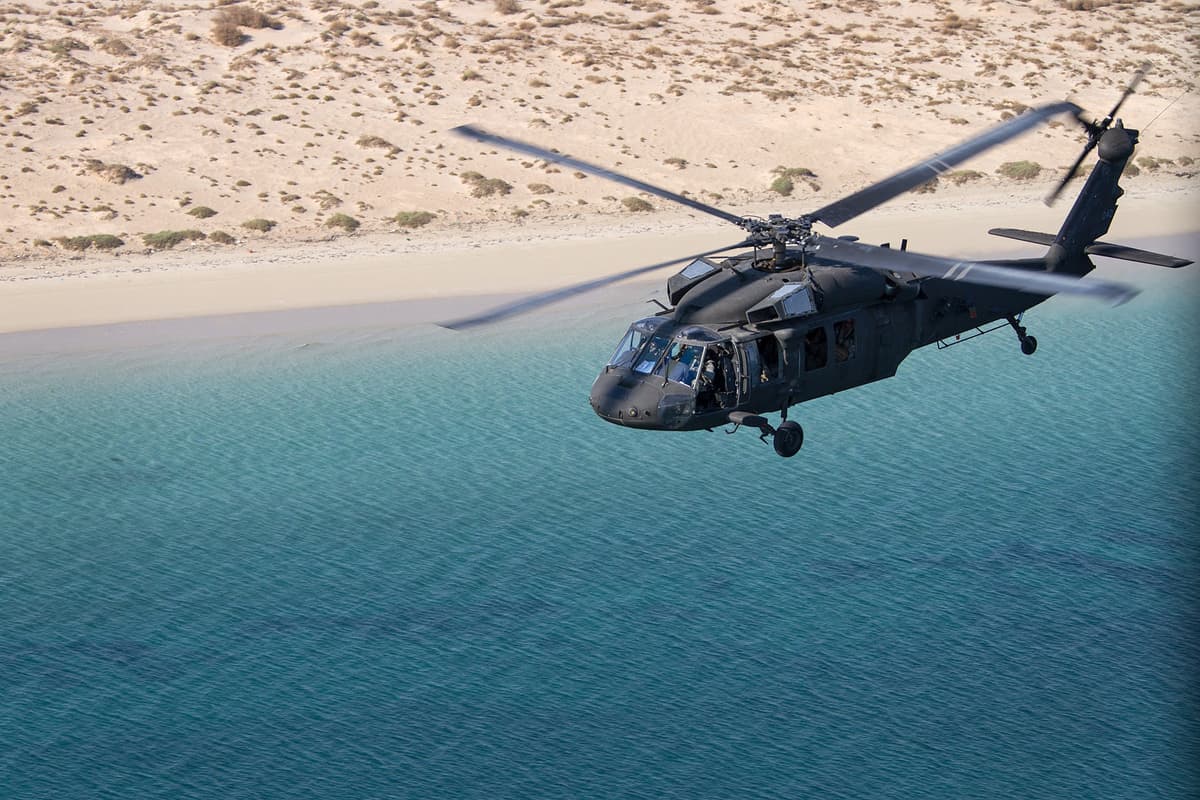
The Age of Drone Warfare Brings New Battlefield Roles for Helicopters
Key Takeaways
- •U.S. Air Force reserves training HH‑60W for counter‑drone missions.
- •Exercise follows Apache downed by Iranian Shahed‑136 drone.
- •Helicopters increasingly intercept Shahed drones in Middle East, Ukraine.
- •Training aims to close readiness gap versus Ukrainian counter‑drone tactics.
Pulse Analysis
The proliferation of inexpensive, loitering drones has reshaped modern battlefields, forcing militaries to rethink air‑defense concepts that once relied on fighter jets and ground‑based radars. Unmanned systems such as Iran’s Shahed‑136 can swarm, linger, and strike with minimal cost, overwhelming legacy interceptors. As a result, the Pentagon is exploring more flexible, low‑altitude platforms capable of rapid response and close‑in engagement. Helicopters, with their maneuverability and payload capacity, are emerging as a pragmatic solution to the growing counter‑drone requirement.
On June 22, reservists from the Air Force’s 301st Rescue Squadron will conduct a four‑day exercise off Cape Canaveral, using HH‑60W Jolly Green II helicopters to practice drone‑intercept tactics modeled after Ukrainian operations. The drill follows the June 8 loss of an AH‑64 Apache, reportedly downed by a Shahed‑136 over the Strait of Hormuz, underscoring the vulnerability of even heavily armored aircraft. Early Ukrainian experiences have shown that armed helicopters can jam, shoot down, or capture hostile drones, prompting the U.S. to adapt similar doctrines.
Successful integration of helicopters into counter‑drone missions could accelerate doctrinal revisions across CENTCOM and the broader services, influencing procurement decisions for sensor suites, directed‑energy weapons, and lightweight missiles. Training programs will need to address crew safety, rules of engagement, and coordination with existing air‑defense networks. If the exercises demonstrate viable tactics, the military may expand the role of platforms like the HH‑60W and future rotorcraft, offering a cost‑effective bridge until dedicated counter‑UAS systems become widely fielded. The shift signals a broader strategic acknowledgment that aerial dominance now includes controlling the unmanned sky.
The age of drone warfare brings new battlefield roles for helicopters
Comments
Want to join the conversation?