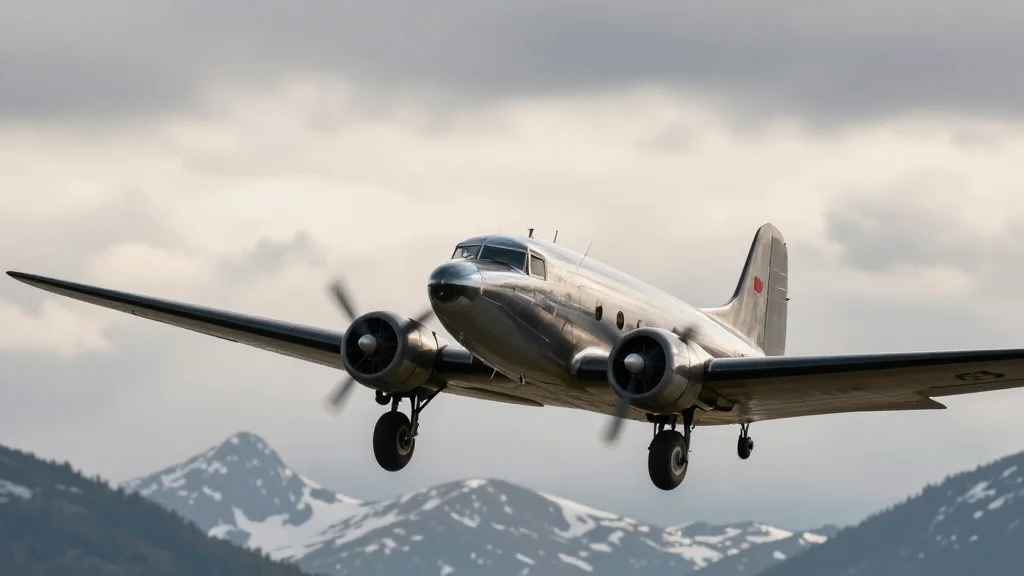
The C-47 Secret Airline that Flew only in Bad Weather to Evacuate Allied Airmen Interned in Neutral Sweden
Key Takeaways
- •Hoag’s C‑47s flew exclusively in bad weather to avoid German detection
- •Operation rescued 2,000 Norwegian refugees and the entire government‑in‑exile
- •Only one C‑47 was lost despite repeated Gestapo scrutiny
- •Flights crossed German‑held airspace without a fixed schedule
- •The mission proved covert air transport could sustain wartime personnel needs
Pulse Analysis
The C‑47 "Gooney Bird" earned a reputation as a versatile workhorse, but its most daring role came in the shadows of European airspace. In early 1944, Brigadier General Earl S. Hoag devised a clandestine airline that leveraged the aircraft’s rugged reliability and short‑field capability. By deliberately scheduling departures during storms, the pilots masked their routes from Luftwaffe radar and German intelligence, turning inclement weather into a strategic asset. This unconventional timing meant that German agents in Sweden could find no timetable to intercept, allowing the planes to slip over occupied territory and back to England.
Beyond the tactical cleverness, the operation had profound strategic implications. It rescued the entire Norwegian government‑in‑exile, along with roughly 2,000 soldiers who had fled German‑occupied Norway, restoring a critical political ally to the Allied fold. Moreover, the extraction of interned American airmen returned experienced crews to combat units just weeks before the Normandy invasion, directly augmenting the Allied air strength needed for Operation Overlord. The mission’s success, with only one aircraft lost, underscored how innovative logistics can preserve human capital and sustain morale under extreme constraints.
Today, the secret C‑47 airline serves as a case study in covert supply‑chain design. Modern military planners cite Hoag’s weather‑driven scheduling as an early example of using environmental variables to conceal movements, a principle echoed in contemporary cyber‑and electronic‑warfare concealment tactics. The story also highlights the enduring value of versatile platforms; the DC‑3’s adaptability continues to inspire new aircraft designs that balance durability with multi‑mission flexibility. For businesses, the lesson is clear: leveraging unexpected assets and timing can create competitive advantages even in highly regulated or hostile markets.
The C-47 secret airline that flew only in bad weather to evacuate Allied Airmen interned in neutral Sweden
Comments
Want to join the conversation?