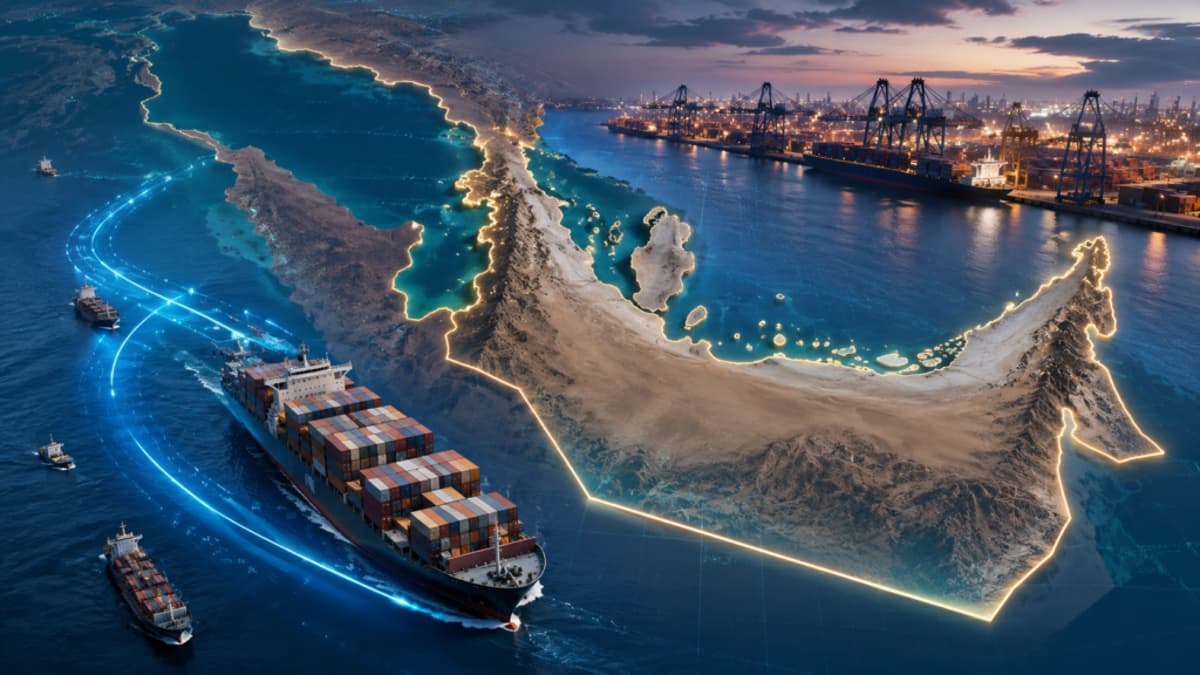
Two Ports Reshape Emirati Maritime Geopolitics
Key Takeaways
- •Khor Fakkan and Fujairah bypass Strait of Hormuz traffic
- •Ports provide UAE direct access to Indian Ocean
- •They enhance maritime security amid regional tensions
- •Serve as strategic assets in UAE’s pivot-state policy
Pulse Analysis
Khor Fakkan and Fujairah, two deep‑water terminals on the UAE’s east coast, were originally conceived as bypass routes to relieve congestion in the Gulf’s main shipping lanes. Situated outside the Strait of Hormuz, the ports give vessels a direct conduit to the Indian Ocean without transiting the narrow chokepoint. Their modern berths, extensive container yards and on‑shore logistics hubs were built with private‑public partnerships, positioning the Emirates to capture a larger share of the growing Asia‑Europe trade flow. In 2024, the combined capacity of the two terminals exceeded 2 million TEUs, rivaling regional peers.
When tensions flare in the Hormuz corridor, commercial ships risk delays, higher insurance premiums, and even rerouting around Africa’s Cape of Good Hope. The two Emirati ports act as a strategic safety valve, allowing oil tankers and container vessels to bypass the disputed waterway while remaining under UAE jurisdiction. This capability not only safeguards billions of dollars in daily trade but also reinforces the nation’s maritime sovereignty, giving it leverage in diplomatic negotiations and deterring potential blockades. During the 2023 Hormuz standoff, cargo volumes rerouted through Fujairah grew by 15%, underscoring the ports’ resilience.
The operational importance of Khor Fakkan and Fujairah dovetails with the UAE’s broader ‘pivot‑state’ doctrine, which seeks to balance relations between major powers while projecting independent strategic depth. By controlling alternative maritime corridors, Abu Dhabi can offer reliable logistics to partners in Europe, Asia and Africa, enhancing its role as a regional hub. Analysts expect further investment in ancillary services—such as ship‑repair yards and digital customs platforms—to amplify the ports’ value, cementing the Emirates’ position in the evolving geopolitics of global shipping. The UAE’s investment plan earmarks $1.5 billion (≈$1.6 billion) for further expansion by 2030, signaling long‑term commitment.
Two ports reshape Emirati maritime geopolitics
Comments
Want to join the conversation?