(Unedited) Podcast Transcript 579: Greensboro’s Downtown Greenway
Key Takeaways
- •Four‑mile downtown greenway opens, completing 25‑year project
- •Public‑private partnership leveraged foundation funds and city support
- •Trail links eight neighborhoods and connects to regional greenway network
- •Integrated public art celebrates local history and draws visitors
Pulse Analysis
Mid‑size cities across the United States are turning to greenways as a catalyst for economic renewal, and Greensboro’s Downtown Greenway exemplifies that trend. Once a manufacturing hub anchored by textiles and tobacco, Greensboro has pivoted toward aerospace and knowledge‑based industries. City leaders recognized that attracting a skilled workforce required more than jobs—it demanded livable, walkable neighborhoods. By commissioning a master plan in 2001 and securing philanthropic seed money, the city set the stage for a multi‑decade effort to stitch together public space, mobility, and cultural identity.
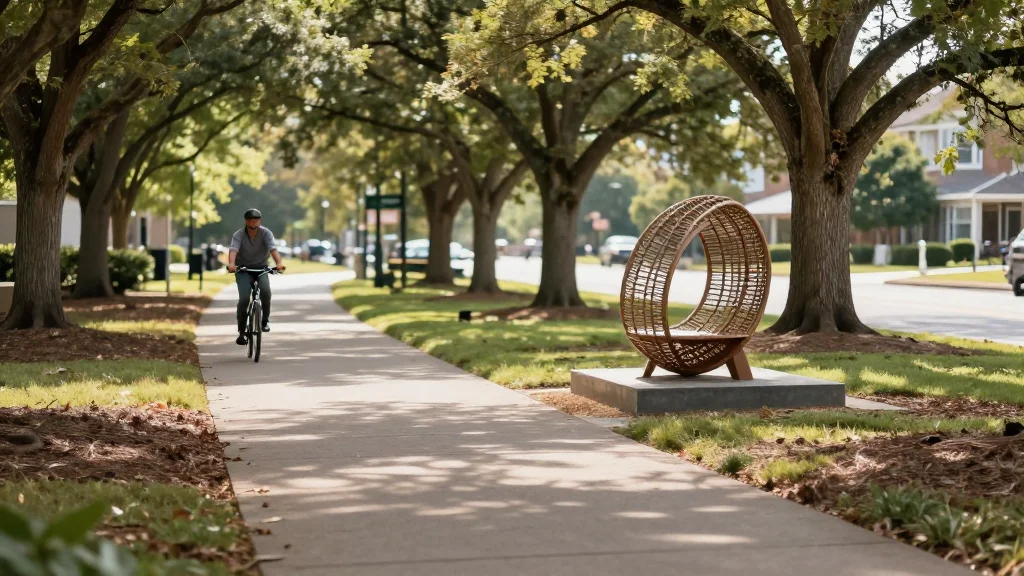
The greenway itself is a 4‑mile, 12‑foot‑wide paved corridor that threads through eight distinct neighborhoods, providing a safe route for cyclists, pedestrians, and joggers. Its design incorporates amenity zones, benches, bike racks, and striking public‑art installations that narrate Greensboro’s textile legacy and civil‑rights history. Crucially, the trail functions as a hub, connecting the Atlantic‑Yadkin Greenway, the state‑spanning Mountains‑to‑Sea Trail, and ultimately the 3,000‑mile East Coast Greenway. This connectivity promises to boost bicycle tourism, encourage longer-distance recreation, and integrate Greensboro into a national network of active‑transport corridors.
Beyond recreation, the greenway is already reshaping downtown’s economic landscape. Private developers have begun repurposing former surface‑parking lots adjacent to the trail, spurring mixed‑use projects that blend housing, retail, and office space. Property values along the corridor have risen, and local businesses report increased foot traffic. As the city assumes full maintenance responsibility, the greenway offers a replicable model for other municipalities seeking to leverage public art, community engagement, and strategic partnerships to revitalize urban cores while promoting health and sustainability.
(Unedited) Podcast Transcript 579: Greensboro’s Downtown Greenway
Comments
Want to join the conversation?