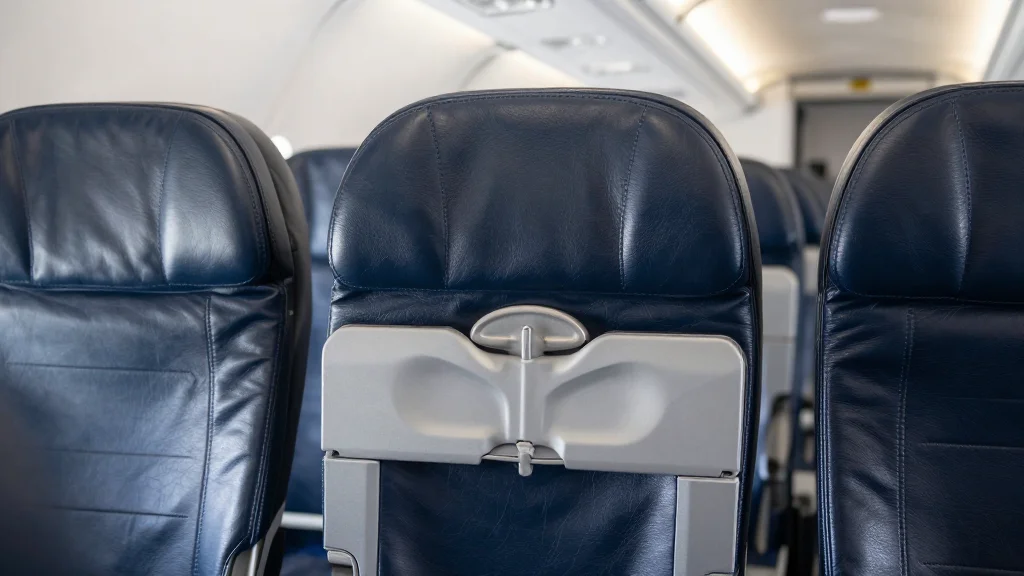
United Airlines Is Reportedly Working On a New Economy Product With a Blocked Middle Seat to Reduce Flight Attendant Requirements
Key Takeaways
- •United plans 50 Coastliner A321neos with 161 seats each
- •New economy seat blocks middle seat using fixed tray table
- •Design reduces required flight attendants from four to three
- •Could lower labor costs and increase revenue per seat
- •Mirrors British Airways Euro Business concept for short‑haul flights
Pulse Analysis
United Airlines is preparing to launch a sub‑fleet of 50 Airbus A321neo “Coastliner” aircraft, slated for delivery later this year. Each plane will carry 161 seats—20 lie‑flat Polaris Business, 12 Premium Plus, and 129 economy—significantly fewer than the 200‑seat layout on United’s standard A321neo. The U.S. Federal Aviation Administration mandates two flight attendants for the first 100 passengers and an additional attendant for each subsequent block of 50 seats, meaning a 161‑seat aircraft normally requires four crew members. United’s proposed economy product, which permanently blocks the middle seat with a fixed tray table, would shrink the effective passenger count enough to qualify for only three flight attendants.
The blocked‑middle‑seat concept offers United a direct way to trim labor expenses without sacrificing aircraft utilization. By reducing the required crew complement, the airline can lower payroll, training, and scheduling costs on a fleet that will serve high‑yield transcontinental routes such as San Francisco‑Los Angeles and Newark‑San Francisco. At the same time, the “perma‑blocked” seat can be marketed as a premium‑economy option, allowing United to charge a modest surcharge for the added space while still fitting 129 economy passengers. The approach mirrors British Airways’ Euro Business layout, where a tray table conceals the middle seat in short‑haul business cabins.
If United proceeds, the strategy could prompt other U.S. carriers to rethink seat‑count‑driven crew requirements, especially as airlines grapple with rising labor costs and competitive pressure to offer more spacious cabins. European regulators, which set a flat minimum of five attendants for A321s regardless of seat count, would limit the tactic overseas, highlighting divergent safety standards. Passengers may view the blocked seat as a welcome upgrade or as a gimmick, influencing brand perception. Ultimately, United’s experiment may reshape how airlines balance regulatory compliance, cost efficiency, and cabin comfort in the post‑pandemic market.
United Airlines is Reportedly Working On a New Economy Product With a Blocked Middle Seat to Reduce Flight Attendant Requirements
Comments
Want to join the conversation?