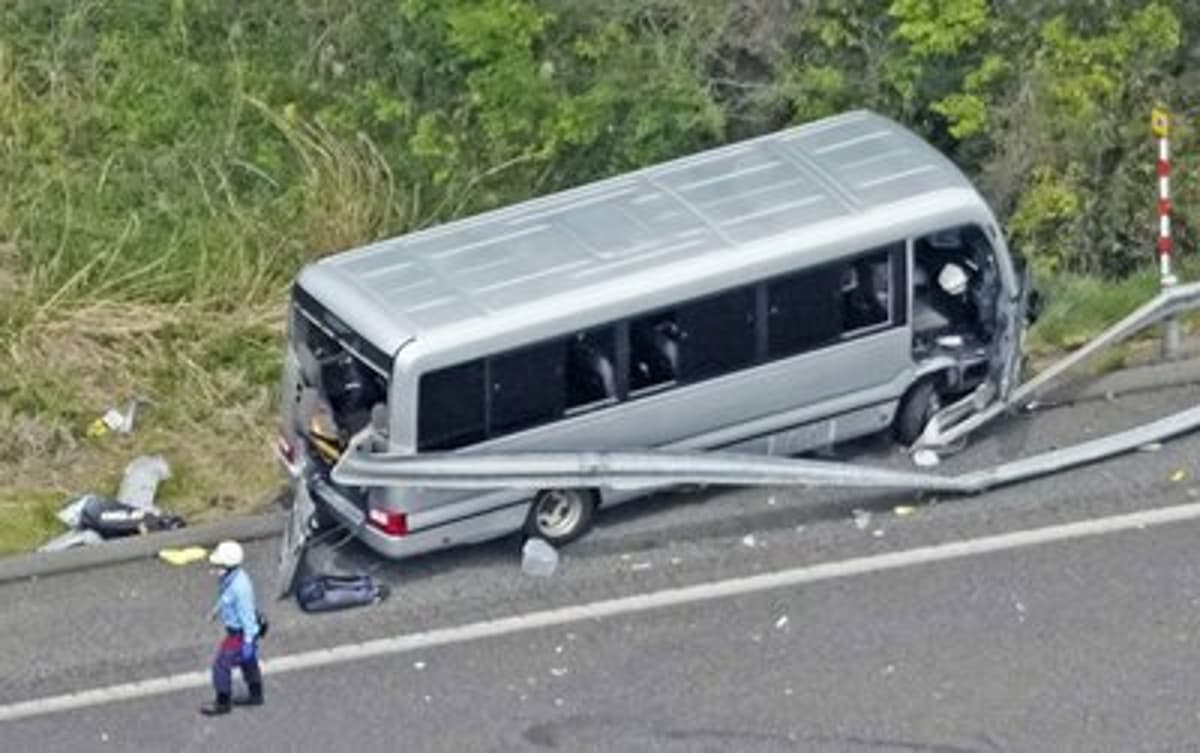
1 Killed in Crash in Fukushima Involving Bus Carrying High School Students
Why It Matters
The tragedy highlights safety concerns around school transportation and aging drivers, prompting scrutiny of bus operator practices in Japan.
Key Takeaways
- •Bus carried 20 tennis team students from Hokuetsu High School
- •Crash killed 17‑year‑old Hiroto Inagaki, injured five students
- •Driver, 68, suffered minor injuries; cause remains unknown
- •26 people, including car occupants, hospitalized after guardrail impact
Pulse Analysis
The fatal crash on the Banetsu Expressway underscores a persistent challenge in Japan: ensuring the safety of school‑age passengers on long‑distance bus trips. With an aging driver population— the 68‑year‑old operator in this case— and a reliance on privately rented coaches, the risk profile differs from urban commuter services that are subject to stricter oversight. Recent data from the Ministry of Land, Infrastructure, Transport and Tourism shows a modest rise in school‑bus incidents over the past five years, prompting calls for more rigorous driver‑age limits and mandatory safety audits for charter operators.
Families and local authorities in Niigata and Fukushima are now confronting the immediate fallout. The loss of Hiroto Inagaki, a promising tennis player, has galvanized parents to demand transparent investigations and compensation for the injured. Legal experts note that Japanese law holds both the bus company and the hiring school liable for negligence, especially if the driver’s health or training records are inadequate. Insurance premiums for charter services are expected to climb, and some municipalities are already reviewing contracts with private operators to include stricter safety clauses.
Beyond the tragic headline, the incident may accelerate adoption of advanced safety technologies in student transport. Telematics systems that monitor speed, lane departure, and driver fatigue are gaining traction worldwide, and several Japanese firms are piloting real‑time alert platforms for school buses. Policymakers are also debating mandatory installation of collision‑avoidance sensors on all vehicles carrying minors. If enacted, such measures could reduce the likelihood of guardrail impacts and protect vulnerable passengers, turning a painful loss into a catalyst for systemic improvement in school‑travel safety.
1 killed in crash in Fukushima involving bus carrying high school students
Comments
Want to join the conversation?
Loading comments...