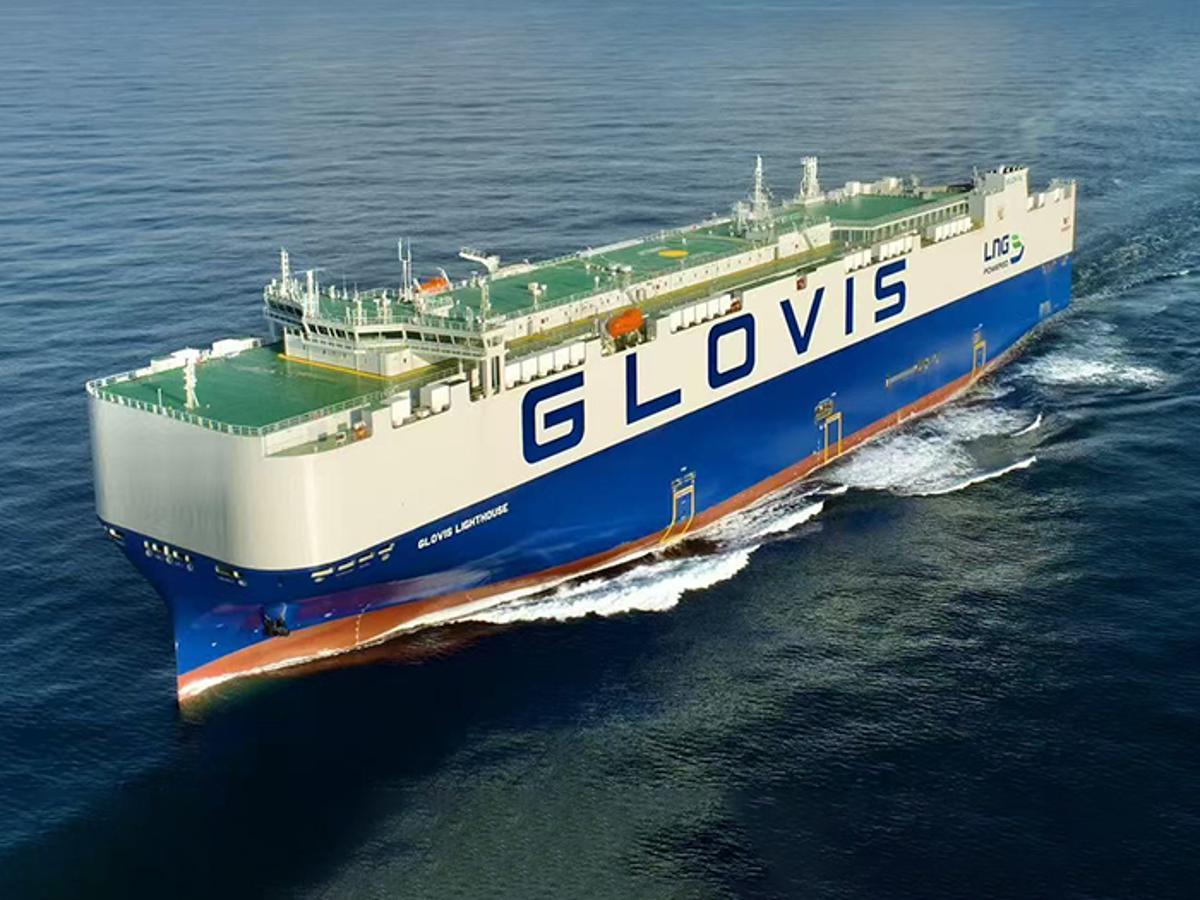
10,000 CEU PCTC Glovis Lighthouse Starts Maiden Voyage
Companies Mentioned
Why It Matters
The launch proves ultra‑large, low‑emission car carriers can be built at scale, giving shippers greener capacity and supporting the automotive logistics industry's decarbonization goals.
Key Takeaways
- •10,800 CEU capacity makes it largest PCTC class globally
- •Dual‑fuel LNG cuts carbon emissions about 24 % versus diesel
- •Liftable decks and hoistable ramps boost cargo flexibility and volume
- •Vessel ready for methanol or ammonia, enabling future fuel transitions
Pulse Analysis
The pure car‑and‑truck carrier (PCTC) segment has been racing to accommodate the surge in global vehicle production while meeting tightening emissions regulations. Traditional carriers, typically limited to 9,000‑10,000 CEU, face constraints in both volume and fuel efficiency. By pushing the capacity envelope to 10,800 CEU, the Glovis Lighthouse not only expands the amount of automotive cargo per voyage but also reduces the number of trips required, directly lowering overall carbon footprints and operational costs for shippers.
Technically, the vessel’s dual‑fuel LNG system delivers a 24 % reduction in CO₂ emissions relative to diesel‑powered peers, a gain amplified by advanced engine designs, a shaft generator, and optimized hull form. The inclusion of four liftable decks and hoistable ramp systems grants operators the ability to adjust deck heights on‑the‑fly, maximizing space utilization for varying vehicle mixes. Moreover, the ship’s readiness for methanol and ammonia fuels signals a forward‑looking strategy, allowing a seamless transition as alternative fuel infrastructure matures, thereby future‑proofing the asset against evolving environmental standards.
For Hyundai Glovis and Seaspan, the Glovis Lighthouse serves as a tangible proof point that large‑scale, environmentally‑advanced vessels can be delivered on schedule and integrated into existing logistics networks. The vessel’s capabilities are likely to spur competitive pressure across the PCTC market, encouraging rivals to adopt similar size and fuel‑flexibility features. As automotive manufacturers push for greener supply chains, carriers that combine massive capacity with low‑emission propulsion will become essential partners, reshaping the economics of global vehicle distribution.
10,000 CEU PCTC Glovis Lighthouse starts maiden voyage
Comments
Want to join the conversation?
Loading comments...