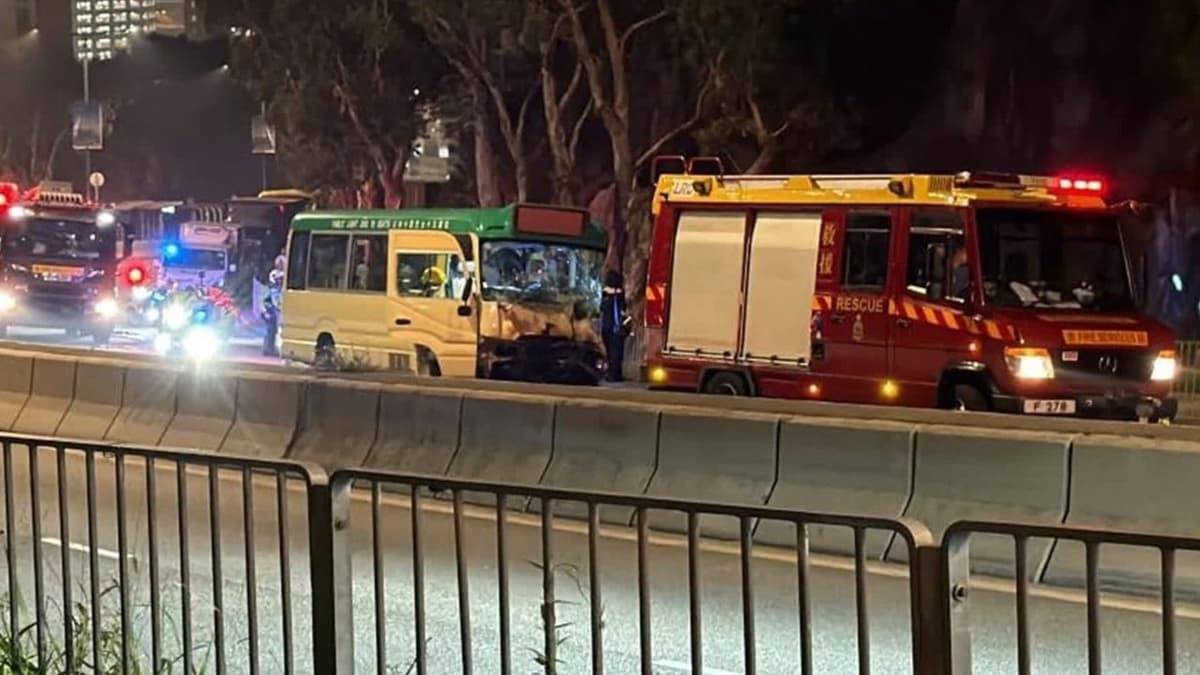
14 Hurt After Minibus Slams Into Back of Goods Vehicle in Hong Kong
Why It Matters
The incident highlights ongoing road safety challenges for Hong Kong’s densely populated transport network, especially involving minibuses that serve thousands of commuters daily. It may prompt tighter enforcement of vehicle safety standards and driver training for mixed‑traffic corridors.
Key Takeaways
- •14 passengers injured after minibus hits heavy goods vehicle in Tsing Yi
- •Collision occurred near Ching Chung House at Cheung Ching Estate
- •Two minor‑injury victims left the scene after treatment
- •Police investigating cause of the minibus‑truck crash
- •Incident underscores safety risks in Hong Kong’s mixed traffic
Pulse Analysis
Hong Kong’s public transport relies heavily on minibuses, which ferry millions of passengers across tight urban corridors each year. When a minibus collides with a heavy goods vehicle, the disparity in size and braking capability can dramatically increase injury severity, as seen in the recent Tsing Yi crash that left fourteen people hurt. The incident draws attention to the need for rigorous vehicle maintenance checks and real‑time monitoring of driver fatigue, factors that have been linked to similar accidents in the city’s congested road network.
The crash also raises questions about traffic management on routes where passenger minibuses share lanes with commercial trucks. Hong Kong’s Transport Department has been piloting dedicated bus lanes and advanced signal‑priority systems to reduce conflict points, yet mixed‑traffic sections remain vulnerable. Enhancing lane segregation and imposing stricter speed limits for heavy goods vehicles during peak hours could mitigate the risk of high‑impact collisions, protecting both commuters and logistics operators.
Beyond immediate safety concerns, the event may influence regulatory scrutiny and public policy. Authorities could tighten licensing requirements for minibus drivers, introduce mandatory defensive‑driving courses, and increase penalties for violations that endanger passengers. For businesses that depend on minibus fleets, investing in telematics and driver‑behavior analytics becomes a strategic priority to lower accident exposure and maintain service reliability in a market where consumer confidence hinges on safety assurances.
14 hurt after minibus slams into back of goods vehicle in Hong Kong
Comments
Want to join the conversation?
Loading comments...