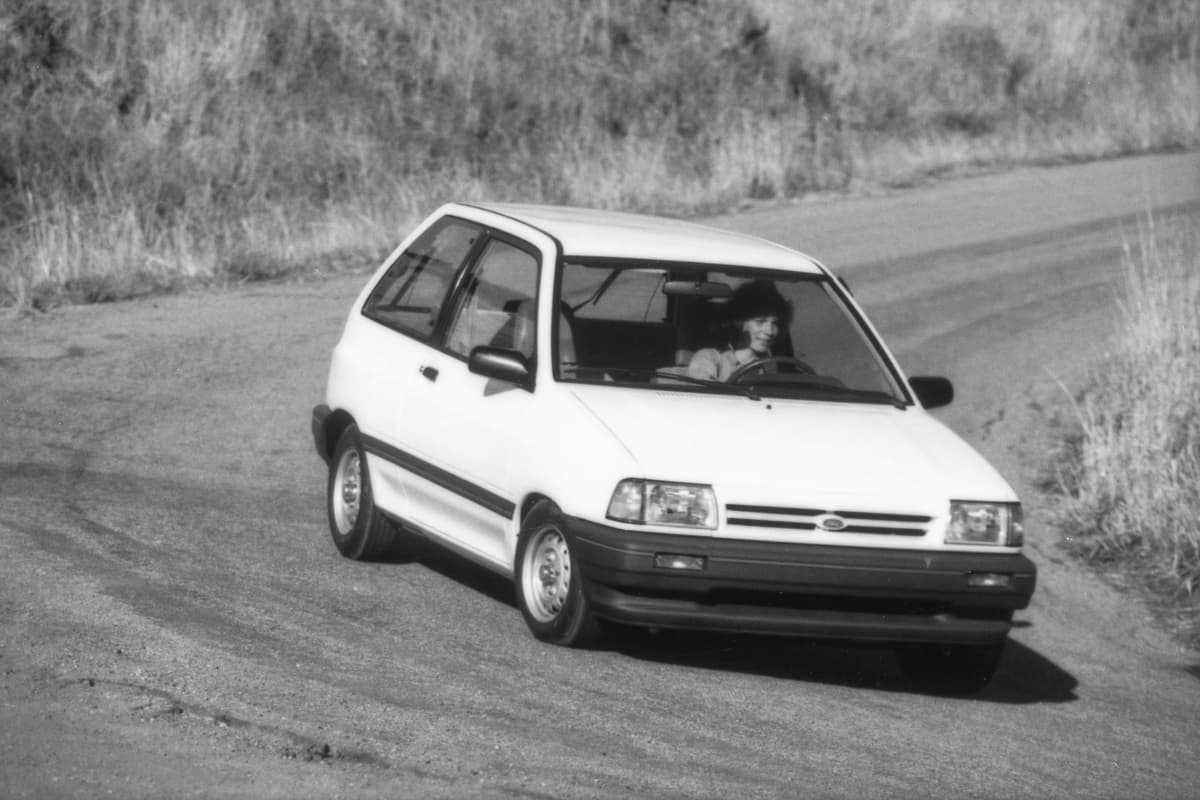
1987 Ford Festiva LX: An Econobox with an Interesting Lineage
Companies Mentioned
Why It Matters
The Festiva signals Ford’s strategic push into the entry‑level segment, leveraging Asian partnerships to deliver a feature‑rich, higher‑priced econobox that targets affluent first‑time car owners.
Key Takeaways
- •Ford's 1987 Festiva LX built by Kia in South Korea.
- •Mazda designed the 1.3‑liter, 58‑hp engine for the Festiva.
- •LX price $6,900, higher than most sub‑compact rivals.
- •0‑60 mph in 13.2 seconds; 0.69 g skidpad grip.
- •Features include air conditioning, power mirrors, and a 5‑speed manual.
Pulse Analysis
In the mid‑1980s, U.S. consumers began gravitating back toward fuel‑efficient sub‑compacts after a decade of muscle‑car dominance. Ford responded by tapping its minority stake in Kia and its engineering alliance with Mazda to create the Festiva, a vehicle that blends Korean manufacturing cost advantages with Japanese design expertise. This cross‑border collaboration allowed Ford to keep the base price near $5,800 while offering a level of refinement—such as a fully independent front suspension and a well‑tuned five‑speed gearbox—rare in the $6,000‑plus segment.
The Festiva LX differentiates itself through a surprisingly generous equipment list: air conditioning, power‑adjustable mirrors, an electronic stereo, and a rear defroster are standard, positioning the car as a premium offering among its peers. Its 1,324 cc SOHC engine delivers 58 hp, enough to propel the lightweight hatchback to 60 mph in just over 13 seconds, though its tall fifth gear hampers acceleration at higher speeds. Compared with rivals like the Honda Civic and Toyota Tercel, the Festiva is heavier and slower, but its interior quality, ergonomic layout, and distinctive styling—borrowed from Mazda’s European‑inspired design language—provide a compelling value proposition for style‑conscious buyers.
Ford’s broader strategy hinges on capturing young professionals who value features and brand cachet over raw performance. By pricing the LX at $6,900—above many competitors—but delivering a vehicle that feels more upscale than its size suggests, Ford hopes to lock in lifelong customers early in their purchasing journey. If the market embraces this blend of Asian efficiency and Western comfort, the Festiva could become a cornerstone of Ford’s sub‑compact lineup, influencing future collaborations and reinforcing the importance of global partnerships in automotive cost management.
1987 Ford Festiva LX: An Econobox with an Interesting Lineage
Comments
Want to join the conversation?
Loading comments...