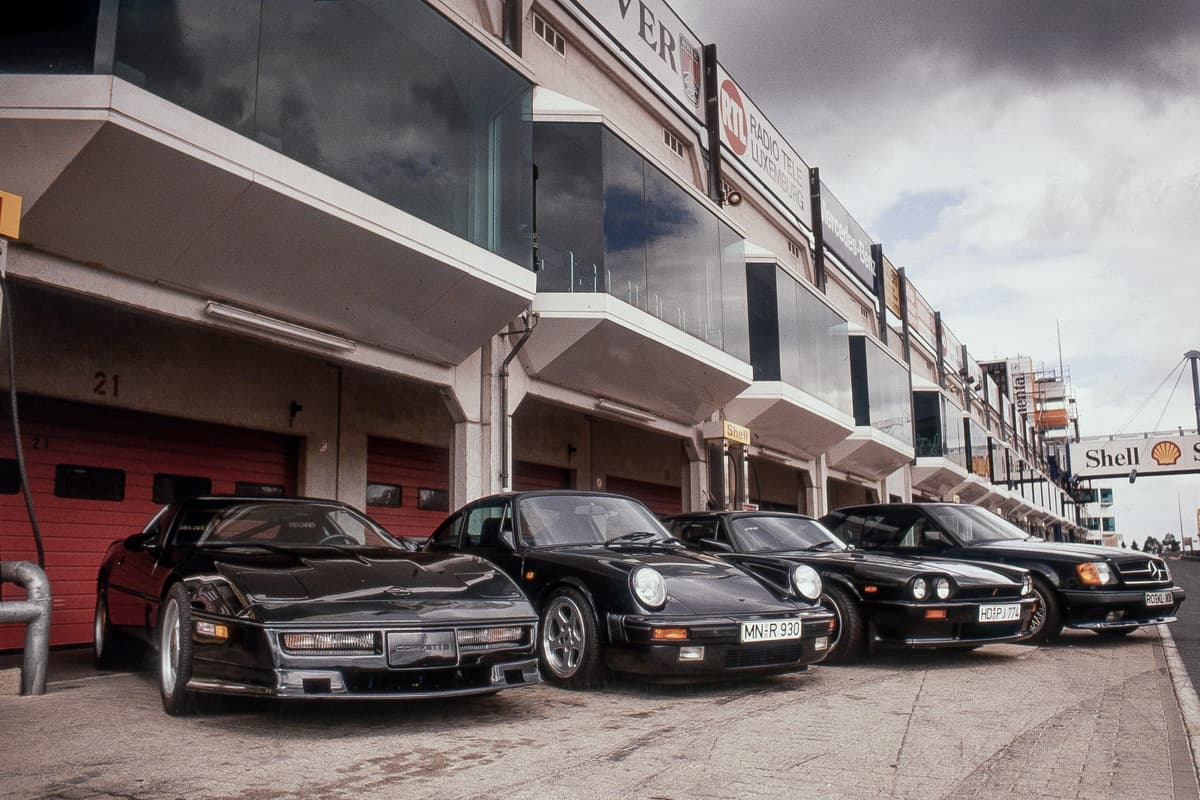
1988 Tuner Car Comparison Test: Corvette, Porsche, Jaguar, Mercedes Unleashed in Germany
Companies Mentioned
Why It Matters
The test shows how boutique tuners in the late‑1980s pushed factory platforms to extreme performance, a legacy that still shapes today’s high‑performance aftermarket. It also underscores the safety risks of pushing street‑legal cars to near‑track speeds without proper tire selection.
Key Takeaways
- •Callaway Corvette topped group at 193 mph, fastest overall
- •Ruf Porsche posted quickest 0‑60 at 4.3 seconds
- •Lotec Mercedes, despite turbo, was slowest with 5.0‑second 0‑60
- •Jaguar Lister delivered 475 hp, 490 lb‑ft, balanced performance
- •Tire failure at 195 mph highlighted importance of proper high‑speed tires
Pulse Analysis
The 1988 tuner showdown captured a pivotal moment in automotive history when small‑scale specialists began redefining what a production chassis could achieve. Ruf’s Porsche 911 Turbo, with its hand‑built turbo system and lightweight chassis, demonstrated that a well‑engineered aftermarket kit could rival factory supercars in acceleration and handling. Meanwhile, Callaway’s Corvette, built for the European market, pushed the envelope of American V8 performance, foreshadowing today’s twin‑turbo Corvette ZR1 and the broader trend of trans‑Atlantic power‑train collaborations.
European testing grounds like Germany’s Autobahn and the Nürburgring offered a harsh, real‑world laboratory that American roads could not match. The stark differences in turbo lag, suspension tuning, and tire choices revealed how each tuner prioritized either outright speed or drivability. The Jaguar’s naturally aspirated V‑12 delivered instant throttle response, a trait prized by modern performance purists, while the turbocharged Lotec Mercedes suffered from the era’s limited boost control technology, resulting in the slowest 0‑60 time despite its 340 hp output.
Beyond raw numbers, the incident of a tire blowing off the Callaway Corvette at 195 mph serves as a cautionary tale still relevant to today’s high‑performance enthusiasts. It highlights the critical role of tire engineering in safely translating horsepower into speed, a lesson that has driven modern tire manufacturers to develop dedicated high‑speed compounds for supercars. The 1988 comparison not only chronicled a unique set of machines but also laid groundwork for the safety standards and performance expectations that define the contemporary exotic‑car market.
1988 Tuner Car Comparison Test: Corvette, Porsche, Jaguar, Mercedes Unleashed in Germany
Comments
Want to join the conversation?
Loading comments...