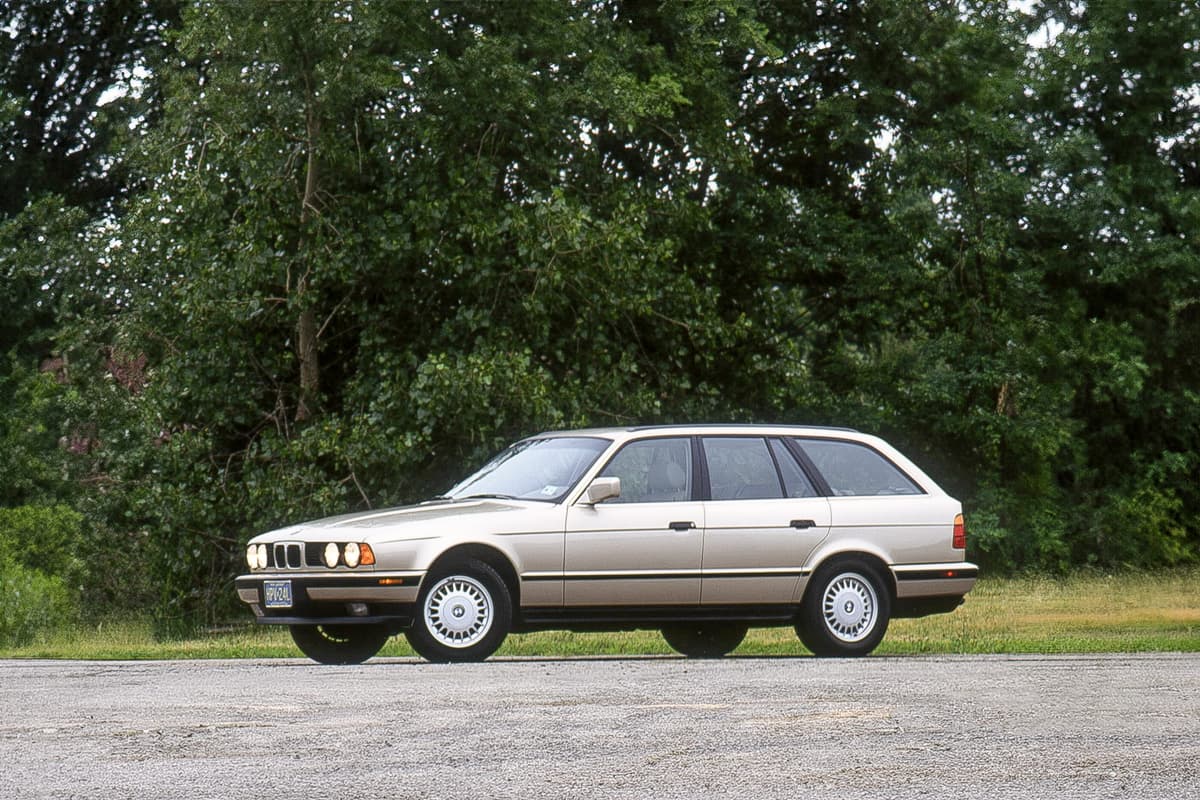
1993 BMW 525i Touring Tested: BMW's First Wagon in America
Companies Mentioned
Why It Matters
BMW’s entry into the U.S. luxury wagon segment signals a strategic push beyond sedans, testing demand for premium utility vehicles. Its pricing and performance set a benchmark that will influence how other premium brands position their wagons in North America.
Key Takeaways
- •Base price $39,873, tested at $41,919, high for wagon segment.
- •2.5‑L inline‑six produces 189 hp, 0‑60 in 10 seconds.
- •Four‑speed automatic feels mismatched, hurting acceleration and fuel economy.
- •Cargo features include tailgate window, spare under floor, dog nets.
- •Handling sharp but rear‑heavy; 0.78 g skidpad and 178‑ft braking.
Pulse Analysis
BMW’s 525i Touring marks the German automaker’s first foray into the American luxury wagon market, a segment traditionally dominated by European stalwarts such as Mercedes‑Benz and Volvo. Introduced at a base price of $39,873—rising to $41,919 in Car and Driver’s test—the model targets affluent buyers who value both performance and cargo versatility. By adapting its midsize 5‑Series platform, BMW offers a larger, more upscale alternative to the compact wagons that have long populated European roads, positioning the Touring as a premium utility vehicle for U.S. consumers.
Under the hood, the 2.5‑liter DOHC inline‑six produces 189 horsepower, a respectable output for a six‑cylinder of its era but modest when paired with a four‑speed automatic transmission. The drivetrain combination results in a ten‑second 0‑60 sprint, noticeably slower than the sportier 325i sedan. Nevertheless, the wagon’s independent suspension and rear‑wheel‑drive layout deliver engaging handling, albeit with a rear‑heavy bias that can induce tail swing in aggressive cornering. Fuel economy settles at 19 mpg, aligning with expectations for a vehicle of its weight and power, while braking performance—178 feet from 70 mph—remains competitive.
The 525i Touring’s practical touches, including a flip‑up tailgate window, under‑floor spare tire, and built‑in dog‑net seatbacks, underscore BMW’s intent to blend luxury with everyday utility. As the U.S. market shows growing appetite for versatile, high‑end crossovers, BMW’s wagon could serve as a testbed for future designs, influencing how the brand balances performance, price, and practicality. Competitors will watch closely, as BMW’s pricing and feature set may reshape expectations for premium wagons in North America.
1993 BMW 525i Touring Tested: BMW's First Wagon in America
Comments
Want to join the conversation?
Loading comments...