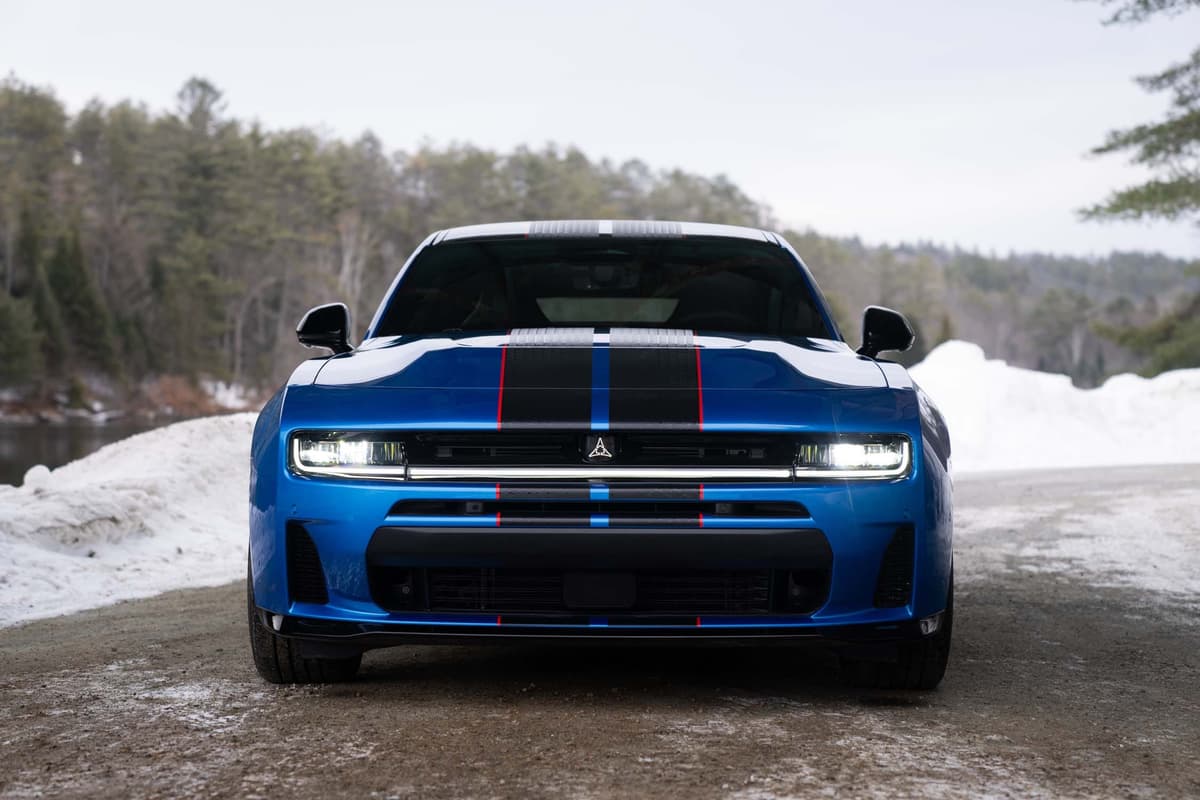
2026 Dodge Charger R/T Driven: The Lesser of Two Sixes
•March 9, 2026
0
Companies Mentioned
Why It Matters
Dodge’s shift to a turbocharged inline‑six expands the Charger’s price‑performance matrix, reshaping competition in the muscle‑car segment.
Key Takeaways
- •Standard-output Hurricane inline‑six delivers 420 hp, 468 lb‑ft torque.
- •Base price starts at $51,990, under $5k above Scat Pack.
- •0‑60 mph claimed 4.6‑4.7 seconds, quarter‑mile 13 seconds.
- •All‑wheel‑drive system offers selectable rear‑bias for handling.
- •Competes with Mustang GT but offers more interior space.
Pulse Analysis
The Charger R/T’s powertrain marks a notable evolution for Dodge’s flagship sedan. The standard-output Hurricane 3.0‑liter inline‑six uses smaller, quicker‑spooling twin turbos that generate 420 hp at 5,200 rpm and 468 lb‑ft of torque as low as 2,500 rpm. Compared with the high‑output Scat Pack’s 550 hp unit, the R/T sacrifices peak power for a more responsive boost curve and lower weight, while retaining the ZF eight‑speed automatic and an innovative all‑wheel‑drive system that can disengage the front axle for a rear‑biased feel. These mechanical choices translate to a claimed 0‑60 mph sprint in 4.6‑4.7 seconds and a quarter‑mile around 13 seconds, edging out the previous generation’s 5.7‑liter Hemi V8.
Pricing positions the R/T as the most affordable gas‑powered Charger, starting at $51,990 for the two‑door version and climbing modestly for additional doors and performance packages. This places it just above the Mustang GT’s $48,555 entry price, yet the Mustang still offers a lighter chassis and a V8’s distinctive sound. The R/T’s price‑per‑horsepower gap narrows when the $5,000‑plus premium Scat Pack is considered, prompting buyers to weigh raw power against everyday practicality and interior space. Optional upgrades, such as the $2,995 Performance Handling Group, further tailor the driving dynamics for enthusiasts willing to invest.
Strategically, Dodge’s reliance on the Hurricane inline‑six reflects a broader industry trend toward forced‑induction efficiency and emissions compliance while preserving muscle‑car character. By offering both standard and high‑output variants, the brand can cater to budget‑conscious shoppers and performance purists alike. However, the absence of a supercharged V8 in the current lineup leaves a segment of traditionalists yearning for the classic roar. As competitors refine their powertrain portfolios, Dodge’s next move—whether a return to larger V8s or further turbo development—will be pivotal in maintaining the Charger’s relevance in a market that balances heritage with modern performance demands.
2026 Dodge Charger R/T Driven: The Lesser of Two Sixes
0
Comments
Want to join the conversation?
Loading comments...