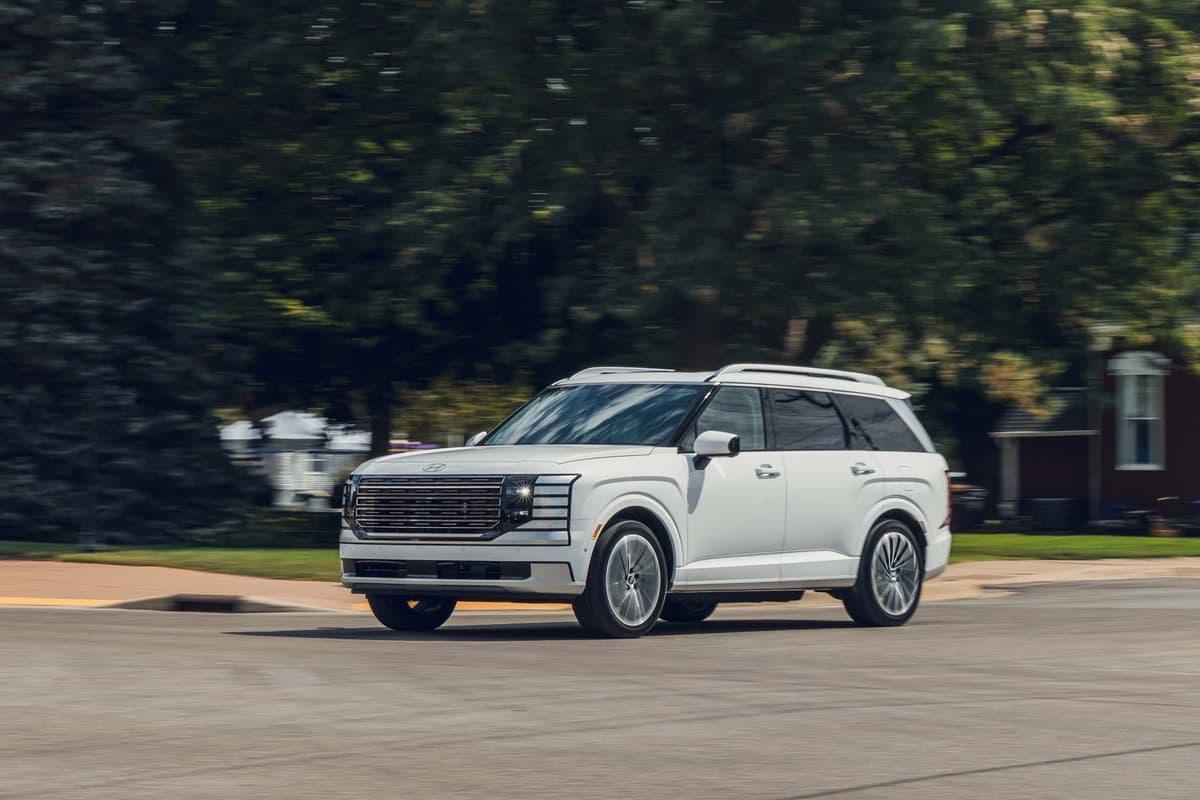
2026 Hyundai Palisade Sales Resume Now That Its Rear Seats Are Fixed
Why It Matters
The recall highlighted safety vulnerabilities in automated seat systems, and Hyundai's swift software remedy restores consumer confidence while protecting revenue streams.
Key Takeaways
- •Hyundai halted Palisade sales after a fatal seat‑stow malfunction.
- •OTA update fixes detection software and disables automatic seat‑folding.
- •Touch‑and‑hold required; tailgate must be open to stow seats.
- •Dealers must apply update before resuming sales of Calligraphy, Limited trims.
- •Safety recall underscores importance of software validation in vehicle design.
Pulse Analysis
The 2026 Hyundai Palisade, a flagship three‑row SUV, was pulled from showrooms in March after a tragic incident in which a two‑year‑old girl was fatally injured by the vehicle’s powered rear‑seat mechanism. The recall targeted the high‑end Calligraphy and Limited trims, prompting a stop‑sale order that halted deliveries nationwide. The episode revived scrutiny over automated seat functions, a feature that has become increasingly common as manufacturers chase convenience and space‑saving designs. Regulators and consumer groups called for swift corrective action to prevent similar accidents.
The automaker engineered a software remedy that can be delivered over‑the‑air through Hyundai’s Bluelink telematics platform, with a dealer‑install option for non‑subscribers. The update disables the single‑touch seat‑stow command, requiring a deliberate touch‑and‑hold action and an open tailgate before the second‑ and third‑row seats will fold. It also upgrades the occupant‑recognition algorithm to better differentiate between a child, an adult or an in‑vehicle object, reducing the risk of unintended seat movement. By leveraging OTA capabilities, Hyundai avoids costly physical recalls and demonstrates how software can become a critical safety lever in modern vehicles.
Resuming sales allows Hyundai to recoup the estimated $150 million revenue shortfall caused by the three‑month suspension, while the prompt fix helps restore brand trust among safety‑conscious buyers. The incident also serves as a cautionary tale for the broader auto industry, where increasingly software‑defined features are subject to regulatory oversight and consumer expectations for rapid remediation. As OTA updates become standard, manufacturers must embed rigorous validation and fail‑safe logic into vehicle code, turning post‑sale patches into a competitive differentiator rather than a reactive necessity.
2026 Hyundai Palisade Sales Resume Now That Its Rear Seats Are Fixed
Comments
Want to join the conversation?
Loading comments...