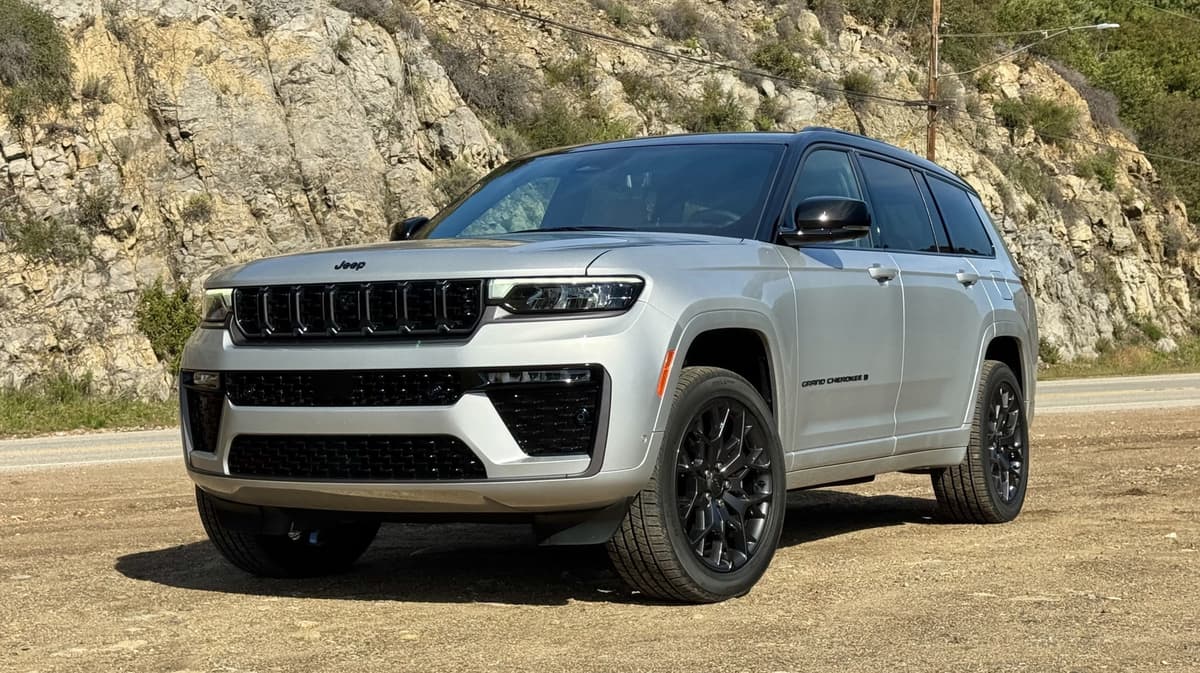
2026 Jeep Grand Cherokee's 324-HP Hurricane Turbo-Four Is Powerful But A Bit Unrefined
•February 25, 2026
0
Companies Mentioned

Why It Matters
Jeep’s shift to a smaller turbo engine reflects industry pressure for better efficiency without sacrificing SUV performance, influencing buyer expectations in the midsize luxury SUV market.
Key Takeaways
- •Hurricane turbo-four replaces V6 in most trims
- •324 hp, 0-60 strong after 3,000 rpm
- •Rough idle, diesel‑like noise below 3k rpm
- •Fuel economy improves only 1‑2 mpg over V6
Pulse Analysis
Jeep’s 2026 Grand Cherokee L marks a strategic pivot toward downsized, turbocharged powertrains, aligning with a broader automotive trend where manufacturers replace larger naturally aspirated engines with efficient four‑cylinders. Stellantis’s Hurricane engine, featuring a variable‑geometry turbocharger, promises 324 horsepower and a broad torque band, aiming to keep the Grand Cherokee competitive against rivals that have already embraced smaller displacement units. This move also helps Jeep meet tightening emissions standards while preserving the brand’s reputation for robust off‑road capability.
In real‑world testing, the Hurricane shines once the revs climb past 3,000, delivering acceleration comparable to a turbocharged six‑cylinder. However, drivers report a clattery, diesel‑like idle and a transmission that upshifts too early in automatic mode, forcing manual throttle input to access peak torque. The 8‑speed Torqueflite 880RE, tuned for the new engine, offers revised gear ratios but still feels eager, highlighting the challenges of pairing a high‑output four‑cylinder with an SUV’s substantial mass.
From a market perspective, the modest 1‑2 mpg fuel‑economy improvement over the legacy V6 may not be enough to sway cost‑conscious buyers, yet the powertrain’s reduced displacement could lower ownership costs and emissions over the vehicle’s lifespan. As competitors continue to refine turbo‑four architectures, Jeep’s gamble hinges on consumer acceptance of the engine’s character and the brand’s ability to deliver a refined driving experience without compromising the Grand Cherokee’s rugged identity.
2026 Jeep Grand Cherokee's 324-HP Hurricane Turbo-Four Is Powerful But A Bit Unrefined
0
Comments
Want to join the conversation?
Loading comments...