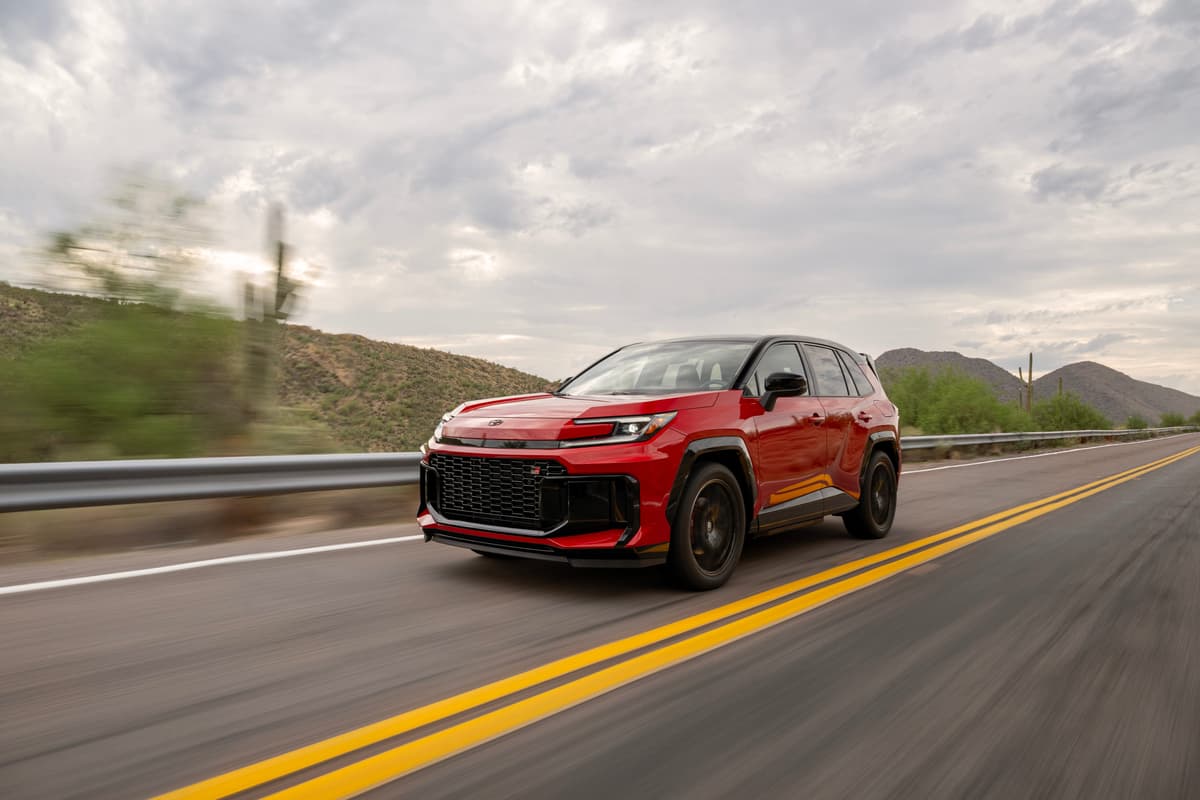
2026 Toyota RAV4 Plug-In Hybrid Is Less Expensive Than Before
•March 2, 2026
0
Why It Matters
The price drop makes the RAV4 PHEV more competitive in the crowded SUV segment, likely accelerating consumer adoption of plug‑in hybrids and strengthening Toyota’s market share.
Key Takeaways
- •Base SE starts $42,950, $3,315 cheaper than 2025
- •Four trim levels now offered, including Woodland and GR Sport
- •GR Sport priced $49,950, adds sport-tuned chassis
- •Only Woodland and XSE support DC fast charging
- •Pricing cut may boost Toyota’s PHEV market share
Pulse Analysis
The 2026 Toyota RAV4 plug‑in hybrid arrives at a time when automakers are racing to make electrified SUVs affordable for mainstream buyers. By trimming the base SE price by over $3,000, Toyota signals a strategic shift toward volume‑driven growth rather than pure premium positioning. This move aligns with broader industry trends where manufacturers are leveraging economies of scale and incremental technology improvements to lower costs, aiming to capture price‑sensitive consumers who have been hesitant about higher‑priced plug‑in models.
Beyond pricing, the expanded trim roster adds tangible value for diverse buyer personas. The newly introduced Woodland trim brings a rugged aesthetic previously reserved for the conventional hybrid, while also offering DC fast‑charging—a feature limited to the XSE and now Woodland, reducing charging time anxiety for long‑distance travelers. Meanwhile, the GR Sport variant taps into Toyota’s Gazoo Racing heritage, delivering sport‑tuned suspension and aggressive styling without altering the underlying powertrain. This blend of practicality and performance broadens the RAV4 PHEV’s appeal across both eco‑conscious families and enthusiasts seeking a dynamic driving experience.
Competitors such as Ford, Hyundai, and Kia have already introduced aggressively priced plug‑in SUVs, intensifying market pressure. Toyota’s price cut and trim diversification could compel rivals to reassess their pricing structures and feature bundles. For consumers, the lower entry point and fast‑charging options make the RAV4 PHEV a more compelling choice, potentially accelerating plug‑in hybrid adoption rates in North America and Europe. Looking ahead, Toyota may continue this pricing trajectory while integrating higher‑capacity batteries, positioning the RAV4 PHEV as a bridge toward fully electric SUVs in its future lineup.
2026 Toyota RAV4 Plug-In Hybrid Is Less Expensive Than Before
0
Comments
Want to join the conversation?
Loading comments...