300,000 Railcars at Risk – Commentary
Why It Matters
Upgrading the legacy fleet could prevent costly derailments like East Palestine and preserve residual car values, while inaction threatens safety, higher maintenance expenses, and reduced capacity for the rail supply chain.
Key Takeaways
- •Over 300,000 pre‑2004 railcars operate above design load
- •S‑286/M‑976 specs cut wheel wear 15%, saving $120 M annually
- •Class F bearings cause four‑times higher defect detections than Class K
- •Upgrade to Class K bearings costs $12‑14 k per car, $3.6‑4.2 B total
- •Down‑rating capacity reduces car value and industry throughput
Pulse Analysis
The heavy‑axle‑load initiative that began in the late 1980s reshaped North American freight rail by allowing 263 K‑GRL cars to carry 286 K loads under Specification S‑259. Although the change delivered an immediate 9% capacity increase without new equipment, it also pushed older car bodies and wheelsets beyond their original fatigue limits. Over two decades, the industry introduced the S‑286 car‑body and M‑976 truck standards, which incorporate advanced suspension, passive steering, and superior damping. These upgrades have demonstrably reduced rolling‑contact fatigue, cutting wheel consumption by 15% and delivering more than $120 million in annual savings.
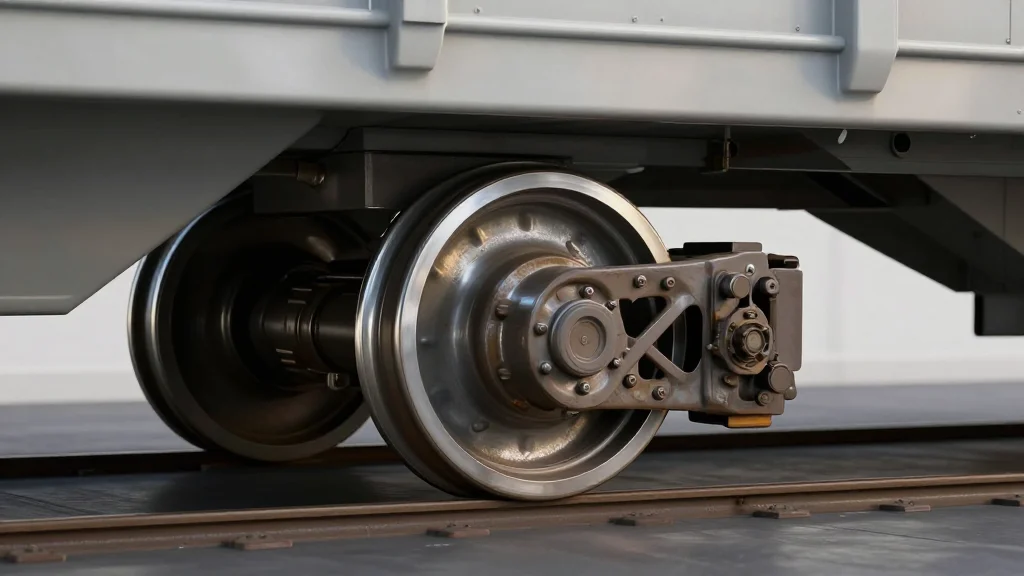
Safety concerns resurfaced dramatically after the February 2023 East Palestine derailment, where a reconditioned Class F bearing on a 1997‑built hopper failed, costing Norfolk Southern over $1.1 billion in damages. Studies show Class F bearings generate four times more acoustic‑bearing‑detector alerts than the newer Class K units fitted to S‑286/M‑976 cars. With roughly 20,000 bearing defects detected each year, the reliability gap translates directly into higher derailment risk, increased inspection costs, and lost revenue for rail operators.
Railcar owners now weigh three paths: maintain the status quo, retrofit to Class K bearings and modern trucks, or down‑rate the cars to their original 263 K capacity. Retrofitting costs $12,000‑$14,000 per unit, amounting to $3.6‑$4.2 billion across the at‑risk fleet, but it can extend service life toward the 50‑year design horizon and preserve higher residual values—evident in the $48,000 price tag for a 1995‑built S‑259 hopper versus $82,000 for a 2015‑built S‑286 unit. Down‑rating safeguards against fatigue failures but erodes the 20% capacity growth achieved since 1990, potentially tightening supply‑chain margins. As rail traffic volumes climb, the economic calculus increasingly favors investment in upgrades to sustain safety, reliability, and profitability across the freight rail network.
300,000 Railcars at Risk – Commentary
Comments
Want to join the conversation?
Loading comments...