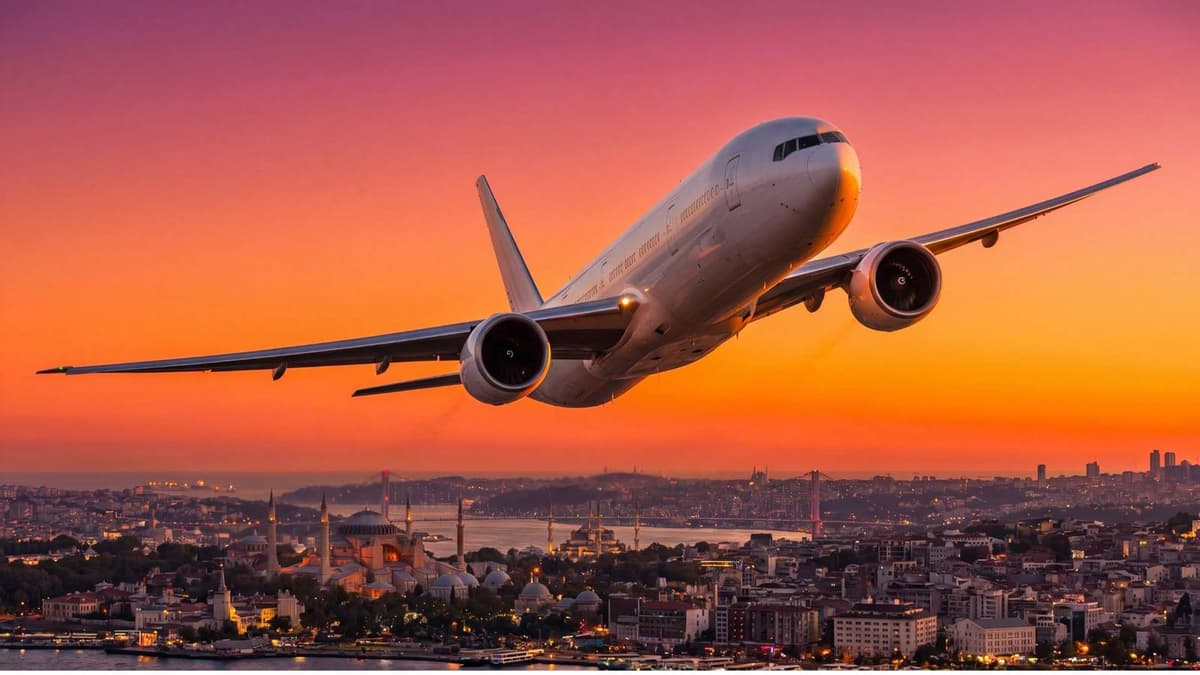
492-Seat Boeing 777 On 1-Hour Flights: Why Turkish Airlines Does It
Companies Mentioned
Why It Matters
The 492‑seat 777 gives Turkish Airlines a flexible, high‑capacity tool for congested short‑haul markets, enhancing revenue per flight while sidestepping the operational costs of larger wide‑bodies. It illustrates how airlines can repurpose legacy assets to meet niche demand spikes.
Key Takeaways
- •Turkish Airlines operates a 777‑300ER with 492 seats, 14 business
- •Aircraft originally delivered to Emirates in 2007, later reconfigured by Royal Flight
- •High‑density layout enables one‑hour domestic routes with near‑full capacity
- •Single‑type configuration adds complexity but avoids need for larger aircraft like A380
- •Used on Istanbul‑Antalya, Istanbul‑Adana, and Saudi Arabia routes for pilgrim traffic
Pulse Analysis
The 777‑300ER TC‑LKF stands out not just for its all‑white livery but for an ultra‑dense cabin that pushes the aircraft’s capacity to 492 seats. Originally delivered to Emirates in 2007, the jet spent a decade in a conventional configuration before Russian charter operator Royal Flight stripped it down to a high‑density layout. After a period of storage, Turkish Airlines acquired the aircraft, turning a once‑standard wide‑body into a specialized capacity tool that can be fielded on short, high‑traffic sectors.
Turkish leverages TC‑LKF on routes where demand routinely outstrips the supply of typical narrow‑body jets. Flights between Istanbul and domestic hubs such as Adana and Antalya, as well as pilgrim‑heavy services to Jeddah and Medina, can be filled to near‑full capacity in under an hour. By deploying a 777‑300ER instead of multiple narrow‑bodies, the airline reduces crew and slot usage while maximizing revenue per departure. The aircraft’s 14 business seats preserve a premium offering, but the bulk of the cabin serves economy travelers, aligning with Turkish’s mixed‑class strategy.
The case of TC‑LKF highlights a broader industry trend: airlines repurposing older, high‑capacity airframes to address specific market niches without investing in new, larger types like the A380. While operating a single aircraft with a divergent layout adds maintenance and scheduling complexity, the revenue upside on congested short‑haul corridors can outweigh those costs. As airlines grapple with fluctuating demand and rising fuel prices, creative asset utilization—exemplified by Turkish’s 492‑seat 777—offers a template for extracting value from existing fleets.
492-Seat Boeing 777 On 1-Hour Flights: Why Turkish Airlines Does It
Comments
Want to join the conversation?
Loading comments...