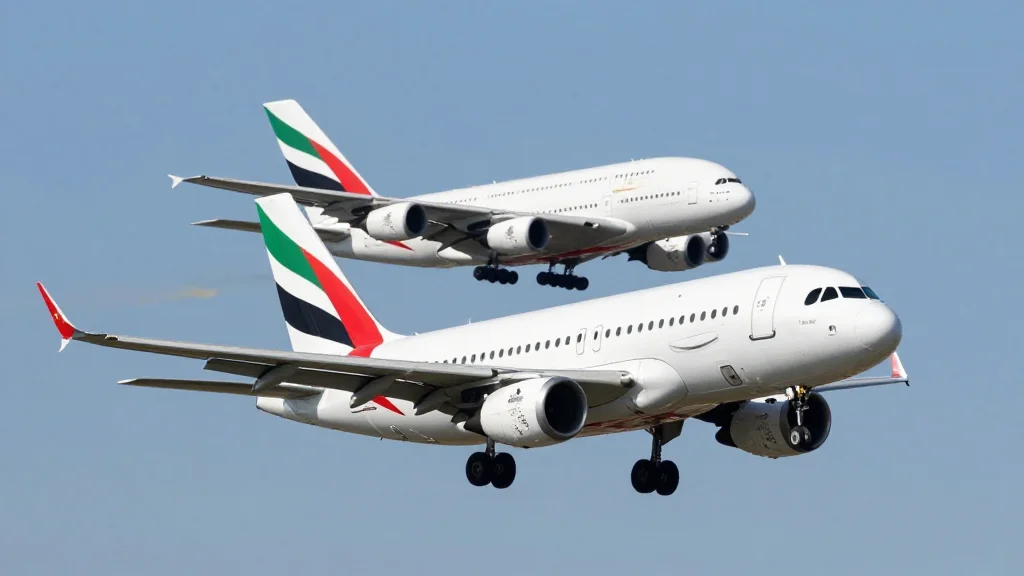
5 Hurt As Emirates A380 Wake Turbulence Hits Eurowings A320 Despite Safe Separation
Companies Mentioned
Why It Matters
The event underscores the critical importance of adhering to wake‑vortex separation standards, as lapses can lead to passenger injuries and operational disruptions for airlines and airports.
Key Takeaways
- •Five injured after Eurowings A320 hit Emirates A380 wake turbulence
- •ICAO recommends seven‑nautical‑mile separation between A380 and A320
- •Wake vortices from A380 can persist up to five miles
- •Flight continued to Cologne; Emirates flight proceeded without delay
- •Incident caused four‑hour inspection and downstream schedule disruption
Pulse Analysis
Wake turbulence remains one of the most unpredictable hazards in commercial aviation, especially when a massive aircraft such as the Airbus A380 follows a narrow‑body jet. The A380’s larger wingspan and higher thrust generate stronger, longer‑lasting vortices that can linger for several minutes and travel up to five miles behind the aircraft. International Civil Aviation Organization (ICAO) standards therefore prescribe a minimum of seven nautical miles separation when an A380 leads an A320 at similar altitudes, a rule designed to give the smaller aircraft enough distance to avoid the disturbed air.
The recent Eurowings incident illustrates how even a modest deviation from these guidelines can have immediate safety consequences. While the A380 was only 7.6 nm ahead—just shy of the recommended buffer—the Eurowings A320 entered the vortex at 37,600 ft, causing sudden vertical motion that threw occupants against the cabin ceiling. The crew’s swift descent to 36,000 ft and continuation to Cologne prevented a more serious outcome, but the episode triggered a four‑hour aircraft inspection and delayed a subsequent flight, exposing the operational ripple effects of wake‑vortex events.
Airlines and air traffic controllers are now re‑examining procedural safeguards, including the Standard Lateral Offset Procedure and real‑time vortex monitoring technologies, to better manage en‑route separation. Regulators may also consider tightening separation minima or mandating enhanced pilot training on vortex avoidance. As traffic density grows on European corridors, balancing efficiency with safety will require both stricter adherence to ICAO recommendations and investment in predictive tools that can anticipate vortex decay, ensuring that wake turbulence remains a manageable risk rather than a source of injury and delay.
5 Hurt As Emirates A380 Wake Turbulence Hits Eurowings A320 Despite Safe Separation
Comments
Want to join the conversation?
Loading comments...