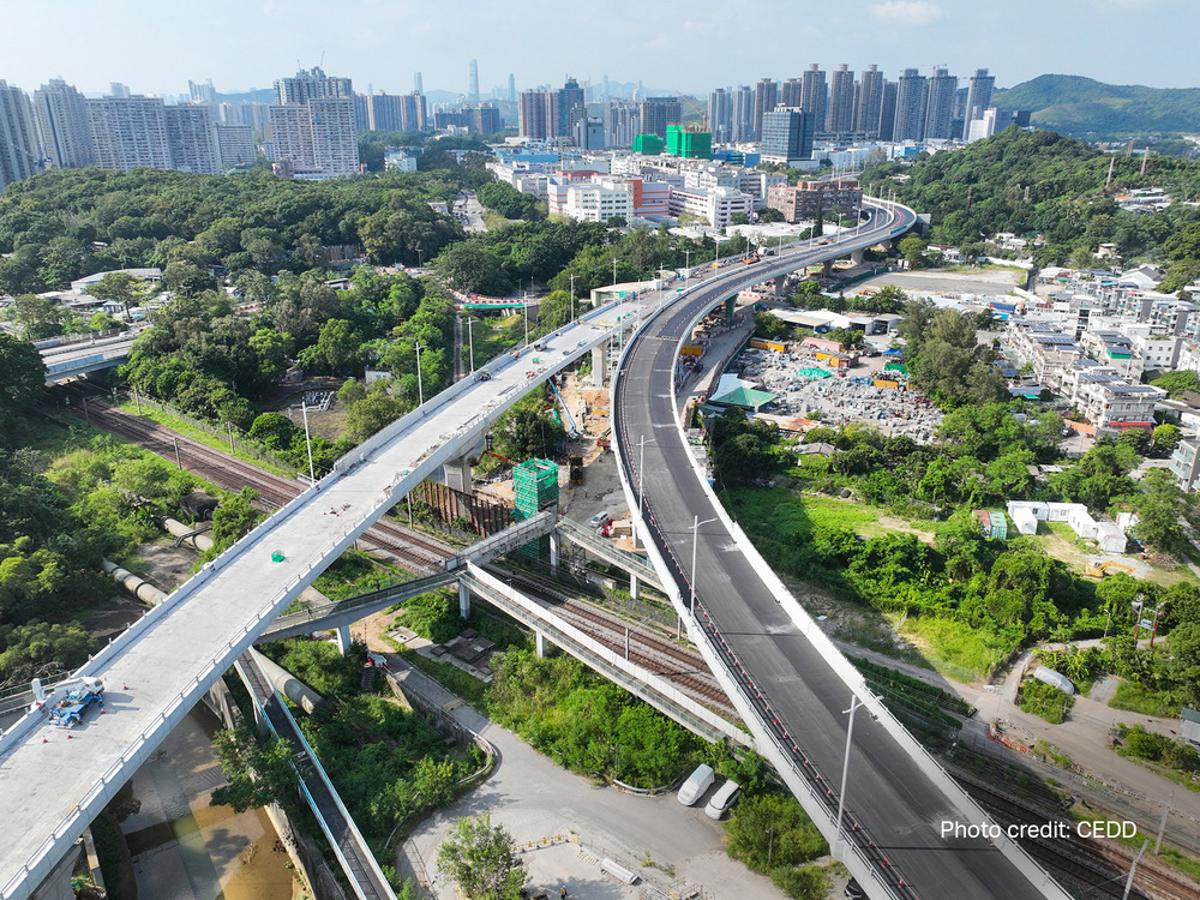
7,000-Ton Hong Kong Bridge Installed Overnight to Minimise Disruption
Why It Matters
The accelerated delivery and minimal service interruption demonstrate how off‑site fabrication and digital engineering can transform large‑scale infrastructure timelines, offering a template for future urban projects. Faster completion also eases congestion in Fanling, delivering measurable travel‑time savings for commuters.
Key Takeaways
- •140m, 7,000‑ton bridge installed overnight, cutting rail disruption
- •Construction schedule trimmed by ~12 months using horizontal rotation
- •4D BIM and AI tools cut risk by ~70%
- •S960 steel reduced bridge weight nearly 90% versus conventional steel
- •Robotic welding boosted precision for high‑strength steel components
Pulse Analysis
The 140‑metre, 7,000‑ton bridge that spans the Fanling Bypass marks a milestone in Hong Kong’s infrastructure portfolio. By constructing the span beside its final location and rotating it into place overnight, Aecom eliminated the need for prolonged rail shutdowns, a critical advantage in a densely packed transit corridor. The horizontal bridge rotation saved roughly a year of construction time, demonstrating how off‑site fabrication and rapid installation can compress schedules without compromising safety. This approach sets a new benchmark for large‑scale bridge projects in congested urban environments.
Digital engineering was the backbone of the project’s efficiency. A 4D BIM model integrated with LiDAR scans, AI‑enabled CCTV and automated deformation monitoring provided real‑time visibility of the bridge’s position and structural behavior. Early clash detection and progress tracking trimmed risk by an estimated 70 percent and allowed the team to fine‑tune the lift sequence. The seamless data flow between design and construction teams exemplifies Construction 2.0 principles, where predictive analytics replace reactive problem solving, accelerating delivery while safeguarding quality.
The project also showcased material innovation through the first structural use of S960 steel, a high‑strength alloy nearly three times stronger than conventional steel. By cutting the bridge’s weight by almost 90 percent, the lighter superstructure reduced foundation loads and eased transportation of prefabricated sections. Robotic welding systems delivered millimetre‑level precision, boosting productivity and ensuring consistent quality across the high‑strength components. These advances align with China’s 15th Five‑Year Plan, which emphasizes smart, sustainable construction, and reinforce Hong Kong’s ambition to become a showcase for next‑generation infrastructure in the Greater Bay Area.
7,000-ton Hong Kong bridge installed overnight to minimise disruption
Comments
Want to join the conversation?
Loading comments...