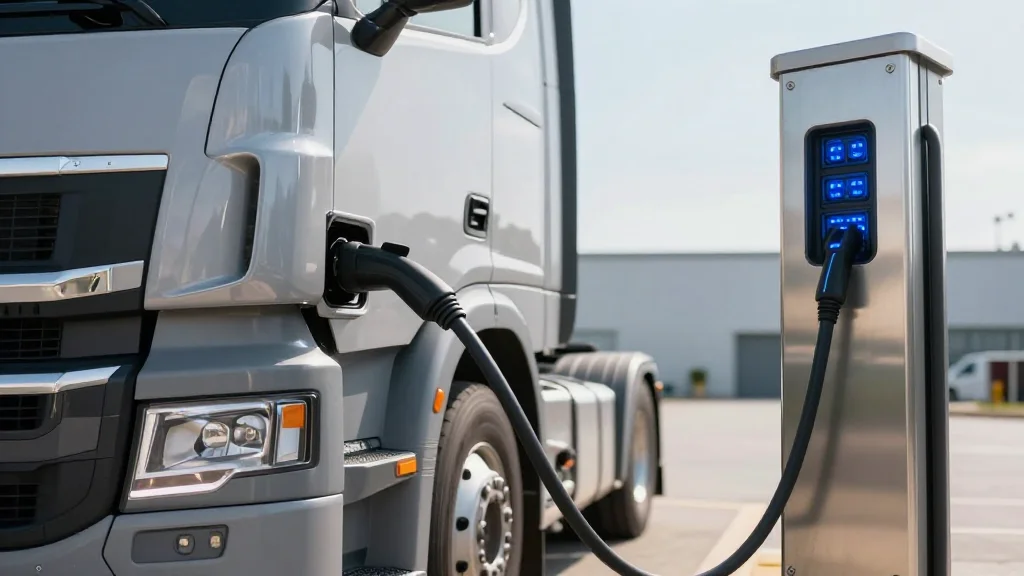
76 Chargers, 9 MW: An EV Truck Hub Opens Where US Freight Runs
Why It Matters
The hub shows that high‑power, shared charging can make electric‑truck adoption viable for large‑scale freight, cutting upfront investment and operational friction. Its strategic location near major interstates accelerates the shift toward zero‑emission supply chains.
Key Takeaways
- •76 ports deliver 9 MW, serving 200+ trucks daily
- •Supports CCS and up to 1.2 MW MCS charging
- •Shared infrastructure lowers fleet capital expenses
- •Located near Intermodal Facility, near I‑10/I‑215 corridors
- •Backed by $75 M equity and state funding
Pulse Analysis
The United States freight sector is at a tipping point as regulators and shippers demand lower emissions while carriers grapple with the high cost of electrifying long‑haul trucks. Central to that transition is access to high‑power charging that can replenish a rig’s battery in a timeframe comparable to a diesel refuel stop. The San Bernardino hub, with 76 ports and a combined 9 MW output, exemplifies the scale of infrastructure required to keep trucks moving on the nation’s busiest corridors without sacrificing productivity.
EV Realty’s shared‑use model tackles one of the biggest barriers to fleet electrification: the capital outlay for private charging depots. By aggregating demand from multiple operators—J.B. Hunt, Gate City Beverage, Nevoya—the hub spreads infrastructure costs and provides a pay‑as‑you‑go pricing structure that mirrors traditional diesel fueling. The dual‑standard design, supporting both CCS today and megawatt charging system (MCS) for future rigs, gives fleets flexibility to adopt current electric trucks while future‑proofing for higher‑capacity batteries. This approach also reduces site acquisition time, accelerating rollout across key logistics nodes.
State incentives and utility partnerships have been critical in de‑risking projects of this magnitude. Funding from California’s Carl Moyer Program and the EnergIIZE Commercial Vehicles initiative helped bridge the gap between construction costs and expected revenue streams, while Southern California Edison’s available grid capacity shortened the build timeline. With a fresh $75 million equity injection, EV Realty plans to replicate the hub model in other freight corridors, signaling that a network of high‑power, shared charging stations could soon become the backbone of America’s zero‑emission supply chain.
76 chargers, 9 MW: An EV truck hub opens where US freight runs
Comments
Want to join the conversation?
Loading comments...