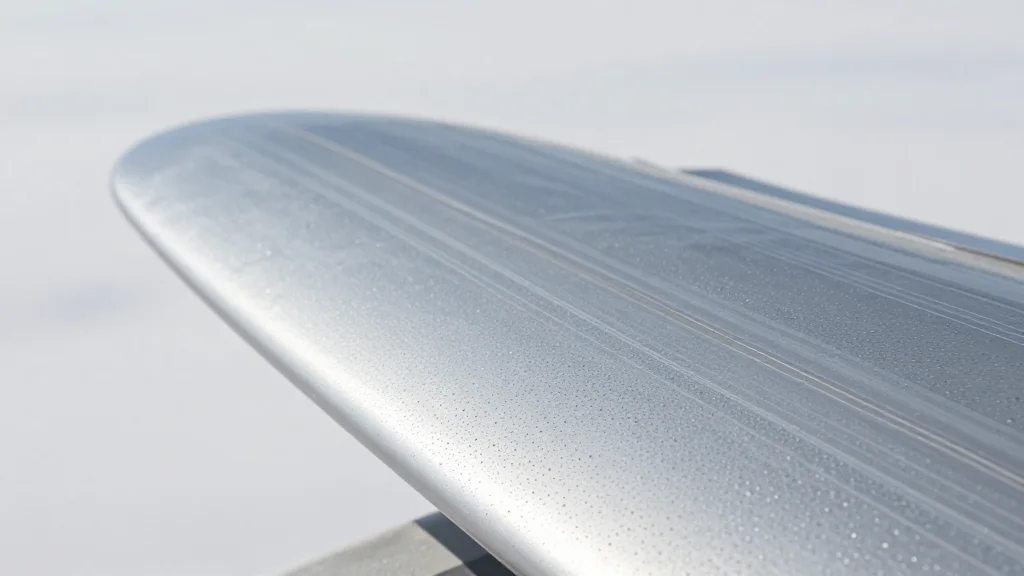
A Fundamental Principle of Aeronautical Engineering Has Been Overturned
Why It Matters
By cutting frictional drag without moving parts, DMR could slash fuel consumption and CO₂ emissions for aircraft, high‑speed trains and automobiles. The technology’s passive, omni‑directional nature makes it a low‑cost, scalable alternative to shark‑skin riblets.
Key Takeaways
- •DMR cuts aerodynamic drag up to 43.6% in transition zone.
- •Critical Reynolds number rises from 1.9 × 10⁶ to 2.2 × 10⁶.
- •Magnetic support balance enables rod‑free wind‑tunnel testing.
- •Drag reduction stems mainly from frictional drag, not pressure resistance.
- •DMR works omni‑directionally, unlike shark‑skin grooves.
Pulse Analysis
Aerodynamic drag has long been the primary efficiency barrier for high‑speed vehicles. Engineers traditionally pursued ever‑smoother surfaces to delay the laminar‑to‑turbulent transition, a doctrine rooted in a 1940 study by Ichiro Tani. That approach assumes surface roughness inevitably triggers turbulence, increasing both pressure and frictional resistance. Recent advances, however, suggest that carefully engineered micro‑scale irregularities can produce the opposite effect, opening a new frontier in fluid dynamics.
To test this hypothesis, a team led by Associate Professor Aiko Yakino at Tohoku University deployed the world’s largest 1‑meter magnetic support balance system, which levitates test models without any supporting rods that could disturb airflow. Across a Reynolds‑number sweep from 0.35 × 10⁶ to 3.6 × 10⁶, DMR‑coated specimens—using either glass‑bead convex patterns or sandblasted concave textures—showed a 43.6 percent drag reduction in the critical transition zone and consistently lower drag coefficients than smooth controls. Large‑eddy simulations confirmed that the bulk of this benefit stems from a reduction in wall‑friction drag, not from altered pressure distribution, overturning the century‑old belief that smoother equals better.
The implications are far‑reaching. A passive, direction‑agnostic surface treatment that trims frictional drag could translate into substantial fuel savings and lower carbon footprints for commercial aviation, bullet‑train networks, and even automotive design. Unlike shark‑skin riblets, DMR requires no precise alignment, machining, or power, making it a cost‑effective retrofit option. As the research group refines pattern geometry and density, the aerospace and transportation sectors may soon see a shift from the pursuit of perfect smoothness to the strategic use of micro‑roughness for performance gains.
A Fundamental Principle of Aeronautical Engineering Has Been Overturned
Comments
Want to join the conversation?
Loading comments...