Why It Matters
A turbo‑RAV4 would broaden Toyota’s performance lineup and tap a growing market for sportier crossovers, potentially boosting sales and brand perception. It also signals how consumer pressure can influence legacy automakers’ powertrain strategies.
Key Takeaways
- •2.4‑liter T24A‑FTS can physically fit in RAV4 engine bay
- •Engine delivers 275 hp in RX 350 and 366 hp with hybrid system
- •Toyota has no current RAV4 turbo plans; demand could change that
- •Future 1.5‑ and 2.0‑liter engines may reach 600 hp in GR models
Pulse Analysis
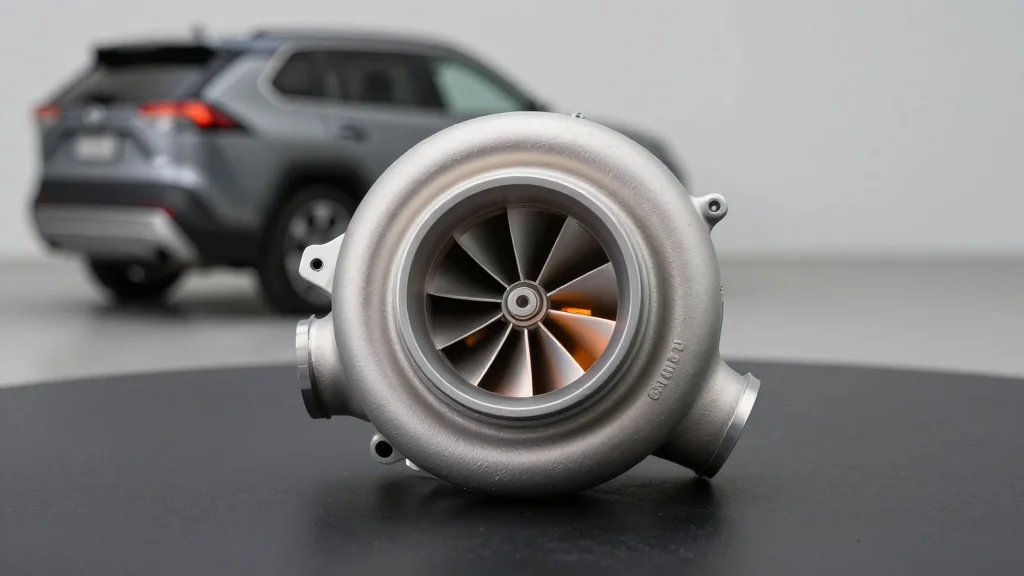
Toyota’s sixth‑generation RAV4 has sparked speculation about a high‑performance variant after chief engineer Yoshinori Futonagane confirmed the 2.4‑liter turbocharged T24A‑FTS could be accommodated in the crossover’s engine bay. While the current GR Sport badge adds sport‑tuned suspension and a 320‑horsepower plug‑in hybrid system, the T24A‑FTS already powers Lexus’s RX 350 and RX 500h, delivering 275 to 366 horsepower. The technical feasibility, however, does not translate into an immediate product launch; Toyota has publicly stated there are no plans for a turbo‑charged RAV4 at this time.
Consumer demand is the wildcard that could shift Toyota’s stance. The automotive market has seen a surge in interest for sportier SUVs, with rivals offering turbocharged or performance‑tuned models that blend utility and excitement. If a vocal segment of RAV4 owners begins to “make noise” for a turbo option, corporate approval could follow, especially as the GR engineering division seeks to expand its performance halo. Moreover, Toyota’s ongoing development of new 1.5‑ and 2.0‑liter engines—projected to reach up to 600 horsepower—suggests the company is preparing a versatile powertrain portfolio that could be adapted to a future GR RAV4.
Should Toyota green‑light a turbo RAV4, the move would have broader implications for its brand strategy. A performance‑focused RAV4 would reinforce Toyota’s commitment to driving enthusiasts while complementing its electrification roadmap, offering a bridge between traditional combustion performance and hybrid efficiency. It could also attract a younger demographic, boost resale values, and generate additional aftermarket interest. Ultimately, the decision will hinge on whether the perceived "wow factor" and market demand outweigh the costs of retooling production lines in an era increasingly dominated by electric and hybrid powertrains.
A Toyota RAV4 Turbo Could Happen, In Theory: Report
Comments
Want to join the conversation?
Loading comments...