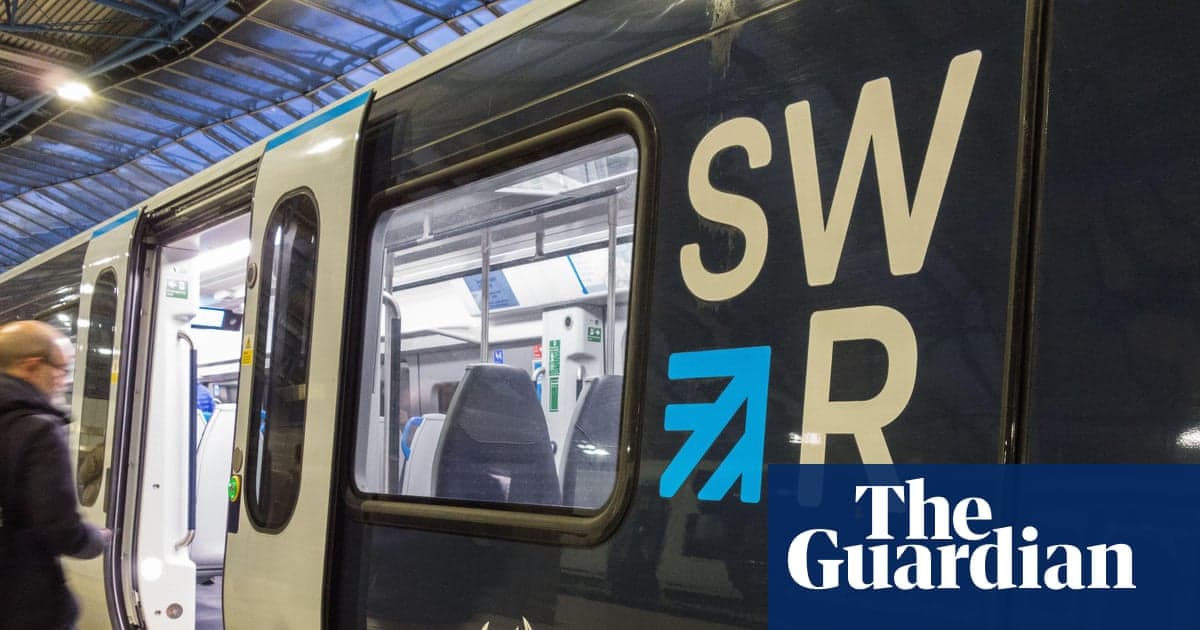
A Year After Nationalisation, Is South Western Railway Delivering?
Companies Mentioned
Why It Matters
The accelerated deployment demonstrates how public ownership can speed capital investment, while lingering operational flaws reveal the challenges of transitioning from fragmented private contracts to integrated state management. Success or failure will shape the future of rail nationalisation across the UK.
Key Takeaways
- •Half of the £1bn ($1.27bn) new fleet now in service.
- •Air‑conditioned 10‑coach trains increase capacity and passenger comfort.
- •Staffing shortages persist, driver‑guard ratios improved from 80% to 8%.
- •Single managing director aligns track and train incentives.
- •Livery draws criticism but signals Great British Railways branding.
Pulse Analysis
The first twelve months of South Western Railway’s nationalisation have been marked by a rapid infusion of new rolling stock. After years of delay under the previous private operator, 45 Arterio units—worth roughly $1.27 billion—have entered service, with half already running on the network. This pace, described by Rail Minister Peter Hendy as evidence that cutting bureaucratic red tape works, contrasts sharply with the stalled introductions that plagued the franchise era. The larger, air‑conditioned carriages not only raise passenger comfort but also expand capacity on one of the busiest commuter corridors in the country.
Operationally, the transition has exposed deep-rooted staffing and reliability challenges. Under private ownership, driver‑guard rosters were tightly cross‑linked to cut costs, resulting in 80 % of trains operating with the same crew all day. Since nationalisation, that figure has fallen to 8 %, reflecting a concerted recruitment drive and a shift toward more flexible rostering. A single managing director now oversees both infrastructure and rolling stock, aligning incentives to prioritize punctuality over contractual minima. While punctuality has improved, occasional track failures and crew shortages still cause delays, indicating that infrastructure upgrades and workforce expansion remain critical.
Beyond South Western, the rollout serves as a litmus test for the broader Great British Railways reform agenda. Successful integration of assets and improved service reliability could accelerate the nationalisation of other franchises, such as Avanti, and reinforce the government’s narrative of a unified, taxpayer‑backed rail system. Conversely, persistent operational hiccups may fuel criticism of the policy’s execution. The new Union‑Jack‑inspired livery, though polarising, signals a branding effort to cement a national identity for the rail network, a visual cue that could become a hallmark of future state‑run operators across the UK.
A year after nationalisation, is South Western Railway delivering?
Comments
Want to join the conversation?
Loading comments...