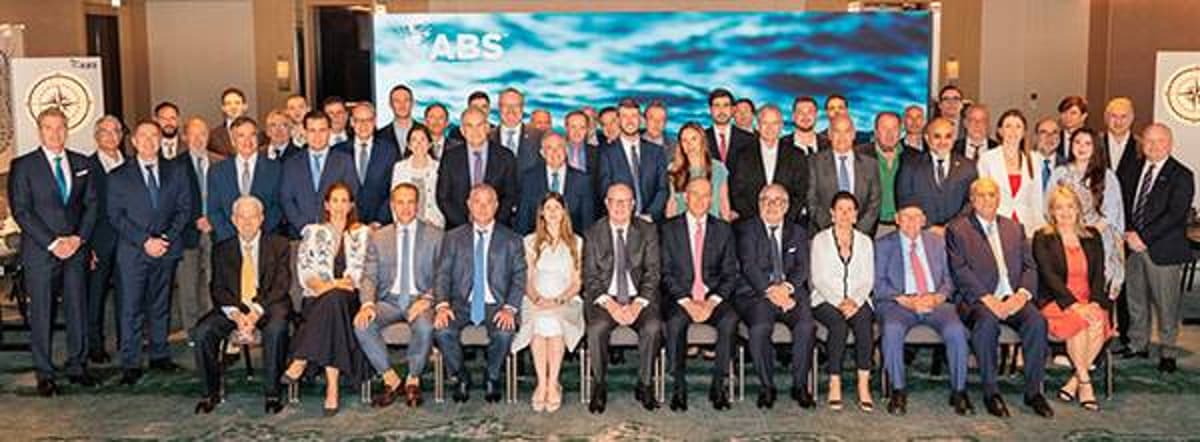
ABS Addresses Operational Solutions for Shipping Challenges at Annual Hellenic Committee Meeting
Why It Matters
Rapid technology adoption is essential for shipowners to stay competitive, meet tightening regulations and achieve sustainability goals, and ABS’s new centers position the class society as a catalyst for industry‑wide operational transformation.
Key Takeaways
- •ABS launches SeaTech Innovation Exchange in Athens and Houston
- •AI, robotics, and simulation target routing, maintenance, decision‑making
- •Initiative aims to close gap between technical potential and operational reality
- •ABS fleet now 314 million gross tons, leading global order‑book share
- •New centers complement existing ABS hubs in Greece, boosting innovation capacity
Pulse Analysis
The maritime sector is confronting a perfect storm of rising fuel and labor costs, tighter emissions standards, and ever‑shortening decision windows. Traditional ship‑operating models, built on incremental improvements, struggle to keep pace with the data‑driven demands of modern trade routes. As vessels become more interconnected, the need for real‑time analytics and automated decision support has moved from a competitive edge to a baseline requirement for profitability and compliance.
In response, ABS introduced the SeaTech Innovation Exchange, a dual‑location hub that brings together artificial‑intelligence research, robotics engineering and high‑fidelity simulation under one roof. By situating a center in Athens—close to the world’s largest ship‑owning community—and a counterpart in Houston, a major U.S. energy and maritime hub, ABS creates a trans‑atlantic pipeline for rapid prototyping and field testing. The Exchange is designed to translate cutting‑edge algorithms into actionable tools for route optimization, predictive maintenance and crew‑assisted decision‑making, thereby shrinking the lag between what technology can achieve and what operators can safely implement.
The broader impact extends beyond ABS’s member base. As the class society’s fleet now tops 314 million gross tons, its safety and performance standards set benchmarks that ripple through the global supply chain. The Innovation Exchange signals a shift toward collaborative, technology‑first solutions that could redefine vessel design, operational risk management and sustainability reporting. Competitors will likely accelerate similar investments, making the next few years a pivotal period for digital transformation in shipping, with ABS positioning itself as a leading enabler of that change.
ABS Addresses Operational Solutions for Shipping Challenges at Annual Hellenic Committee Meeting
Comments
Want to join the conversation?
Loading comments...