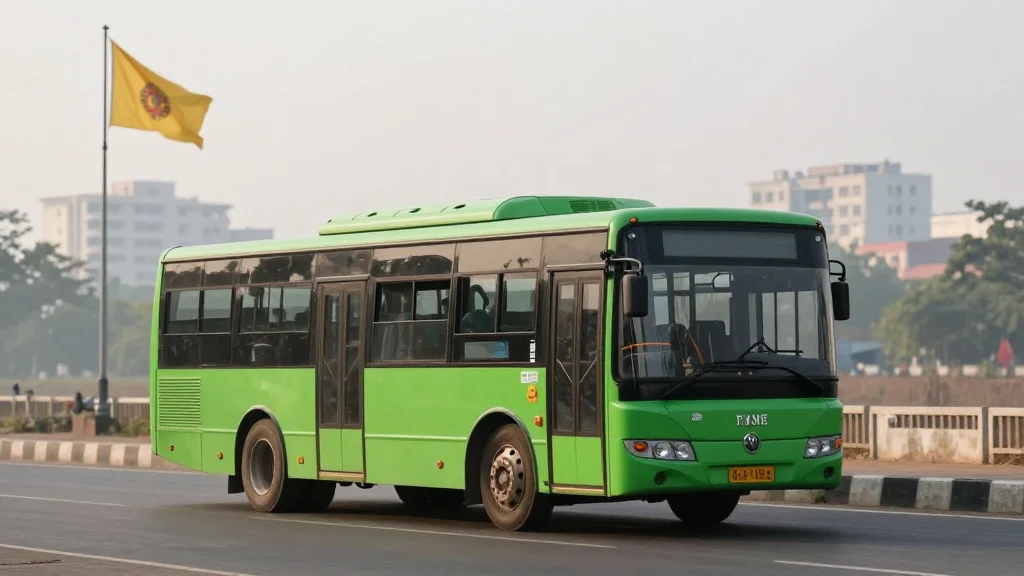
AC Electric Double-Decker Bus Rolls Out in Maharashtra
Why It Matters
The rollout demonstrates Maharashtra’s push toward sustainable, high‑capacity public transit, potentially reducing travel times and traffic on a key suburban route. It also showcases a public‑private wet‑lease model that could lower fiscal risk for municipal authorities while accelerating electric fleet adoption.
Key Takeaways
- •First AC electric double‑decker bus launched in Thane, Maharashtra.
- •Each bus seats 65 seated, 33 standing, costing about $240,000.
- •Operations paid at $1.75 per km; fares $0.12‑$0.42.
- •Ten‑bus fleet to be fully deployed by October 2026.
- •Wet‑lease model shifts procurement, fuel, maintenance to contractor.
Pulse Analysis
India’s urban transport networks are grappling with rising demand and mounting emissions, prompting state governments to experiment with high‑capacity electric vehicles. Double‑decker buses, long a staple in megacities like London and Hong Kong, offer a space‑efficient solution for densely populated corridors. Maharashtra’s decision to introduce AC electric double‑deckers on the Teen Haath Naka‑Gaimukh stretch reflects a strategic effort to combine passenger comfort with sustainability, leveraging the route’s high ridership to justify the larger vehicle footprint.
Financially, the initiative hinges on a wet‑lease arrangement that transfers capital outlays and operational risk to private contractors. At approximately $240,000 per unit, the buses are a modest investment relative to traditional diesel fleets, especially when factoring in lower fuel costs—about $1.75 per kilometre—and reduced maintenance associated with electric drivetrains. Projected fares of $0.12 to $0.42 keep the service competitive with non‑AC private operators while delivering a greener alternative. This model allows Thane’s municipal budget to pay a predictable per‑kilometre fee, preserving cash flow for other civic priorities.
Looking ahead, the phased rollout—ten buses by October 2026—serves as a pilot for broader adoption across Maharashtra and potentially other Indian states. Successful integration could spur policy shifts toward more aggressive electrification targets, encourage manufacturers to scale production, and inspire similar public‑private partnerships. However, challenges remain, including charging infrastructure, driver training, and ensuring consistent performance on mixed‑traffic highways. If these hurdles are addressed, the double‑decker electric bus could become a cornerstone of India’s next‑generation public transit ecosystem.
AC electric double-decker bus rolls out in Maharashtra
Comments
Want to join the conversation?
Loading comments...