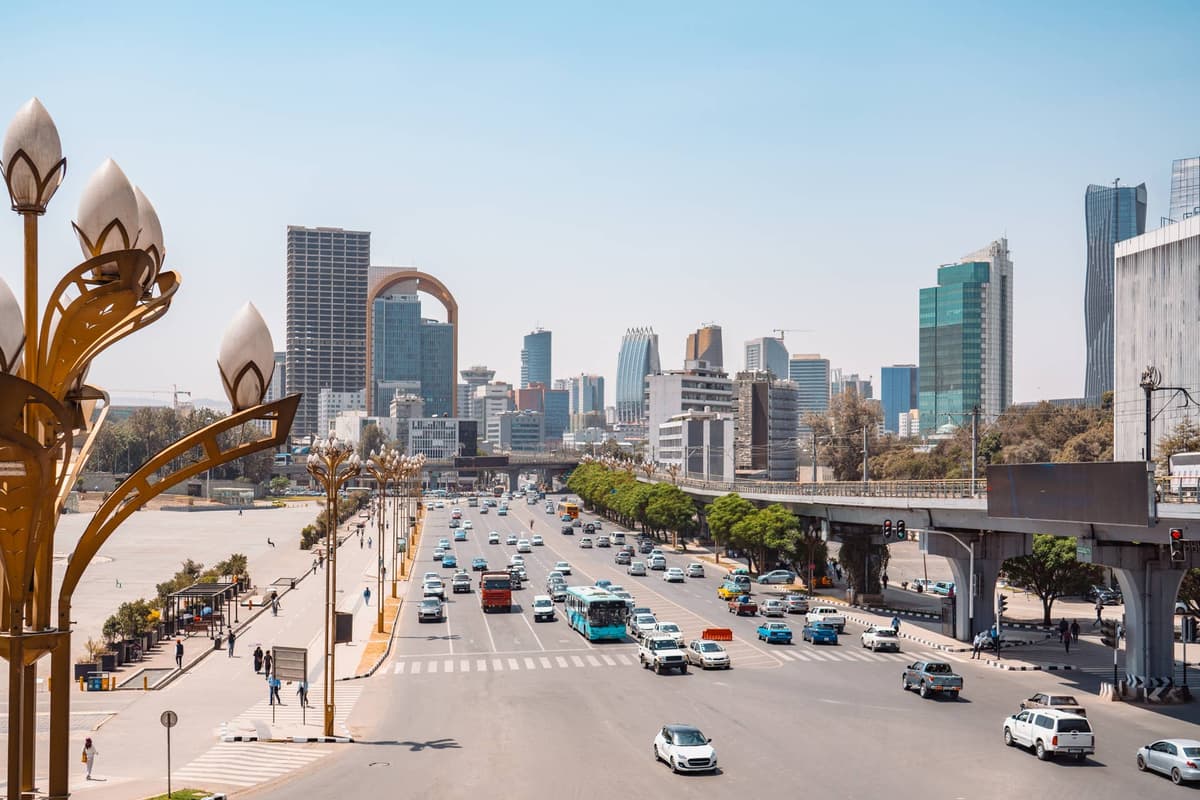
African Country that Banned Gas Vehicles Sees Greener EV Future
Companies Mentioned
Why It Matters
The policy demonstrates how decisive regulation and renewable‑energy resources can accelerate EV adoption even in developing markets, challenging the narrative that only wealthy nations can lead the transition. It offers a replicable model for countries seeking to decarbonize transport while leveraging domestic clean power.
Key Takeaways
- •Ethiopia banned ICE vehicle imports in 2024
- •Over 100,000 EVs now on Ethiopian roads
- •Government plans 17 EV assembly plants with Chinese parts
- •96% of Ethiopia’s electricity comes from hydropower
- •Addis Ababa operates 500 charging stations, mostly in city
Pulse Analysis
While the United States grapples with reduced EV subsidies and a stagnant market share, Ethiopia has taken a bold opposite route. By outlawing new gasoline‑engine vehicle imports in 2024, the East African nation forced a rapid shift toward electrification. The move coincided with a surge in electric bus deployments in Addis Ababa, where 90,000 commuters rely on a cleaner, quieter fleet daily. This policy-driven demand has already pushed electric vehicles to represent roughly 8% of Ethiopia’s total vehicle registrations, a stark contrast to the U.S.’s 10% penetration.
The Ethiopian government is backing the transition with a suite of incentives. Tax breaks for EV purchases lower the cost barrier, while plans for 17 assembly plants—using imported components from China—aim to localize production and create jobs. Public‑transport projects, including fully electric light‑rail lines, further embed electrification into the urban fabric. These measures not only reduce emissions but also align with the country’s abundant renewable energy capacity; about 96% of its grid is hydropower, thanks to the Grand Ethiopian Renaissance Dam, which adds over 5 GW of clean electricity.
Challenges remain, chiefly the limited charging infrastructure concentrated in Addis Ababa, where roughly 500 stations serve a growing fleet. Expanding this network nationwide will be critical to meeting the 2030 target of 500,000 electric vehicles. Nonetheless, Ethiopia’s experience illustrates how policy certainty, renewable‑rich grids, and strategic incentives can fast‑track EV adoption, offering a blueprint for other emerging economies seeking sustainable mobility solutions.
African country that banned gas vehicles sees greener EV future
Comments
Want to join the conversation?
Loading comments...