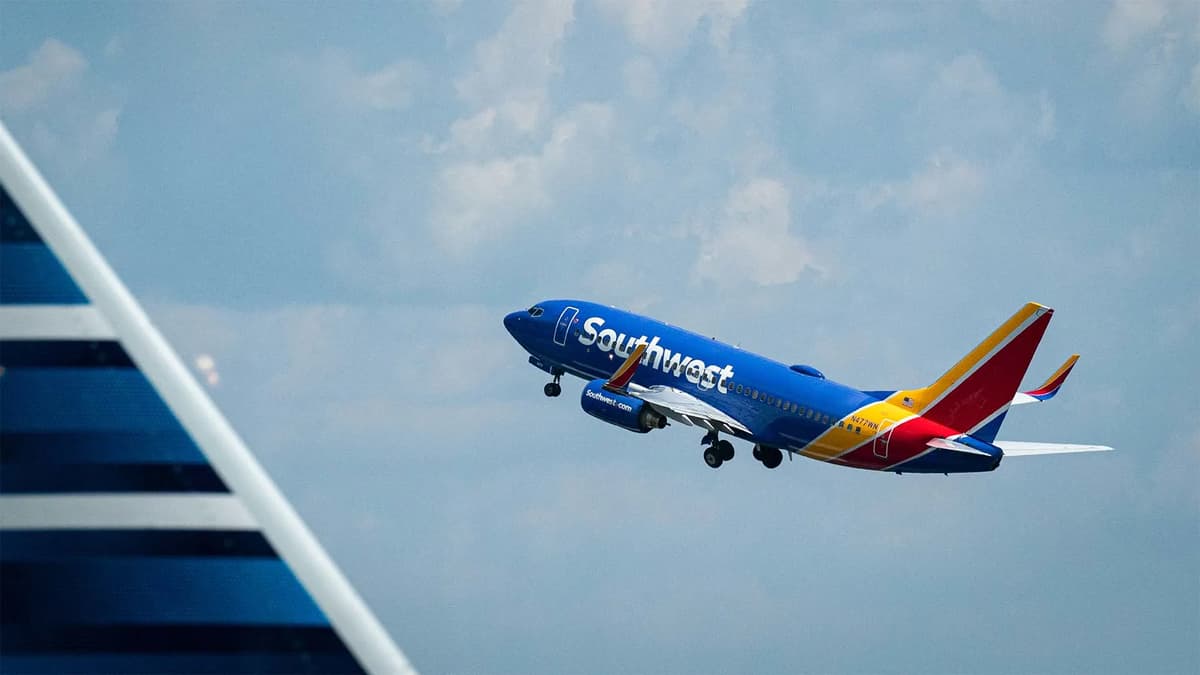
After 23 Months of Changes, Southwest Airlines Just Got Some Very Good News
Why It Matters
The results show Southwest can maintain brand loyalty while overhauling its cost structure, signaling a possible new equilibrium for legacy carriers facing investor pressure and post‑pandemic market volatility.
Key Takeaways
- •Southwest tops economy satisfaction for fifth year despite major changes
- •J.D. Power scores rise eight points across all cabin classes
- •New baggage fees: $35 first bag, $45 second bag
- •1,750 corporate staff (15%) laid off in historic cuts
Pulse Analysis
Southwest’s latest J.D. Power ranking underscores a paradox in the airline industry: customer sentiment can improve even as carriers grapple with operational upheaval. The 2026 North America Airline Satisfaction Study recorded an eight‑point gain on a 1,000‑point scale, a notable uptick given the sector’s recent turbulence—cancellations, airport congestion, and fare spikes that pushed some routes to triple their pre‑pandemic prices. Southwest’s consistent top‑rank in the economy and basic‑economy categories suggests that its core value proposition—reliable service and low‑cost fares—still resonates, providing a buffer against broader market discontent.
The surge in satisfaction arrives on the heels of a rapid transformation driven by activist investor Elliott Investment Management. Since June 2024, Southwest has dismantled hallmark practices: it ended open seating, introduced $35 and $45 baggage fees, and rolled out non‑refundable basic‑economy tickets. The carrier also executed its first mass layoffs, cutting roughly 1,750 corporate roles—about 15% of its back‑office workforce—and finally allowed its flights to be booked through Expedia and Google Flights. These moves aim to tighten margins and diversify revenue streams, but they also risk alienating long‑time customers who prized the airline’s no‑frills simplicity.
The juxtaposition of rising satisfaction scores and aggressive cost‑cutting raises a strategic question: is this a fleeting moment of goodwill or the start of a lasting trend? If Southwest can sustain loyalty while extracting higher ancillary revenue, it may set a template for legacy airlines seeking to balance profitability with brand equity. Competitors will watch closely, especially as the industry adapts to evolving investor expectations and a post‑COVID travel landscape where price sensitivity and convenience remain paramount.
After 23 Months of Changes, Southwest Airlines Just Got Some Very Good News
Comments
Want to join the conversation?
Loading comments...