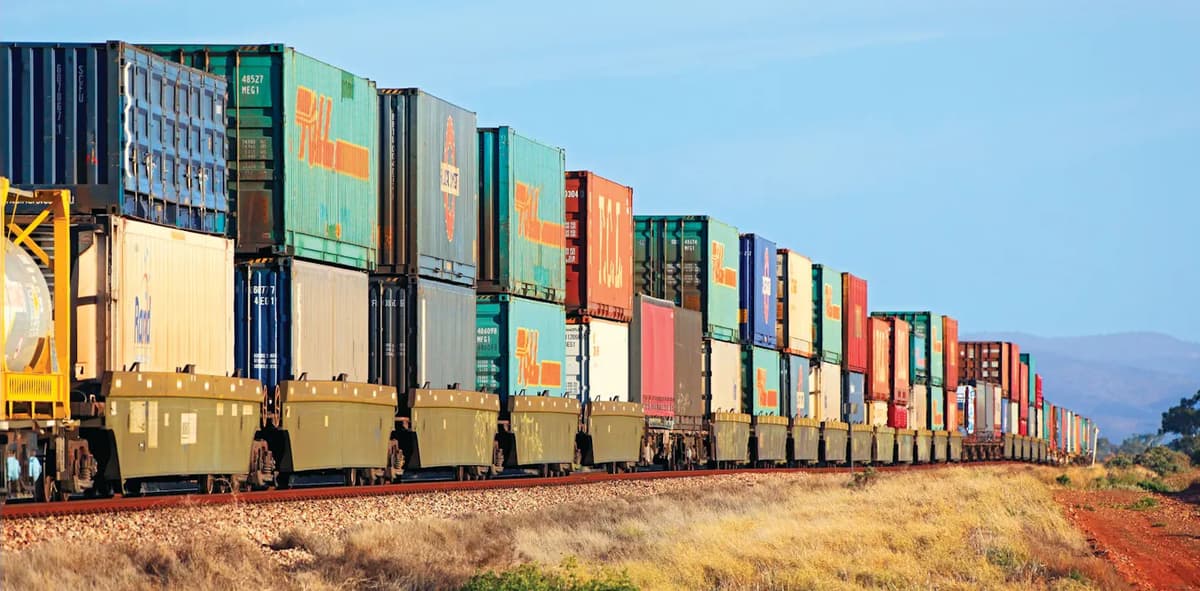
After Dumping Inland Rail, Australia Has No Plan to Stop Relying on Diesel Trucks for Freight
Why It Matters
Continued reliance on diesel trucks exposes Australia to higher emissions, oil‑price volatility, and safety costs, while limiting the economic benefits of a more efficient rail network.
Key Takeaways
- •Inland Rail north segment cancelled, project cost exceeds A$45 bn ($30 bn USD).
- •Road freight on Newell Highway expected to surge, adding diesel demand.
- •Rail carries just 2% of Melbourne‑Brisbane freight, down from 28% in 1994.
- •Federal funds favor urban rail, freight upgrades under $2 bn USD.
- •Without Inland Rail to Queensland, Australia stays vulnerable to oil price shocks.
Pulse Analysis
Inland Rail was conceived as a 1,600‑km freight artery linking Melbourne, Sydney and Brisbane, promising to shift up to 200,000 trucks off the road each year and cut greenhouse‑gas emissions by 750,000 tonnes by 2050. Early construction began in 2018, but a 2023 independent review flagged chronic delays and a budget that ballooned to over A$45 billion (roughly $30 billion USD). The recent federal decision to abandon the northern leg effectively caps the line at Parkes, stripping Queensland of the projected rail link and leaving a fragmented network that cannot deliver the originally promised efficiency gains.
Australia’s freight landscape has tilted heavily toward road transport since the 1990s, with highways upgraded to accommodate ever‑larger B‑triple trucks. Today, diesel‑powered trucks dominate intercity freight, accounting for about 98 % of the Melbourne‑Brisbane corridor, a sharp drop from the 28 % rail share in 1994. This modal imbalance drives higher fuel consumption, amplifies exposure to global oil shocks, and incurs substantial societal costs through road wear, congestion and fatal crashes. The environmental toll is stark: each additional diesel kilometre adds carbon emissions, undermining national climate targets.
Policy makers now face a stark funding mismatch. While the federal budget allocates $3.8 billion AUD ($2.5 billion USD) to the Suburban Rail Loop and billions more to highway upgrades, rail freight receives less than A$2.8 billion ($1.8 billion USD) for network upgrades across a 9,600‑km system. Targeted investments—such as a more direct Macarthur‑Cootamundra corridor, bypasses around Newcastle and Karuah Valley, and flood‑resilient tracks—could restore some rail competitiveness. Without a renewed commitment to complete Inland Rail or comparable freight projects, Australia will remain dependent on diesel trucks, perpetuating supply‑chain vulnerability and missing out on the economic and environmental benefits of a balanced multimodal transport strategy.
After dumping Inland Rail, Australia has no plan to stop relying on diesel trucks for freight
Comments
Want to join the conversation?
Loading comments...