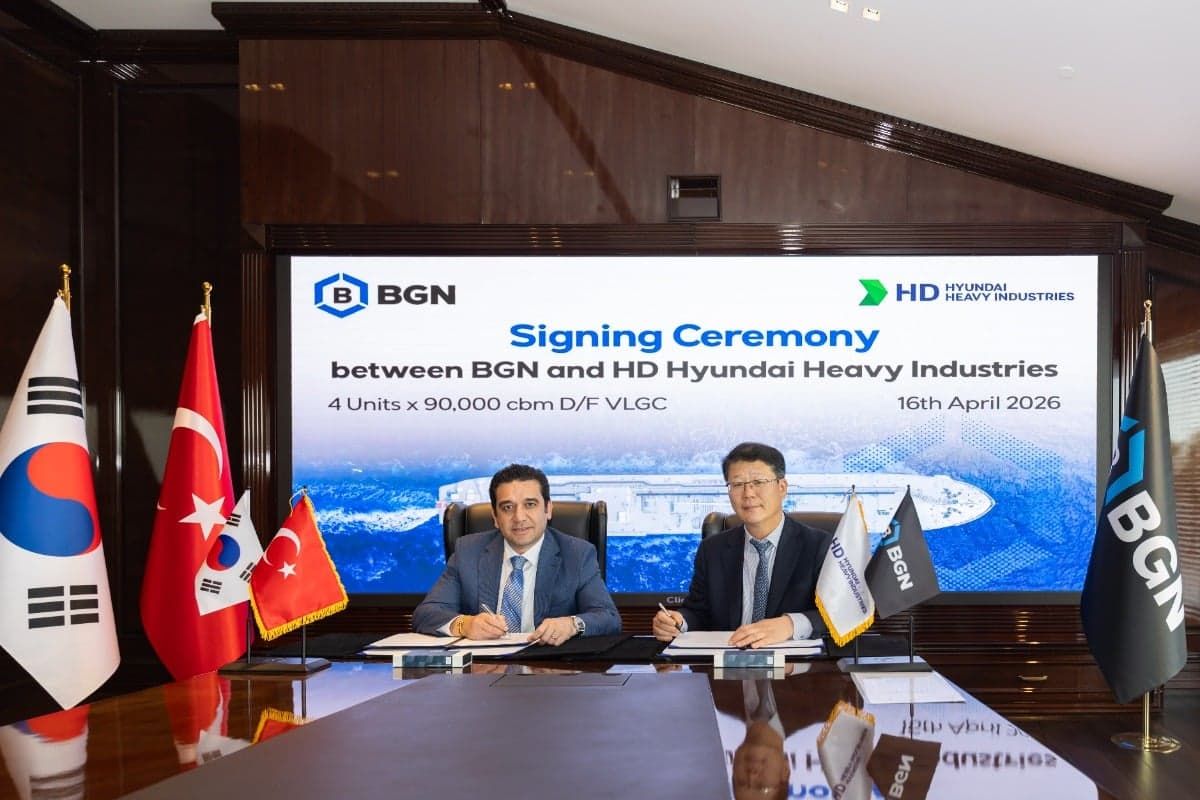
After LNG Vessel Deal, Dubai-Based Firm Orders Four New VLGCs to Enrich LPG Fleet
Companies Mentioned
Why It Matters
The acquisition expands BGN’s LPG capacity and signals a shift toward dual‑fuel vessels that can help the industry meet decarbonisation targets, strengthening its competitive position in a tightening regulatory landscape.
Key Takeaways
- •BGN orders four 90,000 cbm dual‑fuel VLGCs from HD HHI.
- •Vessels can run on conventional fuels and low‑emission options like ammonia.
- •Deliveries slated for 2029, expanding BGN’s LPG transport capacity.
- •Order follows BGN’s first long‑term LNG carrier charter with CCEC.
- •Dual‑fuel VLGCs support industry decarbonization and stricter emission regulations.
Pulse Analysis
BGN’s latest vessel order arrives at a time when global LPG demand is rebounding after pandemic‑induced slowdowns. As emerging markets expand petrochemical production and Europe seeks alternative heating fuels, the need for reliable, high‑capacity LPG transport is rising. By adding four 90,000 cbm VLGCs, BGN not only boosts its fleet size but also positions itself to capture premium freight rates tied to cleaner‑fuel contracts, a trend that analysts expect to accelerate through the late 2020s.
The dual‑fuel design of the new VLGCs reflects a broader industry pivot toward flexible propulsion systems. Equipped to burn conventional marine diesel as well as low‑carbon alternatives—including ammonia, a fuel gaining traction for its zero‑CO₂ combustion—these ships meet IMO’s 2025 and 2030 emission thresholds without sacrificing operational range. Hyundai Heavy Industries’ engineering integrates advanced scrubbers and optimized hull forms, delivering up to 15% fuel‑efficiency gains compared with legacy LPG carriers. Such capabilities allow operators to switch fuels based on price volatility and regulatory pressure, reducing overall carbon footprints while maintaining profitability.
Strategically, the VLGC order complements BGN’s recent ten‑year LNG carrier charter, signaling a deliberate diversification across liquefied gas segments. This dual‑track approach mitigates market risk, as LNG and LPG pricing cycles often diverge. Moreover, the commitment to ammonia‑compatible vessels aligns BGN with emerging carbon‑neutral shipping initiatives, potentially unlocking access to green financing and tax incentives. As decarbonisation mandates tighten, BGN’s expanded, technology‑forward fleet could set a benchmark for other independent traders seeking to balance growth with sustainability.
After LNG vessel deal, Dubai-based firm orders four new VLGCs to enrich LPG fleet
Comments
Want to join the conversation?
Loading comments...