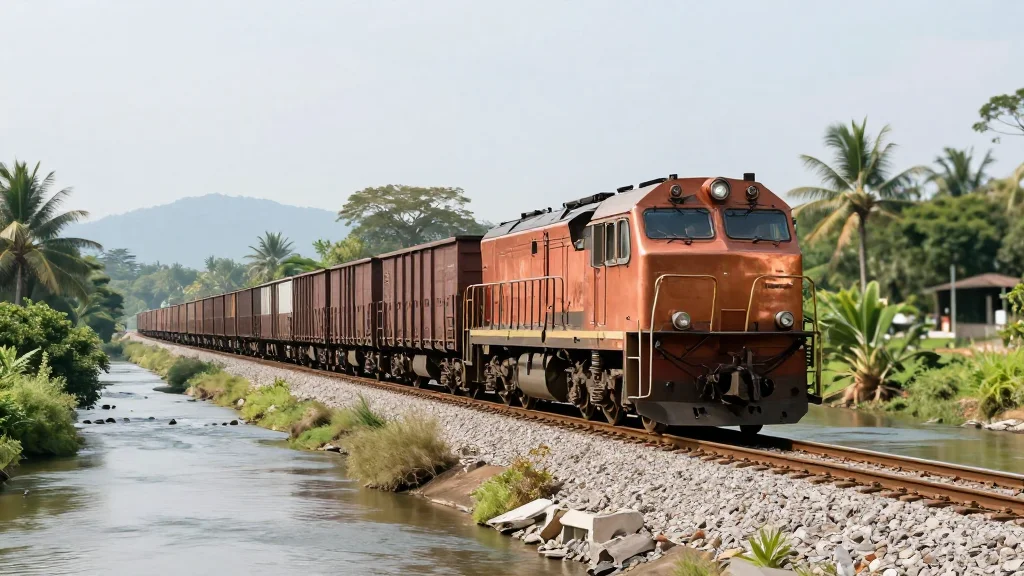
After the Flood: Lobito Reopens Rails
Why It Matters
Restoring the Lobito rail line quickly safeguards DRC’s copper export revenues and stabilizes Angola’s transport infrastructure, reinforcing supply‑chain reliability for global metal markets.
Key Takeaways
- •Floods crippled Angola’s Lobito Corridor, halting copper flow
- •Emergency repairs enabled rail reopening within weeks
- •Copper‑laden train from DRC signals resumed exports
- •Rail corridor’s recovery bolsters regional logistics network
Pulse Analysis
The Lobito Corridor, a 1,300‑kilometer rail link connecting the Democratic Republic of the Congo’s copper belt to the Atlantic port of Lobito, is a linchpin in Africa’s mineral export ecosystem. When unprecedented April rains swamped Angola’s coastal plains, sections of track were washed out, forcing a sudden halt to freight movements. The disruption threatened to bottleneck copper shipments, a commodity that accounts for a sizable share of DRC’s export earnings and influences global pricing. Rapid mobilization of engineering crews and international partners enabled emergency rehabilitation, illustrating the strategic priority placed on keeping this corridor operational.
Recovery of the Lobito line carries broader implications for regional trade and investment. By restoring a reliable overland route, Angola reinforces its role as a logistics hub, attracting further infrastructure funding and encouraging private‑sector participation in rail upgrades. For mining firms in the DRC, the reopened corridor reduces reliance on longer, costlier maritime detours, improving cash‑flow timing and lowering transportation costs. Moreover, the swift response showcases the resilience of African supply chains amid climate‑related shocks, a factor increasingly scrutinized by investors seeking stable commodity exposure.
Looking ahead, the incident underscores the need for climate‑adaptive infrastructure across the continent. Stakeholders are likely to prioritize flood‑resilient engineering standards, real‑time monitoring systems, and diversified routing options to mitigate future disruptions. As global demand for copper accelerates—driven by renewable energy technologies and electric vehicles—the Lobito Corridor’s reliability will remain a critical determinant of DRC’s export capacity and Angola’s economic diversification goals. Continued investment in rail robustness will thus be essential for sustaining growth in the African mining sector.
After the flood: Lobito reopens rails
Comments
Want to join the conversation?
Loading comments...