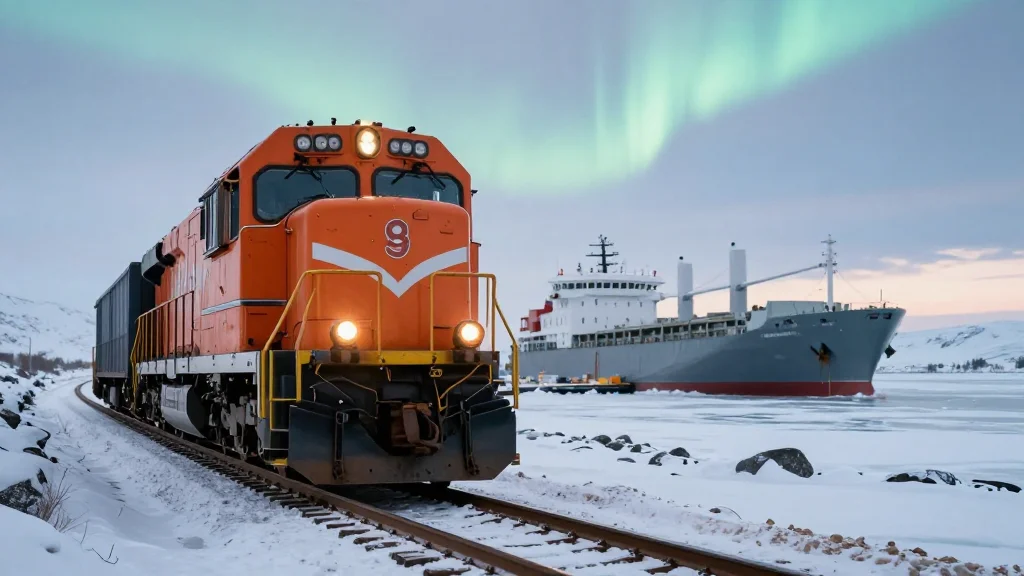
AGG, Aecon Sign Collaboration Agreement
Why It Matters
The partnership unlocks critical northern logistics capacity, diversifying Canada’s export routes while delivering economic reconciliation and job growth for Indigenous communities. It positions the Port of Churchill as a strategic Arctic gateway for global trade.
Key Takeaways
- •Aecon and AGG sign MoU to develop Port of Churchill and HBRY
- •Project aims to create Indigenous jobs and training across northern Manitoba
- •Port modernization targets year‑round operations and higher industrial weight standards
- •Federal funds total about $233 M USD for rail and port upgrades
- •Enhanced Arctic corridor could diversify Canadian trade routes and boost export capacity
Pulse Analysis
The Aecon‑AGG memorandum marks a watershed moment for Canada’s northern supply chain. By combining Aecon’s multidisciplinary construction capabilities with AGG’s Indigenous governance model, the alliance promises to rebuild the flood‑damaged Hudson Bay Railway to modern industrial weight standards and transform the Port of Churchill into a year‑round deep‑water hub. This synergy not only restores a critical link between remote communities and the national rail network but also embeds Indigenous employment and training targets, reinforcing Canada’s reconciliation agenda.
Financially, the initiative taps into a cascade of public investments—approximately C$175 million, C$80 million and C$60 million—translating to roughly $130 million, $59 million and $44 million USD respectively, for a combined $233 million USD infusion. These funds will underwrite track rehabilitation, terminal upgrades, and the Churchill Marine Tank Farm expansion, creating a more resilient freight corridor. The enhanced capacity is expected to attract bulk commodities, grain, and mineral shipments, opening new markets in Europe and Asia via the Atlantic and Arctic routes, while also bolstering Canada’s Arctic security posture.
Strategically, the revived corridor could reshape Canada’s trade geography. A reliable northern gateway reduces reliance on West Coast ports, shortens transit times for prairie producers, and offers a climate‑resilient alternative to southern routes vulnerable to congestion and bottlenecks. Moreover, the partnership showcases a model for Indigenous‑led infrastructure development, potentially spurring similar collaborations across the country. As global supply chains seek diversification, the Aecon‑AGG project positions Canada to capture a share of emerging Arctic trade flows, reinforcing its role in the evolving North‑South economic landscape.
AGG, Aecon Sign Collaboration Agreement
Comments
Want to join the conversation?
Loading comments...