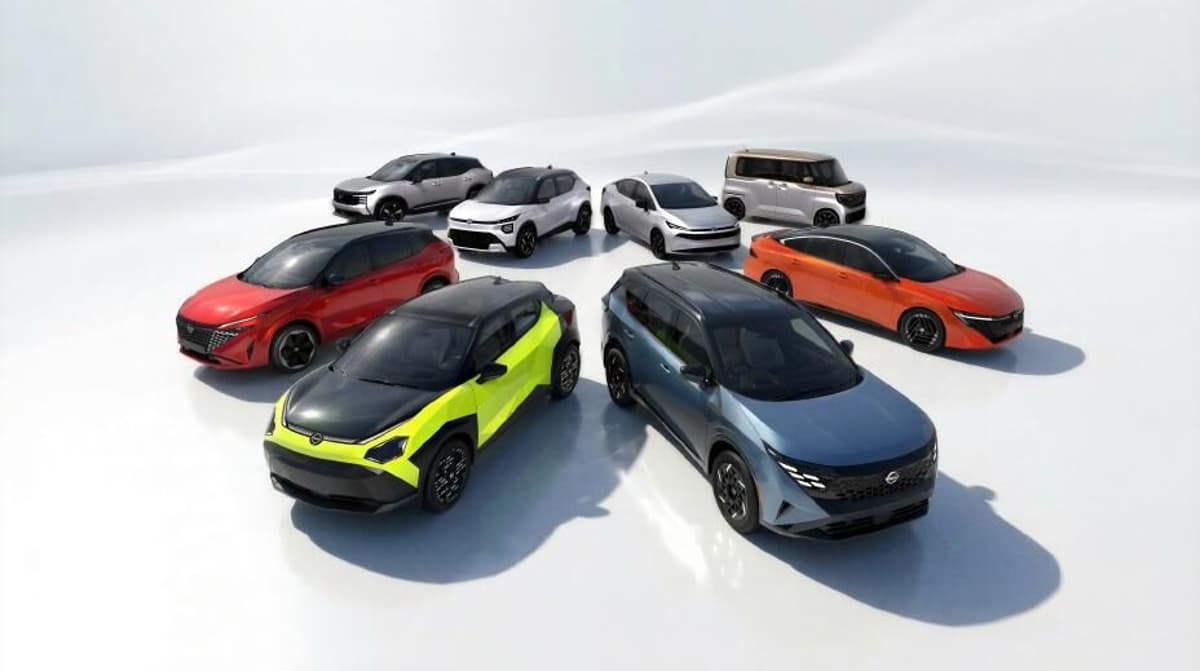
AI-Defined Vehicles and Expanded Electrification Shape Nissan’s Future Mobility Strategy
Companies Mentioned
Why It Matters
Nissan’s AI‑centric, multi‑technology approach could accelerate its competitive edge in the rapidly evolving EV and autonomous market, while reinforcing brand relevance through personalized, intelligent mobility.
Key Takeaways
- •Nissan unveils "Mobility Intelligence for Everyday Life" vision.
- •Strategy centers on AI-defined vehicles integrating AI Drive and AI Partner.
- •Offers multiple electrification options to suit global market demands.
- •Emphasizes customer experience as guiding priority for future products.
- •Moves beyond Re:Nissan recovery plan toward long‑term growth.
Pulse Analysis
Nissan Motor Co. is charting a new strategic course with its “Mobility Intelligence for Everyday Life” roadmap, a move that comes as the automaker seeks to recover from the modest gains of its Re:Nissan plan. By anchoring the vision in artificial intelligence, Nissan signals a departure from traditional vehicle development toward a platform where software and data drive product differentiation. The announcement arrives at a time when global car sales are increasingly dominated by electric powertrains and consumers expect seamless, connected experiences, positioning Nissan to re‑engage both legacy and emerging markets.
The centerpiece of the strategy is the AI‑defined vehicle (AIDV) concept, which merges Nissan AI Drive—a suite of advanced driver‑assist and autonomous capabilities—with Nissan AI Partner, an in‑car digital assistant that personalizes infotainment and vehicle settings. This dual‑layer architecture enables over‑the‑air updates, predictive maintenance, and context‑aware navigation, effectively turning each car into a learning device. Crucially, the AIDV framework is agnostic to the underlying powertrain, allowing the same intelligence to be deployed across battery‑electric, hybrid‑electric and fuel‑cell models, thereby streamlining development costs.
Industry analysts view Nissan’s flexible electrification and AI focus as a hedge against the uncertainty of regional regulatory mandates and consumer adoption rates. By offering a portfolio that can be quickly adapted to market‑specific emissions standards, Nissan aims to capture market share from rivals that have committed to a single EV architecture. Moreover, the emphasis on customer‑centric intelligence could boost brand loyalty in an era where software ecosystems increasingly influence purchase decisions. If executed effectively, the strategy may accelerate Nissan’s path to profitability while reinforcing its reputation as an innovator in connected mobility.
AI-defined vehicles and expanded electrification shape Nissan’s future mobility strategy
Comments
Want to join the conversation?
Loading comments...