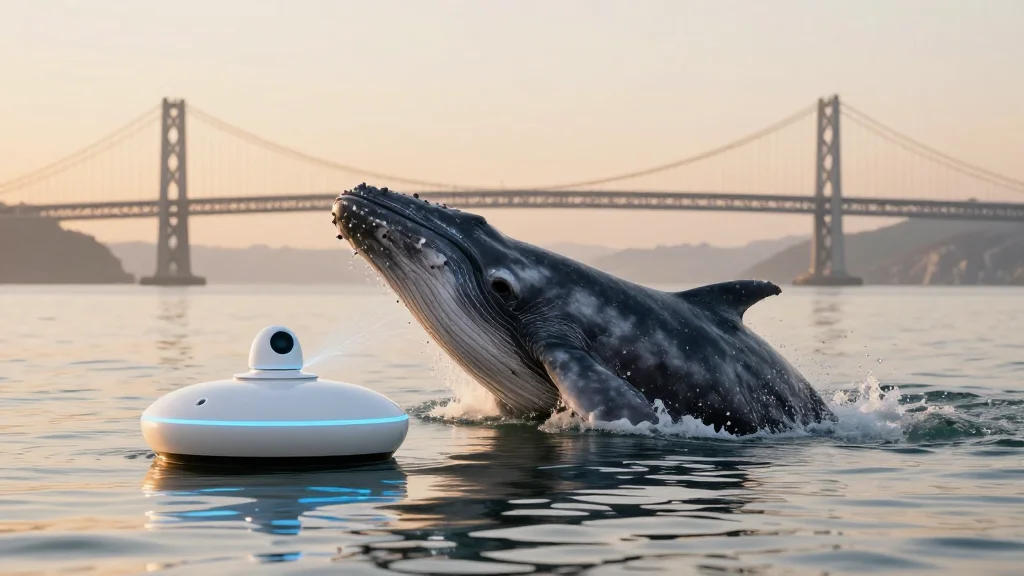
AI‑Powered WhaleSpotter Network Launches in San Francisco Bay to Cut Ship Strikes

Why It Matters
The WhaleSpotter launch tackles two converging crises: a steep decline in the eastern North Pacific gray‑whale population and growing pressure on one of the nation’s busiest maritime corridors. By providing actionable, real‑time intelligence, the system not only protects an iconic species but also reduces the risk of costly vessel damage and legal liability for operators. Its success could accelerate adoption of AI‑based environmental monitoring across ports, shaping regulatory frameworks that balance commerce with ecosystem stewardship. Beyond immediate safety gains, the data stream generated by WhaleSpotter offers scientists a granular view of whale movement patterns in an urban estuary. This insight can refine climate‑impact models, guide habitat restoration projects, and support policy decisions on shipping lane adjustments. In a broader sense, the initiative demonstrates how advanced sensing and machine‑learning can be harnessed for public‑good outcomes, setting a precedent for future collaborations between tech firms, government agencies and conservation groups.
Key Takeaways
- •WhaleSpotter AI scans up to 2 nautical miles for whale blows and heat signatures
- •System integrates land‑based thermal cameras with vessel‑mounted sensors for real‑time alerts
- •Last year 21 gray whales died in the Bay Area, 40% of deaths linked to ship strikes
- •Thomas Hall (SF Bay Ferry) says alerts let vessels adjust routes before collisions
- •First U.S. network to combine AI detection with official mariner alerts in near‑real time
Pulse Analysis
WhaleSpotter arrives at a moment when maritime operators are under increasing scrutiny for environmental impact. Historically, ship‑strike mitigation relied on static speed limits and seasonal advisories, tools that are blunt and often ignored. AI‑driven detection offers a precision approach, turning a reactive system into a proactive one. The technology’s ability to flag a whale at a distance of two nautical miles gives captains a meaningful window to alter course without jeopardizing schedules, a trade‑off that was previously untenable.
Economically, the network could lower insurance premiums for ferry and cargo operators by reducing the frequency of costly collisions and associated legal claims. Moreover, the data repository created by WhaleSpotter may become a valuable asset for researchers and policymakers, feeding into predictive models that anticipate whale hotspots under different climate scenarios. If the Bay’s experience proves scalable, ports such as Los Angeles, Seattle and New York could adopt similar systems, turning a regional pilot into a national standard.
Strategically, the partnership underscores a growing trend: tech firms and environmental NGOs are co‑creating solutions that serve both commercial and conservation goals. This collaborative model may inspire further cross‑sector initiatives, from AI‑guided oil‑spill response to autonomous vessel traffic management. As regulatory bodies tighten emissions and wildlife protection rules, operators that embed such technologies early will likely gain a competitive edge, positioning themselves as responsible stewards of both the economy and the marine ecosystem.
AI‑Powered WhaleSpotter Network Launches in San Francisco Bay to Cut Ship Strikes
Comments
Want to join the conversation?
Loading comments...