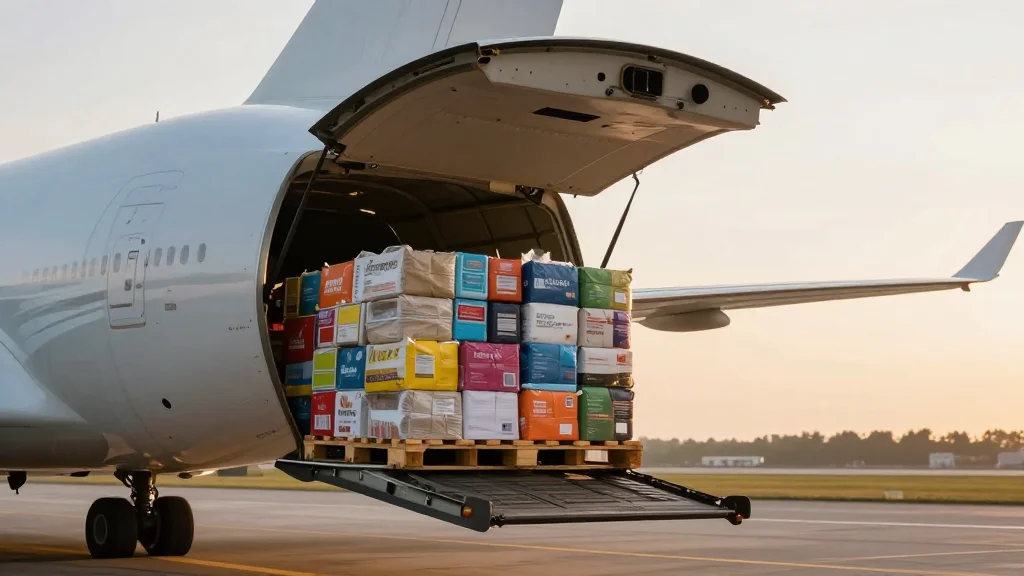
Air Cargo Market Set to Reach $420 Billion by 2035, Fueled by E‑Commerce Surge

Why It Matters
The projected expansion of the air cargo market signals a fundamental shift in how goods move across borders, with e‑commerce acting as the primary catalyst. Faster, more reliable air freight enables manufacturers to adopt leaner inventory models, reduces lead times for critical supplies like medicines, and supports the rise of on‑demand consumption. For policymakers, the growth trajectory underscores the need for infrastructure investment at airports and the adoption of greener technologies to meet tightening environmental regulations. For investors and industry players, the forecast highlights lucrative opportunities in digital logistics platforms, AI‑driven optimization tools, and cold‑chain services. Companies that can deliver end‑to‑end visibility and meet the stringent requirements of high‑value shipments will likely command premium pricing and secure long‑term contracts, reshaping the competitive hierarchy of the global logistics ecosystem.
Key Takeaways
- •Global air cargo market valued at $250 B in 2025, projected to reach $420 B by 2035.
- •5.3% CAGR forecast driven by e‑commerce and cross‑border trade.
- •Air freight volumes exceeded 65 million tons in 2024.
- •China leads regional growth with 6.2% CAGR; U.S. follows at 5.7%.
- •Cold‑chain transport and AI‑enabled logistics identified as key growth segments.
Pulse Analysis
The 5.3% CAGR projection places air cargo on a growth path that outpaces many traditional freight modes, reflecting the sector’s increasing relevance in a digital economy. Historically, air freight has been a premium service, but the surge in e‑commerce is democratizing access, pushing carriers to expand capacity while keeping costs competitive. This pressure is likely to accelerate the adoption of automation and AI, as operators seek to squeeze more payload out of existing aircraft without massive capital outlays.
From a competitive standpoint, the market is fragmenting. Legacy carriers with extensive freighter fleets are being challenged by pure‑play logistics firms that leverage cloud‑based platforms to offer on‑demand capacity. The race to integrate end‑to‑end visibility tools will reward those who can provide real‑time data on cargo condition, location, and estimated arrival—attributes increasingly demanded by pharmaceutical and high‑tech customers.
Regulatory and environmental considerations will also shape the next decade. As the International Civil Aviation Organization tightens emissions standards, airlines will need to invest in newer, fuel‑efficient aircraft or alternative fuels. Companies that pre‑emptively align with sustainability goals may gain a competitive edge, especially with large retailers committing to carbon‑neutral supply chains. In sum, the forecasted market growth is not just a size metric; it is a bellwether for technological innovation, competitive realignment, and the broader push toward a more resilient, digitized global trade network.
Air Cargo Market Set to Reach $420 Billion by 2035, Fueled by E‑Commerce Surge
Comments
Want to join the conversation?
Loading comments...