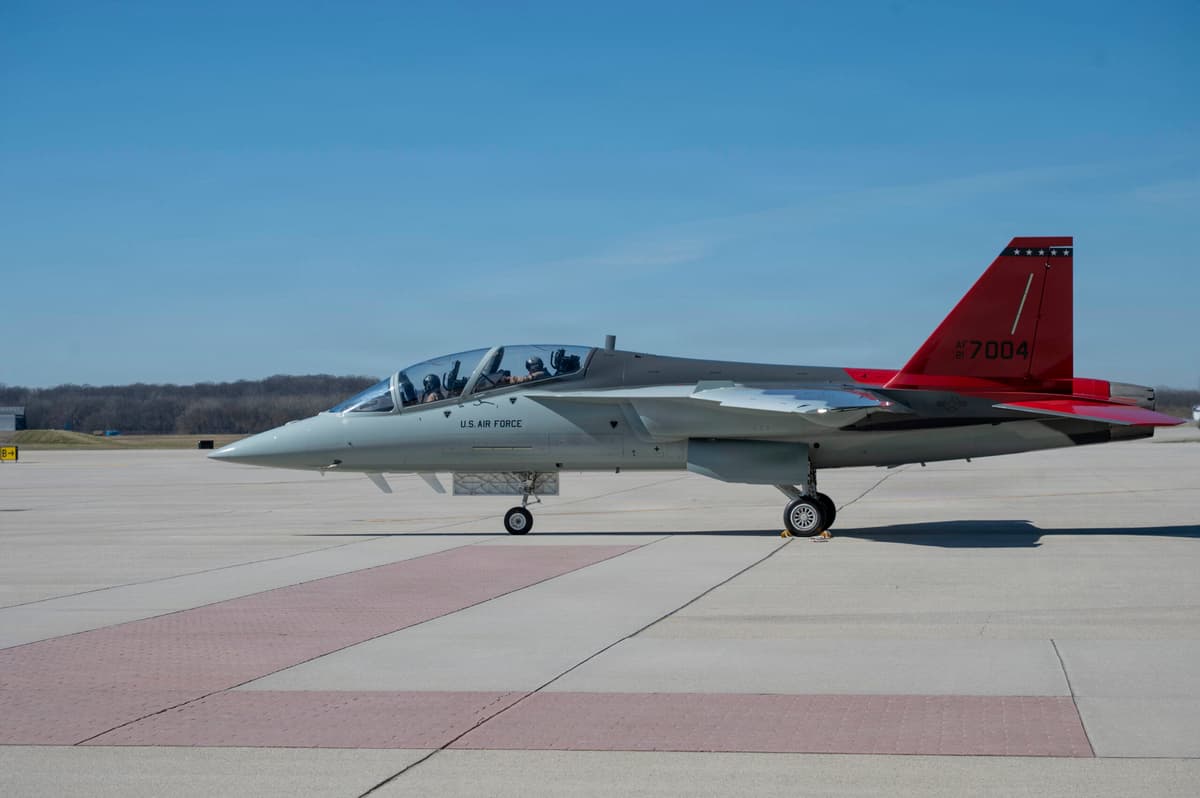
Air Force Eyes ‘G-Limiter,’ Other Future Upgrades for T-7
Companies Mentioned

Why It Matters
These enhancements could reduce G‑LOC incidents and improve training fidelity, strengthening the Air Force’s pipeline of combat‑ready pilots. Early adoption positions the T‑7 as a versatile platform for both advanced and initial pilot instruction.
Key Takeaways
- •Air Force seeks “Dial‑a‑G” selectable G‑limiter for T‑7 trainer
- •Upgrades target terrain, collision avoidance, barrier compatibility, and navigation resilience
- •Modernization could begin FY 2029, expanding T‑7 role to undergraduate training
- •Cockpit interface enhancements aim to simulate 4th‑ and 5th‑gen fighter systems
- •Safety focus addresses G‑LOC risks common among novice pilots
Pulse Analysis
The T‑7A Red Hawk represents the Air Force’s first new jet trainer in decades, replacing the aging T‑38C Talon. Developed by a Boeing‑Saab team, the program faced schedule slips but recently entered low‑rate initial production, with the first two aircraft stationed at Joint Base San Antonio‑Randolph. As the service transitions to the Red Hawk, attention has shifted from fielding to future‑proofing, prompting a formal request for modernization that could reshape pilot training for the next generation.
Central to the upgrade package is a “Dial‑a‑G” capability that lets instructors cap the aircraft’s G‑force envelope below its 8‑G limit. This selective G‑limiter, paired with an override that responds slowly, is designed to mitigate G‑induced loss of consciousness—a leading cause of training mishaps, especially among pilots with fewer than 100 flight hours. Complementary safety upgrades include terrain‑aware collision avoidance, automatic ground‑and‑air avoidance systems developed with Lockheed Martin and NASA, and refined barrier‑interaction studies to ensure safe runway aborts. An upgraded inertial navigation system will also preserve situational awareness when GPS signals are degraded or jammed.
Beyond safety, the Air Force seeks to embed fourth‑ and fifth‑generation fighter cues into the T‑7’s cockpit, expanding touch‑screen functionality and reprogrammable controls. These changes could enable the Red Hawk to support undergraduate pilot training, shortening the pipeline to frontline fighters. If implemented by FY 2029, the modernized T‑7 would offer a more versatile, resilient training platform, potentially influencing procurement decisions for allied air forces and reinforcing the United States’ edge in pilot readiness.
Air Force Eyes ‘G-Limiter,’ Other Future Upgrades for T-7
Comments
Want to join the conversation?
Loading comments...