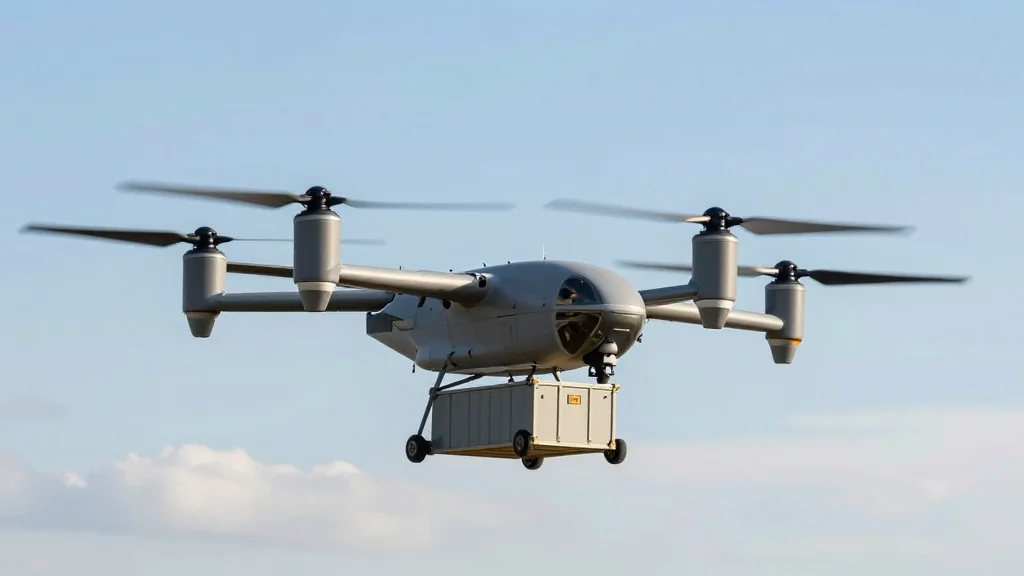
AIR Lifts Off With First Flight of Heavy-Lift Cargo Drone
Companies Mentioned
Why It Matters
The flight proves that autonomous heavy‑lift drones can safely handle sizable payloads, opening new avenues for last‑mile delivery and disaster relief. It signals a shift toward runway‑free logistics, potentially reducing costs and expanding reach for manufacturers and humanitarian agencies.
Key Takeaways
- •AIR's cargo UAS can lift ~550 lb payload.
- •70‑cubic‑foot cargo bay enables diverse freight types.
- •VTOL design eliminates need for runway infrastructure.
- •First flight validates AIR's heavy‑lift eVTOL technology.
- •Potential to disrupt last‑mile logistics in remote regions.
Pulse Analysis
The heavy‑lift unmanned aerial system (UAS) market has accelerated in recent years, driven by demand for rapid, flexible freight movement beyond traditional air‑cargo hubs. Air’s new cargo‑heavy lift platform joins a growing roster of eVTOL solutions that promise to bridge the gap between long‑haul air transport and ground delivery. With a 550‑pound payload capacity and a spacious 70‑cubic‑foot bay, the drone can accommodate everything from medical supplies to industrial parts, positioning it as a versatile asset for logistics providers seeking to cut transit times and bypass congested road networks.
Beyond commercial freight, the aircraft’s VTOL capability offers strategic advantages for emergency response and remote‑area supply chains. Disaster zones often suffer damaged runways, making conventional aircraft impractical. A runway‑free drone that can hover, lift, and deliver heavy loads directly to isolated sites can dramatically improve humanitarian aid speed and efficiency. Likewise, mining, oil‑field, and offshore operations stand to benefit from on‑demand delivery of tools and components without the need for costly helipad infrastructure, potentially lowering operational expenditures and enhancing safety.
Air now faces a competitive landscape that includes established aerospace firms and agile startups alike, all vying for regulatory approval and market share in the nascent cargo‑eVTOL sector. Certification pathways for autonomous heavy‑lift drones remain complex, requiring coordination with the FAA and adherence to emerging safety standards. Continued flight testing, payload integration, and partnership development will be critical for Air to scale production and secure contracts. If successful, the platform could catalyze a broader shift toward autonomous, runway‑independent logistics, reshaping supply‑chain dynamics across multiple industries.
AIR Lifts Off With First Flight of Heavy-Lift Cargo Drone
Comments
Want to join the conversation?
Loading comments...