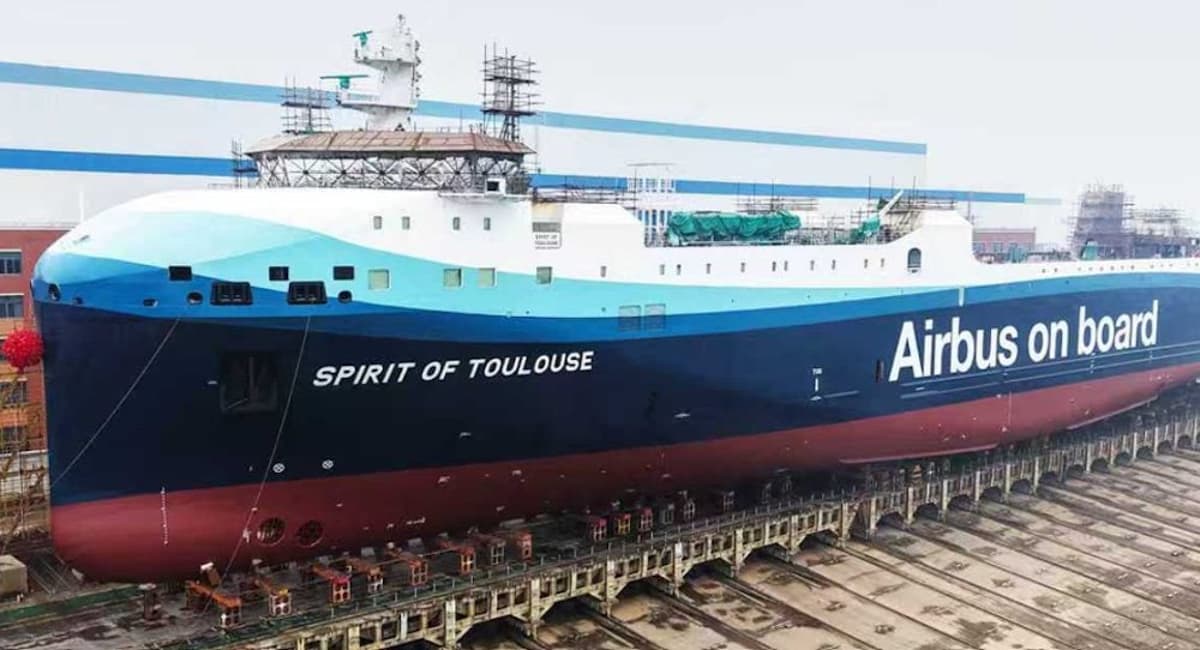
Airbus Goes to Sea: How a French Shipowner and Chinese Shipyard Are Reinventing the Atlantic Supply Chain
Companies Mentioned
Why It Matters
The program offers Airbus a lower‑carbon supply chain while proving that wind‑assisted propulsion and alternative fuels can be scaled for high‑value industrial logistics, setting a benchmark for the broader shipping industry.
Key Takeaways
- •Three new ro‑ro vessels will replace Airbus's aging Atlantic fleet
- •Rotor sails aim to supply 15‑20% of propulsion energy
- •Dual‑fuel engines can run on methanol, cutting sulphur‑oxide emissions
- •Projected fleet CO₂ drops from 68,000 to 33,000 tonnes by 2030
- •InfraVia’s €1 billion ($1.09 billion) plan doubles LDA’s ship capacity
Pulse Analysis
Airbus’s trans‑Atlantic logistics have long relied on chartered vessels that shuttle sub‑assemblies between its French production hub and the Mobile, Alabama final‑assembly line. By commissioning three dedicated roll‑on/roll‑off ships, the aerospace giant is consolidating control over a critical supply‑chain link, reducing reliance on third‑party carriers and aligning transport emissions with its broader sustainability goals. The vessels, built by China’s Wuchang Shipbuilding for French owner Louis Dreyfus Armateurs, are timed to enter service as Airbus ramps up A320 Family output, ensuring capacity keeps pace with demand.
The technical package on the new fleet is a showcase of emerging maritime decarbonisation tools. Six 35‑metre Norsepower rotor sails exploit the Magnus effect, delivering an estimated 15‑20% of the thrust needed on North Atlantic passages. Complementing wind assistance, dual‑fuel engines can switch between marine diesel oil and methanol, eliminating sulphur‑oxide emissions and potentially slashing NOₓ output. An AI‑driven routing system continuously optimises sail orientation, speed and fuel mix, while an Organic Rankine Cycle recovers waste heat for additional power. Together, these innovations target a 70% per‑vessel CO₂ reduction and a fleet‑wide cut from 68,000 to 33,000 tonnes by 2030.
Beyond Airbus, the initiative signals a turning point for the shipping sector. InfraVia’s $1.09 billion capital infusion to LDA doubles the owner’s fleet size, demonstrating confidence that green technologies can meet the rigorous schedules of a blue‑chip charterer. Success will provide a credible case study for other high‑value logistics operators—ranging from automotive to energy—seeking to meet IMO emissions mandates while preserving cargo throughput. As e‑methanol production scales and wind‑assist hardware matures, the Spirit series could become a template for carbon‑neutral maritime supply chains worldwide.
Airbus Goes to Sea: How a French Shipowner and Chinese Shipyard Are Reinventing the Atlantic Supply Chain
Comments
Want to join the conversation?
Loading comments...