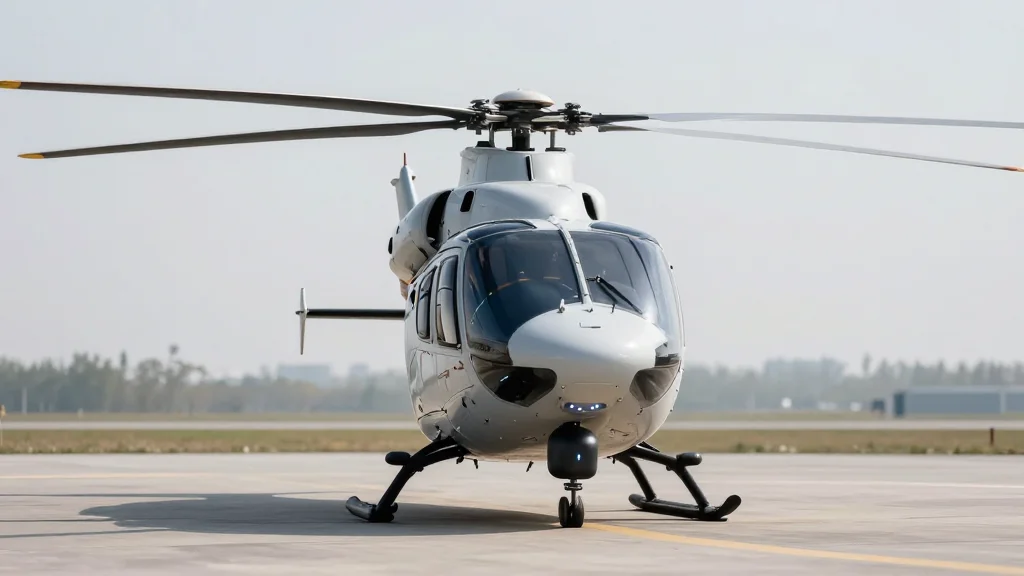
Airbus Introduces U145 Uncrewed Helicopter with AI-Powered Autonomy
Companies Mentioned
Why It Matters
The U145 could accelerate adoption of autonomous rotorcraft, opening new commercial and defense markets while reducing crew costs and operational risk.
Key Takeaways
- •Airbus shows U145 mock‑up at ILA Berlin 2026
- •Maiden flight with safety pilot slated for late 2026
- •Service entry aimed for early 2030s with AI autonomy
- •Uncrewed H145 targets emergency, utility, and defense missions
- •AI system promises autonomous navigation and obstacle avoidance
Pulse Analysis
The push toward autonomous aircraft is reshaping the rotorcraft sector, and Airbus’s U145 arrives at a moment when operators are seeking cost‑effective, low‑risk solutions for repetitive or hazardous tasks. By stripping the cockpit and integrating AI‑based flight controls, the U145 promises to deliver the same payload and performance envelope as the manned H145 while eliminating crew‑related expenses. This aligns with broader trends in urban air mobility, offshore wind‑farm inspection, and disaster‑relief logistics, where payload flexibility and rapid deployment are paramount.
Technically, the U145 builds on the proven H145 airframe, adding redundant flight‑control computers, sensor suites for real‑time terrain mapping, and a secure data link for ground‑station oversight. Airbus plans a safety‑pilot‑on‑board test flight by the end of 2026 to satisfy certification authorities, a step that mirrors the incremental approach used for other unmanned systems. The AI autonomy stack is designed to handle take‑off, cruise, and precision landing without human input, while still allowing a remote operator to intervene if needed. This hybrid testing model aims to streamline the regulatory pathway and demonstrate reliability under varied weather conditions.
If the timeline holds, the U145 could be in service by the early 2030s, positioning Airbus as a leader in the emerging uncrewed‑helicopter market. Potential customers span civil agencies needing rapid aerial assessment, energy firms requiring routine inspections, and defense units looking for persistent surveillance platforms. Competitors such as Bell and Leonardo are also exploring unmanned rotorcraft, but Airbus’s extensive H145 fleet base gives it a unique advantage in retrofitting existing operators. The successful rollout of the U145 may catalyze broader acceptance of AI‑driven aviation, prompting new business models and investment in autonomous flight infrastructure.
Airbus Introduces U145 Uncrewed Helicopter with AI-Powered Autonomy
Comments
Want to join the conversation?
Loading comments...